The quiet rise of a desert airport into a central node of U.S. immigration enforcement has drawn renewed scrutiny after a confirmed deportation flight carried Iranian nationals back to the Middle East. Operations coordinated by U.S. Immigration and Customs Enforcement have increasingly relied on Mesa Gateway Airport as a strategic hub, reshaping how deportations are conducted across continents.
Mesa Gateway’s Transformation Into a Deportation Nerve Center
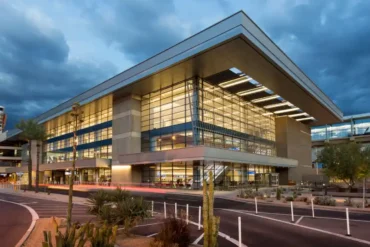
Far from the congestion and visibility of major international hubs, Mesa Gateway has evolved into a discreet logistical center designed for scale. Located roughly 20 miles southeast of Phoenix, the airport offers operational flexibility that larger airports cannot easily match. Its infrastructure allows federal agencies to coordinate large movements of detainees while minimizing disruption to commercial aviation.
In 2025 alone, deportations processed through Mesa surged to approximately 5,800 individuals, signaling a dramatic escalation in enforcement activity. The airport’s design supports this growth, featuring a 25,000-square-foot holding facility capable of temporarily housing over 150 detainees. This capacity enables synchronized departures, often involving chartered aircraft contracted specifically for removal operations.
The expansion aligns with a broader policy push emphasizing accelerated deportation procedures. Mesa’s relative isolation and purpose-built facilities make it an ideal environment for executing these operations with limited public visibility.

Iranian Deportations Spark Heightened Concern
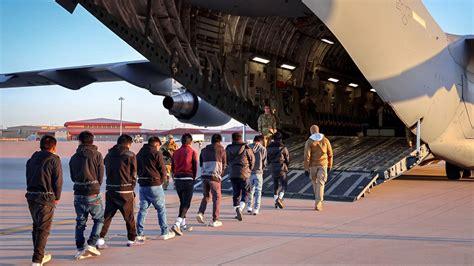
Among the many deportation flights, one recent operation has drawn particular attention. On January 25, eleven Iranian nationals were deported to Tehran, marking one of at least three such flights within a twelve-month period. The individuals ranged in age from 19 to 58, though little else has been publicly disclosed about their identities or circumstances.
The timing of the deportation has intensified debate. Iran has been experiencing prolonged periods of civil unrest and mass protests, raising concerns among human rights observers about the safety of individuals returned to the country. Deportations to politically unstable environments often trigger scrutiny, especially when transparency around the cases remains limited.
Officials from ICE declined to provide detailed responses regarding the specific flight, reinforcing a pattern of minimal public disclosure surrounding sensitive international removals. This opacity has fueled questions about how decisions are made when deportees may face uncertain or potentially dangerous conditions upon return.
Political Backdrop and Enforcement Pressure
The increase in deportation flights reflects a broader enforcement climate shaped by political priorities. Advocates of stricter immigration controls argue that expanded operations are necessary to address unauthorized entry and maintain legal order. Critics, however, contend that rapid deportations risk overlooking humanitarian considerations.
Supporters within Congress have voiced confidence in the current approach. A spokesperson for Andy Biggs emphasized the importance of balancing enforcement with respect for individual rights, while also calling for increased funding to ensure agencies can operate effectively. The statement underscores a recurring theme in immigration debates: the tension between resource constraints and policy ambitions.
Mesa Gateway’s growing role is inseparable from this political context. As enforcement intensifies, the need for scalable, efficient infrastructure has elevated the airport’s strategic importance.
Why Mesa Gateway Is Uniquely Suited for ICE Operations
Unlike major commercial airports, Mesa Gateway operates with fewer scheduling constraints and less passenger traffic, creating an environment where deportation flights can be managed with precision. The airport functions as an ICE Air Operations (IAO) center, a specialized framework designed to handle large-scale detainee transfers.
Charter airlines play a crucial role in this system, providing aircraft configured for secure transport. These flights often connect to destinations across North and South America, Africa, Asia, and the Middle East, reflecting the global scope of U.S. deportation efforts.
Another advantage lies in reduced public exposure. High-profile airports tend to attract media attention and advocacy groups, whereas Mesa’s lower visibility allows operations to proceed with minimal interruption. This discretion, while operationally beneficial, has also become a point of criticism for those demanding greater transparency.
A Historic Airfield With a Modern Role
Mesa Gateway’s current function contrasts sharply with its origins. Established in 1941 as Higley Field, the site later became Williams Air Base, a key training facility during World War II. Following its closure in 1993, the airport was repurposed to support commercial aviation and relieve pressure on Phoenix Sky Harbor.
Today, it serves as a base for Allegiant Air and accommodates limited scheduled service from Sun Country Airlines. Yet its most consequential role now lies beyond commercial travel, embedded within the mechanics of federal enforcement.

The airport’s three long runways—capable of handling large aircraft—make it particularly well-suited for charter operations. This physical capacity, combined with its strategic location, has enabled its transition into a central deportation hub.
The Human Dimension Behind the Numbers
Behind each statistic is an individual story, often obscured by the scale of operations. The deportation of eleven Iranian nationals may represent a small fraction of total removals, yet it highlights the complex realities faced by those caught in immigration enforcement systems.
For some, deportation marks the end of a prolonged legal process. For others, it may mean returning to environments marked by political instability or economic hardship. The lack of detailed public information about these cases makes it difficult to fully assess the human impact, leaving gaps that continue to fuel debate.
As Mesa Gateway’s role expands, it stands at the intersection of policy, logistics, and human consequence. Its runways now carry not just passengers, but the weight of decisions that reverberate far beyond Arizona’s desert landscape.