United Airlines embraced a fundamental shift in wing technology when it began removing blended winglets from selected aircraft and replacing them with more advanced split-scimitar and AT winglets. These changes were not cosmetic. They were rooted in aerodynamic efficiency, structural logic, and a long-term business strategy shaped by narrow margins and intense competitive pressure. The transition reflected a pragmatic understanding that incremental aerodynamic gains compound dramatically across a large fleet, especially in an era when fuel remains a decisive cost variable.
The winglet story often goes unnoticed by passengers, but at an engineering level, it is among the most consequential evolutions of modern commercial aviation. Airlines rely on advanced wingtip devices to reduce drag, extend range, and cut fuel burn. United’s early adoption of the split scimitar set the tone for the market, signaling that blended winglets—once considered essential—had reached their technological sunset.
Aerodynamic Principles Driving The Shift
The argument begins at the wingtip, where competing airflows collide. Each wing generates low-pressure airflow on top and high-pressure airflow beneath, a difference that creates persistent wingtip vortices. These spiraling disturbances weaken lift and produce what engineers describe as lift-induced drag. The core purpose of any winglet, whether blended or scimitar, is to tame these vortices and redirect their energy into smoother, narrower trails that require less fuel to overcome.
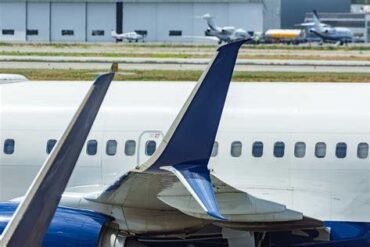
Blended winglets once represented a breakthrough by softening the interface between wing and winglet, reducing turbulence at that junction. But technology progressed. Split-scimitar winglets create a more optimized flow pattern by adding an upward fin and a downward ventral strake, reshaping the vortex into a thinner and more controlled spiral. The result is measurably lower drag, stronger climb performance, reduced wake turbulence, and—most attractive to airlines—substantial fuel savings.
United Airlines’ Early Leap Toward The Split Scimitar
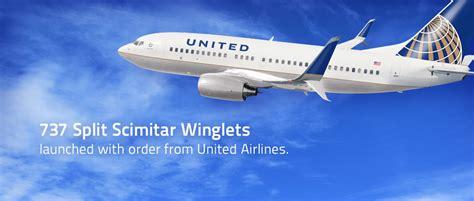
United Airlines introduced the split scimitar winglet to commercial service in 2014, beginning with the Boeing 737-800 and 737-900ER. Developed jointly by Aviation Partners Boeing, the new design integrated an elegantly curved upper blade and a sharply angled lower strake that re-engineered the wingtip’s aerodynamic profile.
The gains were immediate. The airline reported up to a 2% reduction in fuel burn per aircraft, a deceptively small percentage that becomes transformative when multiplied by thousands of annual flight cycles. Across United’s fleet, the projected annual savings hovered near $200 million, validating the engineering claims with unmistakable financial results.
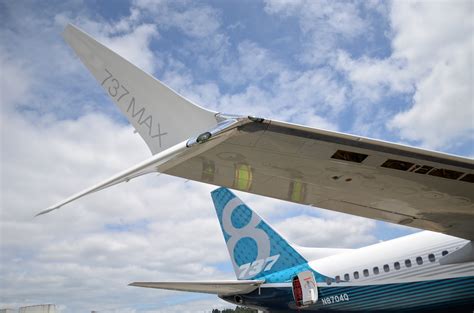
United expanded its adoption rapidly. After the 737NG upgrades, the carrier implemented scimitar designs on the 757-200 and welcomed the Boeing 737 MAX family—delivered with Boeing’s Advanced Technology winglet, a close cousin of the split scimitar that delivers similar aerodynamic benefits.
Engineering And Structural Rationale For Abandoning Blended Winglets
Beyond aerodynamic efficiency, blended winglets introduce structural considerations at the wing root. Because blended winglets generate additional lift at the tip, they increase the bending moment at the wing’s attachment to the fuselage. More bending means more structural stress. It is manageable, but not ideal.
Split-scimitar winglets distribute loads more efficiently. The lower ventral strake provides a secondary load path, easing the bending moment and improving the wing’s aeroelastic behavior. This subtle but meaningful structural advantage reduces long-term fatigue stress and enhances overall wing integrity. For a large operator such as United, long-term maintenance savings add up, reinforcing the case for eliminating blended winglets.
Performance data tells the story clearly. Compared to a 737 without winglets, blended winglets reduce drag by about seven percent and fuel burn by around 3.3 percent. Split scimitars push those numbers to nine percent and 5.5 percent respectively. The improvements may sound small, but commercial aviation thrives on percentages that live in decimal places.
The Industry Follows United’s Lead
As United accelerated its retrofit program, large U.S. carriers took notice. Delta Air Lines adopted split-scimitar systems for its 737NG and 757-200 fleets, and Southwest Airlines, Qantas, flydubai, and others soon integrated variants of the design. Boeing’s decision to equip the 737 MAX with AT winglets from the factory reflected the industry’s consensus—split-style winglets were the new standard.

Even Airbus operates aircraft with split-style tips. The A320 family and A380 include fence-type winglets, which function similarly by moderating wingtip vortices from both vertical directions. Not every aircraft can support a scimitar design due to size or wing geometry constraints, and long-range widebodies like the 787 and A350 favor raked wingtips optimized for higher cruising speeds. But for narrowbodies in particular, the split scimitar remains a standout performer.
Why United Had No Regrets Removing Blended Winglets
United’s swift departure from blended winglets represented clarity rather than risk. The carrier evaluated the aerodynamic data, confirmed the structural advantages, measured the fleet-wide savings, and concluded that the older technology no longer justified its place on the wing. Removing blended winglets was not merely a modernization choice—it was a long-term financial and engineering strategy.
Every flight cycle amplifies the benefits of the split design. Reduced drag lowers fuel burn. Lower burn decreases emissions. Efficient loading pathways reinforce wing longevity. The improvements aren’t theoretical; they affect balance sheets and maintenance schedules in ways that compound annually.
Conclusion: A Small Wingtip With Outsized Influence
The reason United Airlines easily let go of blended winglets is simple. Better technology arrived, and the advantages were too compelling to ignore. The split-scimitar design proved superior in aerodynamic performance, structural behavior, and operating economics. Its adoption across the aviation world confirms that progress sometimes happens at the margins—literally at the wing’s edge—where small changes shape the future of flight.
Passengers boarding a United 737NG or 737 MAX may overlook the angled, sculpted wingtip outside their window. Yet that slim composite blade is doing quiet, relentless work, saving fuel, reducing drag, and improving the airline’s financial foundation. Aviation’s innovations are often subtle, but their impact is immense, and United’s winglet evolution stands as proof.