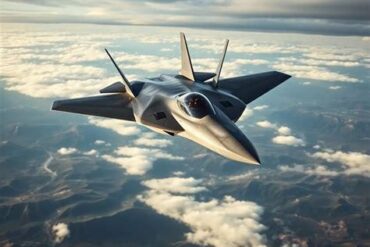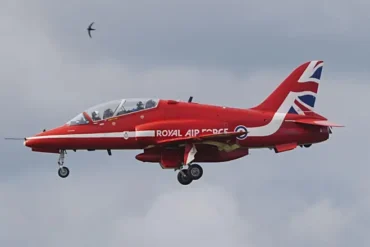
The urgency driving NATO’s sweeping fighter fleet modernization is not subtle—it is strategic, calculated, and rooted in a stark reassessment of 21st-century warfare realities. The war in Ukraine shattered long-standing assumptions about stability in Europe, exposing vulnerabilities that had been quietly tolerated for decades. Air forces that once relied on upgraded Cold War-era platforms suddenly found themselves confronting the uncomfortable truth: legacy aircraft are no longer sufficient in high-end conflict scenarios dominated by stealth, data fusion, and electronic warfare supremacy.
For NATO nations, replacing ageing fighter fleets is no longer a matter of modernization cycles or budget convenience. It has become a race against time, where deterrence credibility depends on the ability to outmatch adversaries not just in numbers, but in technological sophistication and networked combat capability. The stakes are enormous, and the response has been equally dramatic.
The Strategic Shock That Redefined NATO Priorities
Russia’s 2022 invasion of Ukraine served as a brutal wake-up call. While NATO had long maintained a posture of collective defense, the scale and persistence of the conflict revealed how quickly regional instability can escalate into a systemic threat. Air power, once seen as a supporting arm, re-emerged as a decisive factor in shaping battlefield outcomes and strategic deterrence.
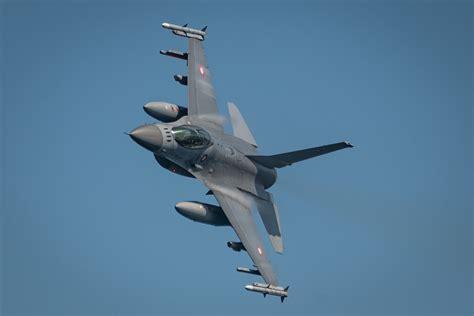
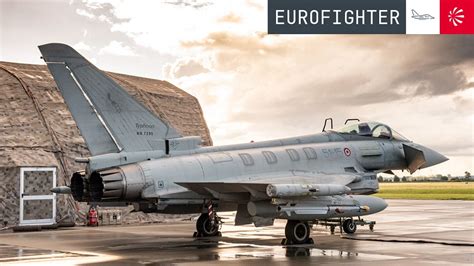
European defense planners began reassessing their inventories with renewed urgency. Aircraft such as the F-16 Fighting Falcon, Panavia Tornado, and older variants of the Eurofighter Typhoon suddenly appeared outdated in the face of modern integrated air defense systems and stealth-enabled adversaries. Even more concerning was the realization that Russia retains a willingness to absorb heavy losses, altering traditional calculations of risk and engagement.
The presence of advanced Russian platforms like the Sukhoi Su-57—even in limited numbers—further reinforced the need for NATO to prioritize stealth, survivability, and long-range engagement capabilities. The result is a continent-wide push to rebuild air superiority from the ground up.
The F-35 Lightning II: Backbone of NATO’s Airpower Transformation
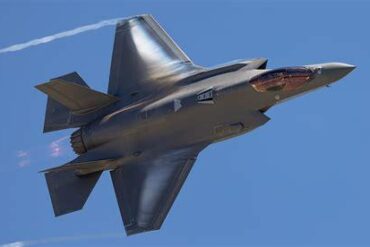
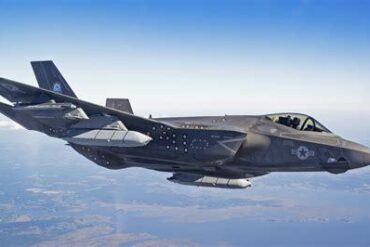
At the center of this transformation lies the Lockheed Martin F-35 Lightning II, a platform that has rapidly become the cornerstone of NATO’s future air combat doctrine. Unlike traditional fighters, the F-35 is not merely an aircraft—it is a data-centric combat system designed to dominate across multiple domains.
The scale of adoption is unprecedented. By 2035, Europe is expected to host around 600 F-35 aircraft, operated by a majority of NATO member states. This widespread integration is not coincidental; it reflects a shared understanding that interoperability and unified battlefield awareness are critical advantages.
What sets the F-35 apart is its ability to function as a “digital quarterback”, orchestrating complex operations in real time. Through advanced sensor fusion and secure data links, it can detect, classify, and share targeting information across air, land, and sea assets. This transforms the battlefield into a highly coordinated network, where every participant benefits from a single, coherent operational picture.
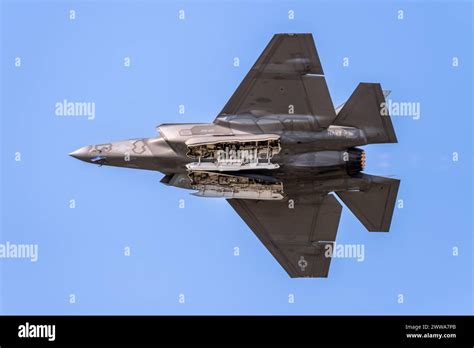
Despite criticisms regarding its maneuverability compared to legacy fighters, the F-35 compensates with stealth penetration, beyond-visual-range engagement, and unmatched situational awareness. In modern warfare, the ability to strike without being seen often outweighs the need for close-range dogfighting agility.
Interoperability as a Force Multiplier
One of the most compelling reasons behind NATO’s shift toward the F-35 is its role in creating a unified combat ecosystem. Historically, multinational operations were hindered by incompatible systems and fragmented communication channels. The F-35 eliminates these barriers by enabling real-time data sharing across allied forces, regardless of national origin.
This capability allows older aircraft to remain relevant. A non-stealth platform like the Rafale or Typhoon can launch weapons guided by targeting data provided by an F-35 operating deep within contested airspace. The result is a layered combat strategy, where each platform contributes its strengths without exposing itself unnecessarily.
This interconnected approach represents a profound shift in military thinking. Victory is no longer determined solely by individual platform performance, but by the collective efficiency of an integrated network.
Political Friction and Procurement Dilemmas
The rapid adoption of the F-35 has not been without controversy. Concerns over strategic dependence on the United States have sparked debate across Europe. Some nations worry about the implications of relying on a platform where critical systems and software are controlled externally.
Countries like Denmark and Switzerland have openly questioned the potential for operational restrictions, often referred to as a hypothetical “kill switch.” While such concerns remain speculative, they highlight a deeper issue: the tension between technological superiority and sovereign control.
At the same time, many NATO members have chosen pragmatism over hesitation. Nations including the United Kingdom, Germany, and Canada have continued procurement, prioritizing collective defense capabilities over political uncertainty. The logic is straightforward—shared threats demand shared solutions, even if they come with compromises.
The Evolution of Air Combat: From Dogfights to Data Wars
The transition from legacy fighters to fifth-generation platforms marks a fundamental change in how wars are fought in the air. Traditional metrics such as speed, climb rate, and maneuverability are being overshadowed by data processing power, sensor integration, and electronic warfare capabilities.
In this new paradigm, the fighter pilot becomes less of a lone tactician and more of a node within a vast information network. Decisions are informed by a continuous stream of data, enabling faster and more precise responses to evolving threats.
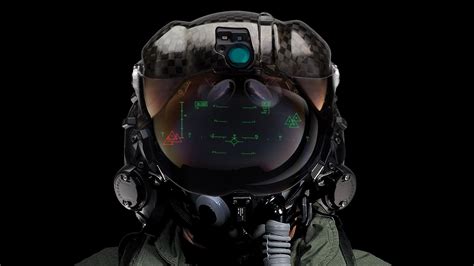
The F-35 exemplifies this shift. Its ability to passively detect enemy systems without emitting signals allows it to operate with a level of stealth and discretion previously unattainable. Combined with AI-enhanced systems, it reduces pilot workload while increasing mission effectiveness—a critical advantage in complex combat environments.
Bridging the Gap with 4.5-Generation Fighters
While the F-35 dominates headlines, it is not the only solution. Many NATO countries are investing heavily in advanced 4.5-generation fighters as a cost-effective bridge toward future technologies. Aircraft such as the Eurofighter Typhoon Tranche 5 and Dassault Rafale F4 remain formidable platforms, especially when upgraded with modern avionics and weapons systems.
These fighters offer exceptional performance, high payload capacity, and operational flexibility, making them indispensable for a wide range of missions. With the integration of advanced radar systems, electronic warfare suites, and AI-assisted decision tools, they are evolving into highly capable assets that complement stealth platforms.
France’s development of the Rafale F5 illustrates this approach. Designed to operate alongside autonomous drones and deploy next-generation weapons, it aims to deliver near-fifth-generation capabilities without full stealth dependency. This hybrid model provides a practical pathway for nations balancing budget constraints with operational demands.
Dispersed Operations and Tactical Flexibility
Not all modernization efforts focus on high-end stealth platforms. Sweden’s Saab Gripen E/F represents a different philosophy—one centered on resilience and adaptability. Designed for dispersed operations, the Gripen can operate from short runways, highways, and remote airstrips, reducing vulnerability to enemy strikes.
This capability aligns with NATO’s evolving doctrine of distributed air operations, where forces are spread across multiple locations to complicate targeting efforts. In a conflict where airbases are prime targets, such flexibility can be a decisive advantage.
Moreover, the Gripen’s integration of AI-assisted systems and advanced electronic warfare capabilities ensures that it remains competitive despite its relatively lower cost. It demonstrates that modernization is not a one-size-fits-all endeavor, but a strategic balancing act between capability, survivability, and affordability.
The Sixth-Generation Horizon: Preparing for the Next Leap
Even as fifth-generation fighters enter service, NATO nations are already looking ahead to the next frontier. Sixth-generation programs such as the Global Combat Air Programme (GCAP) and the Future Combat Air System (FCAS) aim to redefine air combat once again.
These initiatives envision a future where manned fighters operate alongside autonomous “loyal wingman” drones, connected through a high-speed combat cloud. The emphasis shifts further toward network-centric warfare, where information dominance becomes the ultimate weapon.
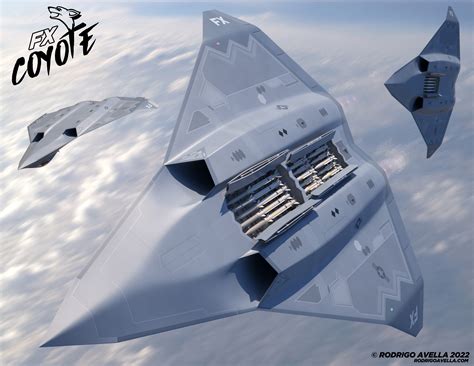
The GCAP, involving the United Kingdom, Japan, and Italy, has gained significant momentum, with structured development and international interest expanding. Meanwhile, the FCAS project, led by France, Germany, and Spain, faces challenges related to industrial coordination and political alignment.
Despite these hurdles, the direction is clear. NATO’s long-term strategy is not just about replacing ageing fleets, but about building a future-proof air combat ecosystem capable of adapting to emerging threats from technologically advanced adversaries.
Deterrence in the Age of Uncertainty
Ultimately, the race to replace ageing fighter fleets is about more than hardware—it is about maintaining credible deterrence in an unpredictable world. The presence of advanced, interoperable air forces sends a powerful signal to potential adversaries: aggression will be met with overwhelming capability.
The integration of platforms like the F-35 into NATO’s nuclear sharing framework further underscores this point. With stealth-enabled delivery systems, the alliance enhances its ability to project power while minimizing vulnerability, reinforcing the delicate balance that underpins global security.
At the same time, modernization efforts reflect a broader recognition that technological superiority must be continuously renewed. Standing still is not an option when rivals are rapidly advancing their own capabilities.
A New Era of Allied Air Power
NATO’s push to replace ageing fighter fleets marks the beginning of a new era in military aviation, defined by integration, innovation, and strategic urgency. The combination of fifth-generation stealth fighters, upgraded legacy platforms, and emerging sixth-generation concepts creates a multi-layered force structure capable of addressing a wide spectrum of threats.
What emerges is not just a stronger alliance, but a smarter and more adaptive one, where collaboration amplifies individual strengths and mitigates weaknesses. The skies over Europe are being reshaped—not by chance, but by deliberate, coordinated effort.
And if there’s one thing this transformation makes clear, it’s that air superiority is no longer just about who flies higher or faster. It’s about who sees first, decides faster, and acts with precision across an interconnected battlefield.