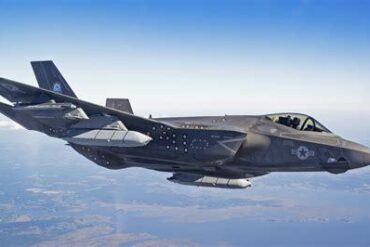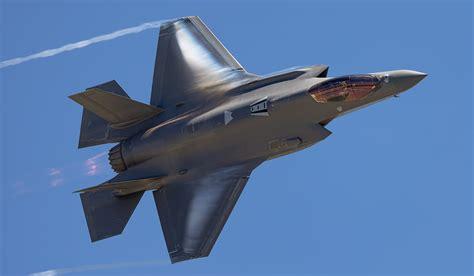
The modern fighter market has entered a decisive transition period, and no aircraft represents that shift more clearly than the Lockheed Martin F-35 Lightning II. Once criticized for delays, soaring development costs, and unfinished software architecture, the F-35 has now evolved into the backbone of Western tactical aviation. Its rise is no longer theoretical. By 2026, the aircraft has become one of the most widely deployed frontline combat jets on Earth and is rapidly closing the gap with the legendary F-16 Fighting Falcon.
The speed of this transformation is remarkable because it has happened during a time when many other fighter programs are slowing down, shrinking, or approaching retirement. Legacy fleets that dominated global air power for decades—including older F/A-18 Hornets, MiG-29s, and early Su-27 variants—are gradually disappearing from operational service. In contrast, the F-35 production ecosystem continues expanding across multiple continents simultaneously.
The result is a historic shift in air combat power. The F-35 is no longer simply another advanced stealth fighter competing for export contracts. It is becoming the standard combat aircraft for a growing number of allied air forces, fundamentally reshaping the composition of global fighter inventories.
By sheer operational scale, industrial momentum, and future procurement pipelines, the F-35 is now positioned to become the second most common fighter jet family in the world, and eventually perhaps even challenge the F-16’s long-standing dominance.
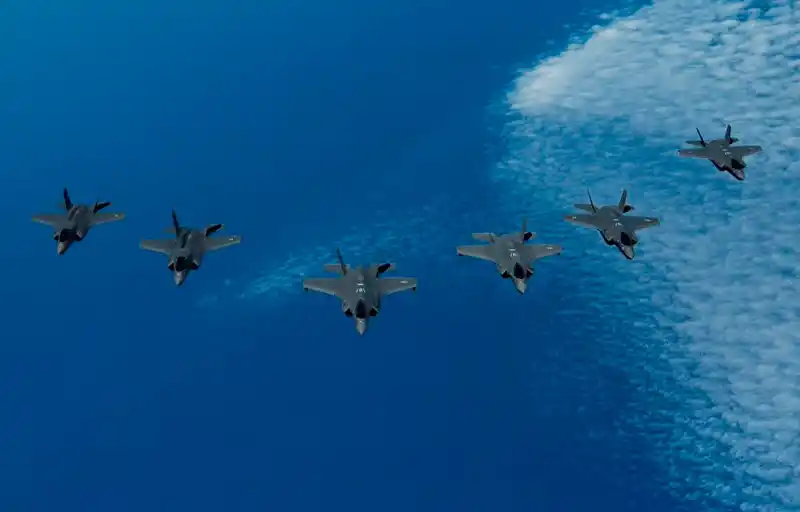
The F-35’s Rise From Troubled Program To Global Standard
The F-35 program endured years of criticism during its early development phase. Technical setbacks, software instability, maintenance complexity, and ballooning procurement costs turned the aircraft into one of the most controversial defense programs in modern history. Critics repeatedly questioned whether the aircraft would ever mature into the transformational platform promised by Lockheed Martin and the Pentagon.
Yet the strategic logic behind the program never disappeared. The aircraft was designed not merely as a fighter, but as a multi-role combat ecosystem capable of replacing several aircraft categories simultaneously. Instead of operating separate fleets for air superiority, strike missions, reconnaissance, and electronic warfare support, the F-35 consolidated those functions into a single stealth-capable platform.
That philosophy is now paying off.
The Technology Refresh 3 upgrade delays severely affected deliveries during previous years, but by 2026 those issues have largely stabilized. With TR-3 finally integrated, the pathway toward the enormously important Block 4 modernization package is now open. Block 4 will significantly enhance sensor fusion, electronic warfare capabilities, weapons integration, and processing power, pushing the aircraft closer to its intended final operational standard.
This matters because the F-35’s story is no longer centered around development promises. It is increasingly centered around real-world operational usage.
Israeli F-35I aircraft played a major role during strikes against Iranian air defense infrastructure across operations conducted in 2024, 2025, and 2026. These missions highlighted the aircraft’s stealth penetration capabilities and its ability to coordinate network-centric warfare in heavily defended environments. The jet’s survivability and sensor dominance gave allied air forces operational advantages that older fourth-generation aircraft would have struggled to achieve without massive support packages.
The aircraft has transitioned from a controversial procurement story into an active geopolitical instrument.
More Than 1,300 Aircraft Delivered And Still Accelerating
By May 2026, Lockheed Martin is estimated to have delivered approximately 1,350 F-35s across all variants, including the conventional takeoff F-35A, carrier-based F-35C, and short takeoff and vertical landing F-35B.
That number alone changes the global fighter landscape.
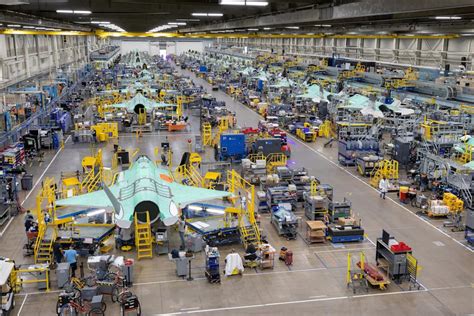
Unlike many advanced aircraft programs that remain niche fleets produced in small batches, the F-35 operates on industrial-scale manufacturing levels rarely seen in modern military aviation. Northrop Grumman’s production statistics illustrate this perfectly. The company delivered its 1,500th center fuselage for the aircraft in early 2026, with assembly lines reportedly producing one fuselage every 30 hours.
This level of manufacturing consistency is critical because fighter dominance in modern warfare depends not only on sophistication, but also on fleet size, sustainment, replacement rates, and alliance interoperability.
Many nations now structure their future air combat doctrine almost entirely around the F-35 platform. Norway, Denmark, and the Netherlands already operate the aircraft as their sole frontline fighter type. Other nations continue shifting procurement priorities away from mixed fleets toward F-35 standardization.
That trend creates a compounding effect. Every additional operator strengthens logistics networks, pilot training compatibility, maintenance infrastructure, spare parts availability, and multinational combat integration.
No Russian or European fighter program currently matches this ecosystem scale.
Why The F-16 Still Holds First Place
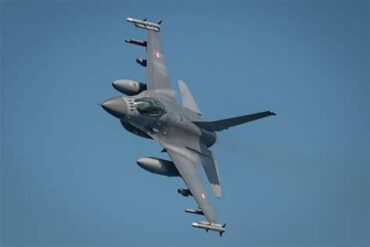
Despite the F-35’s explosive growth, the F-16 Fighting Falcon remains the world’s most common fighter jet family in active service.
The F-16’s dominance was built over nearly five decades. More than 4,600 aircraft were produced, making it one of the most successful combat aircraft programs in aviation history. Even after extensive retirements, roughly 2,100 aircraft remain operational worldwide.
The aircraft’s enduring popularity comes from several factors:
- Relatively low operating costs
- Excellent maneuverability
- Proven combat performance
- Wide export availability
- Large upgrade ecosystem
- Strong maintenance familiarity globally
Even today, countries continue purchasing upgraded F-16 variants. Taiwan, Bulgaria, and Slovakia are among nations acquiring new-build aircraft, while others continue modernizing older fleets.
However, the numbers now reveal an important reality. The F-16 fleet is gradually shrinking faster than it is expanding.
The US Air Force has significantly reduced its operational inventory. Many allied nations are replacing F-16 squadrons with F-35s instead of extending legacy modernization cycles. Although production continues, annual delivery rates remain relatively modest compared to the F-35 program.
Lockheed Martin delivered only 16 F-16s in both 2024 and 2025. Meanwhile, F-35 deliveries reached nearly 200 aircraft during 2025 due to backlog clearances associated with TR-3 delays.
That production imbalance matters enormously over time.
At current trends, the F-35 does not need decades to overtake older fighter families. It needs only sustained manufacturing momentum while legacy fleets continue retiring.
The Flanker Family Remains The Biggest Obstacle
The primary competitor preventing the F-35 from definitively claiming second place is the sprawling Su-27 Flanker family.
This family includes:
- Su-27
- Su-30
- Su-33
- Su-34
- Su-35
- Indian Su-30MKI variants
Depending on classification methods, estimates place the active global Flanker inventory somewhere between 1,000 and 1,300 aircraft. Russia, India, China, Algeria, and several smaller operators still maintain sizable fleets.
Yet the Flanker family faces structural limitations that the F-35 program does not.
First, many older Su-27 airframes are aging rapidly. Some remain technically listed in inventories despite questionable operational readiness. Satellite imagery from Russian facilities increasingly shows stored aircraft accumulating in boneyard conditions.
Second, wartime attrition has accelerated fleet pressure. Russian operations and losses since 2022 have affected several modern Flanker variants, particularly Su-34 and Su-35 aircraft.
Third, production output remains comparatively low. Russia’s annual Flanker production likely sits around only a few dozen aircraft annually, insufficient to dramatically expand global fleet numbers.
The F-35, by contrast, operates at industrial volumes that resemble Cold War production tempos more than modern boutique fighter programs.
This difference in production capacity may ultimately determine the rankings.
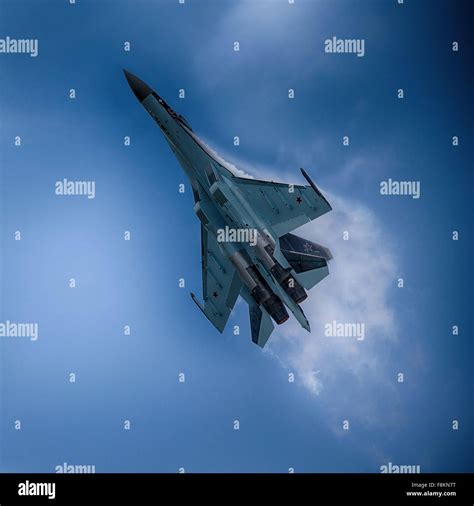
The F/A-18 Hornet Family Is Slowly Declining
The F/A-18 family once appeared capable of maintaining long-term numerical relevance alongside the F-16. Instead, it is entering a gradual decline phase.
Combined inventories of legacy Hornets, Super Hornets, and EA-18G Growlers still total roughly 1,200 aircraft globally. However, the overwhelming majority belong to the US Navy and Marine Corps.
The problem is sustainability.
Older Hornets are aging out rapidly, while Super Hornet production is nearing its conclusion. Boeing’s production line is expected to shut down around 2027 after fulfilling final US Navy orders.
Several traditional Hornet operators—including Finland, Switzerland, and Canada—have selected the F-35 as their replacement aircraft. Australia already retired its classic Hornets, while the Marines continue transitioning toward F-35B operations.
This shift demonstrates a larger trend inside Western air forces. Increasingly, militaries prefer consolidating fleets around stealth-capable fifth-generation aircraft rather than maintaining mixed fourth-generation inventories.
The F/A-18’s decline indirectly accelerates the F-35’s numerical rise.
The Strategic Advantage Of Allied Standardization
One reason the F-35 program continues expanding so aggressively is that it solves a strategic alliance problem beyond simple aircraft replacement.
Modern coalition warfare depends heavily on integrated systems. Communication compatibility, sensor sharing, targeting synchronization, logistics coordination, and electronic warfare interoperability are now essential battlefield requirements.
The F-35 was built specifically for that environment.
An American F-35 can seamlessly exchange targeting data with Dutch, Japanese, Australian, British, Israeli, or Norwegian F-35s using shared systems architecture. This dramatically enhances multinational operational cohesion.
For NATO and allied Pacific forces, standardizing around the F-35 creates an enormous strategic advantage.
Pilots train within compatible frameworks. Maintenance systems become standardized. Software upgrades distribute across allied fleets simultaneously. Shared procurement reduces long-term sustainment complexity.
No competitor currently matches this level of multinational integration.
Russian fighter exports remain constrained by sanctions, industrial bottlenecks, and geopolitical limitations. European programs such as the Rafale and Eurofighter achieve respectable export success but operate at much smaller scales. China’s advanced fighters continue growing rapidly, but their export footprint remains limited compared with Western systems.
The F-35 benefits not only from American defense spending, but from an alliance network spanning multiple continents.
China Is The Only Country Matching The Pace
While the F-35 dominates Western procurement discussions, China represents the only nation currently approaching similar fighter production momentum.
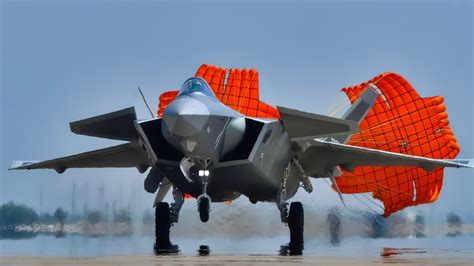
Chinese aerospace manufacturing has accelerated dramatically in recent years. Estimates suggest China delivered substantial numbers of J-20 stealth fighters, J-16 multirole aircraft, J-15 carrier fighters, and potentially early J-35 stealth variants throughout 2025.
The exact figures remain debated among analysts, but China’s production scale is unquestionably expanding.
This matters because Beijing appears committed to building a high-volume fifth-generation force rather than relying on limited prestige fleets. The J-20, in particular, is emerging as the backbone of Chinese high-end air power.
Still, China faces a different starting position.
The F-35 program already possesses a massive installed base exceeding 1,300 aircraft across numerous allied operators. Chinese fifth-generation programs are scaling rapidly, but from lower overall operational numbers.
Moreover, the F-35 ecosystem extends globally, while Chinese advanced fighters remain concentrated primarily within domestic service.
That distinction affects not only fleet size but strategic reach.
Production Capacity Is Deciding Modern Air Power
One of the most important lessons emerging from modern military aviation is that production capacity matters as much as technological sophistication.
During the post-Cold War period, many nations prioritized smaller numbers of highly advanced aircraft. But ongoing geopolitical tensions and large-scale conflicts have highlighted the importance of sustained manufacturing capability.
The F-35 program succeeds because it combines both advanced technology and mass production.
Stealth alone is not enough. Nations require replacement aircraft, spare parts, pilot pipelines, maintenance infrastructure, software support, and scalable combat readiness. The F-35 program delivers all of those simultaneously.
Annual production rates around 150 aircraft create a level of strategic resilience unmatched by most competitors. Even temporary delivery slowdowns caused by TR-3 delays did not fundamentally disrupt the long-term expansion trajectory.
Few fighter programs in history have achieved this combination of technological sophistication and manufacturing scale simultaneously.
The F-22 Raptor achieved extraordinary performance but remained numerically limited. Russian stealth programs struggle with low production volumes. European fighter manufacturing operates at comparatively modest tempos.
The F-35 occupies a unique position because it merges fifth-generation capability with sustained industrial throughput.
Why The F-35’s Dominance Is Still Growing
The most significant aspect of the F-35 story is that its rise is far from complete.
Large procurement pipelines remain active across Europe, Asia, and North America. Existing operators continue expanding orders, while additional countries evaluate future acquisitions. Block 4 upgrades promise major capability enhancements that will keep the aircraft technologically relevant deep into the 2030s and likely beyond.
At the same time, many competing fleets face irreversible decline.
Older MiG-29s continue retiring. Legacy Su-27s are disappearing from frontline duties. Hornets are aging out. F-15 fleets remain highly capable but comparatively limited numerically. Even successful European fighters lack the production volume necessary to challenge the F-35’s trajectory.
The Lightning II’s greatest strength may not be stealth, speed, or sensor fusion individually. Its greatest strength is scale.
Modern military aviation increasingly rewards aircraft programs capable of producing hundreds of interoperable frontline fighters across allied nations. The F-35 has become the clearest example of that reality.
Within only a few years, the aircraft has transformed from a controversial development program into one of the defining military aviation success stories of the twenty-first century.
And if current trends continue, the F-35 may soon stand not merely as the world’s second most common fighter jet, but as the aircraft defining the future balance of global air power itself.