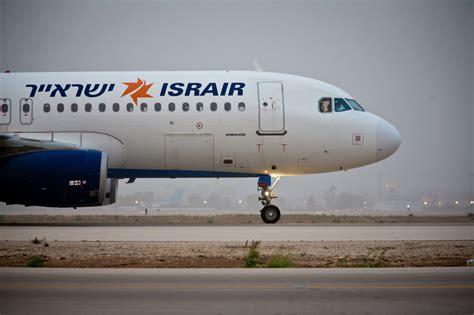
Israir Airlines Ltd., commonly known as Israir, stands as a cornerstone in Israel’s aviation landscape, balancing affordability with versatility in a market often dominated by legacy players. Headquartered in Tel Aviv, the airline began its journey in 1989 under the name Kanfei HaEmek before rebranding as Israir in 1996. Over the decades, it has transformed into the second-largest airline in Israel, outpacing Arkia during the turbulence of the COVID-19 pandemic and positioning itself just behind national carrier El Al.
Operating primarily out of Ben Gurion International Airport, with additional services from Ramon Airport and Haifa Airport, Israir manages a modest but effective fleet while maintaining a schedule of both domestic air taxi services and international charter flights. As of early 2025, the airline employs roughly 350 staff and has become synonymous with agile, customer-focused travel.
From Domestic Roots to International Reach
Israir’s origin story is closely tied to Israel’s domestic air needs. Initially serving routes such as Eilat, Haifa, Sde Dov, and Ben Gurion, the airline focused on connecting northern and southern regions efficiently. By 1999, Israir expanded into international charter flights, spreading its wings across Europe, Asia, Africa, and North America. Modeled loosely on the successful U.S.-based low-cost carrier JetBlue, Israir blended budget-friendly pricing with a customer-centric operational ethos.
In June 2004, Israir took a significant leap by initiating charter services to John F. Kennedy International Airport in New York City. This transatlantic endeavor marked a bold strategic move and culminated in scheduled flight approval by both the Israeli government and the FAA on May 1, 2006. However, persistent challenges—such as skyrocketing fuel prices and a weakened U.S. dollar—forced the airline to halt this route in September 2008.
This period also marked Israir’s foray into aircraft acquisition negotiations. The airline considered adding Airbus A350s and ultimately signed an agreement to acquire Airbus A320s—a first in Israeli aviation history, as no Israeli airline had previously purchased Airbus jets. Further modernizing its fleet, Israir introduced an Airbus A330 in 2008 to replace the wet-leased Boeing 767s on its U.S. routes.
Cultural Positioning and Controversies
Israir has made deliberate moves to court specific passenger demographics. In 2007, it launched the Sky-Torah initiative, placing Torah scrolls aboard its aircraft to provide ultra-Orthodox Jewish travelers a means to engage in prayer mid-flight. This move was widely interpreted as a competitive jab at El Al, which faced backlash from Haredi communities for operating flights during the Sabbath.
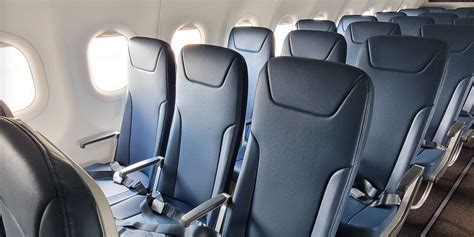
However, the airline’s marketing was not without fault. Later in 2007, Israir faced legal action from a passenger alleging false advertisement over legroom specifications. Such events reflect the inherent tension in balancing aggressive growth, customer satisfaction, and legal oversight within a high-stakes industry.
By 2008, the airline was aiming higher, applying for designated carrier status to destinations including London, Paris, Berlin, Moscow, Amsterdam, Rome, Budapest, Las Vegas, and Miami. Many of these locations had already featured in Israir’s seasonal or charter network, marking a clear transition toward becoming a regular international operator.
Post-2010 Expansion and Strategic Moves
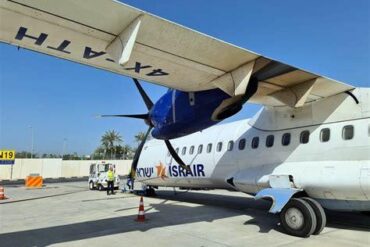
Israir’s evolution didn’t slow in the 2010s. In July 2011, the airline took delivery of the ATR 72, upgrading from its earlier ATR 42s. Yet profitability remained elusive—2014 financial statements revealed a loss of ₪18.4 million, signaling that expansion alone couldn’t offset rising operational costs.
Trouble escalated in May 2015, when one of Israir’s Airbus A320-200 aircraft was seized by authorities in Lisbon, Portugal. The seizure was linked to outstanding debts to euroAtlantic Airways, rooted in an unresolved leasing contract from 2008. This incident cast a shadow on the airline’s international credibility and signaled the need for internal restructuring.
Later that same month, El Al began merger talks involving its subsidiary Sun D’Or and Israir. While Sun D’Or was to be dissolved, the plan included El Al acquiring equity in Israir. Though the merger did not materialize, it underscored Israir’s strategic importance in the broader Israeli aviation ecosystem.
In October 2020, the airline was officially put up for auction. Bids were solicited until November 8, and interest emerged quickly. The first bid came from Rami Levy and Shalom Haim via BGI Investments. Shortly afterward, Naum Koen’s Dubai-based NY Koen Group also announced participation, indicating cross-regional investment interest in Israel’s aviation sector.
Fleet Overview: Focused and Streamlined
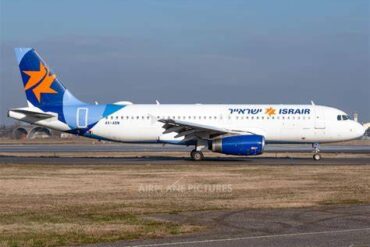
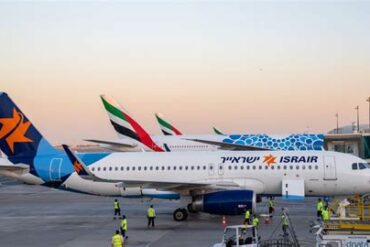
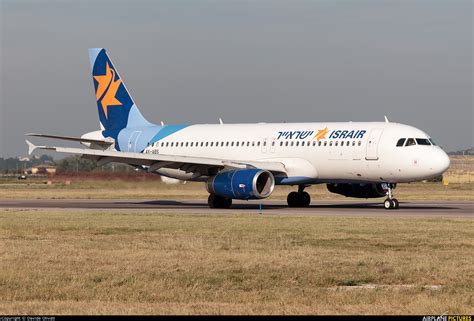
As of February 2025, Israir operates a fleet consisting exclusively of Airbus A320-200s. These eight aircraft are configured to seat 168 to 180 passengers, with one additional A320 on order. The streamlined fleet enhances maintenance efficiency, crew training, and cost management, aligning with the airline’s low-cost model.
Despite once operating long-haul jets like the A330 and leasing Boeing 767s, Israir has since abandoned transcontinental operations in favor of shorter international and regional routes. This strategic fleet simplification helps the airline maintain reliability and reduce financial exposure.
Safety Record and Operational Incidents
Israir’s operational history includes a number of notable safety-related events, none of which resulted in fatalities but did bring the airline under scrutiny.
In June 2001, an ATR 42-320 suffered irreparable damage from a hard landing at Ben Gurion Airport, though no injuries were reported. A serious near-miss occurred on July 6, 2005, when a fully loaded 767 mistakenly taxied onto an active runway at JFK, narrowly avoiding collision with a Douglas DC-8 cargo aircraft, which had to take off prematurely to evade impact.
May 2007 proved eventful. An Israir aircraft on a test flight strayed into an unauthorized zone and was nearly intercepted by Israeli F-16s. Later that same month, smoke filled the cabin of another flight during its approach to Berlin-Schönefeld, forcing an emergency landing.
In July 2008, a ground operations error in Eilat led to a mobile staircase striking an aircraft, creating a small fuselage hole. The plane subsequently flew to Ben Gurion, where the damage was discovered. A later investigation confirmed that had the flight continued on to its next scheduled international leg, a mid-air decompression event could have occurred.
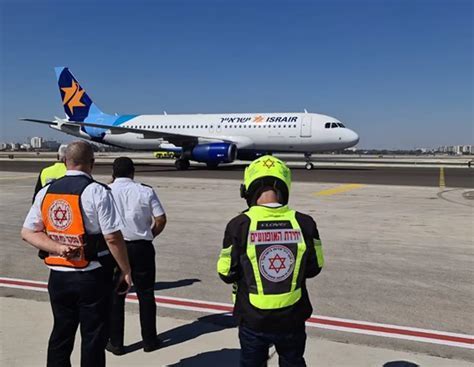
Most recently, in January 2025, a scheduled flight from Tel Aviv to London declared an emergency due to a technical issue. The aircraft was forced to circle for three hours to burn fuel before landing safely back at Ben Gurion International Airport.
Conclusion: A Strategic Player in Israeli Aviation
Israir Airlines has steadily carved out a vital niche within Israel’s aviation industry. Through a blend of strategic agility, fleet simplification, and targeted market outreach, it has emerged as a credible alternative to larger national and regional competitors. Despite financial challenges and operational missteps, Israir has maintained growth by adapting to shifting market dynamics and seizing opportunities in both domestic and international sectors.
Now under the stewardship of the Rami Levy Group, Israir continues to evolve—no longer just a low-cost alternative, but a strategic connector for Israeli travelers seeking efficiency, accessibility, and cultural accommodation in air travel.