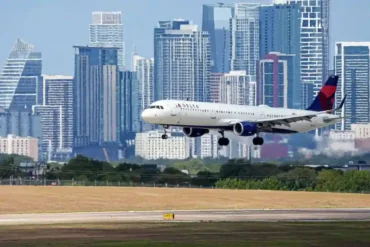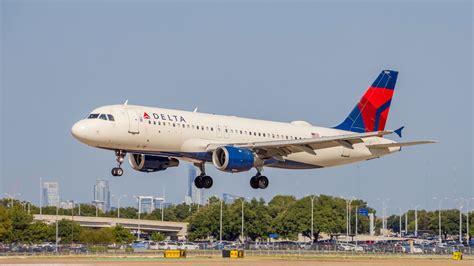
Austin Bergstrom International Airport (AUS) has witnessed a significant shift in its airline hierarchy, as Delta Air Lines has officially overtaken American Airlines to become the airport’s second-largest carrier. This strategic advancement places Delta directly behind Southwest Airlines, which continues to dominate the airport’s passenger traffic. The shift reflects not only evolving travel patterns in Austin but also the aggressive network expansion strategies pursued by Delta.
In April 2025, Delta handled over 302,000 passengers, edging past American’s 298,500. This milestone follows a steady rise in Delta’s presence in Austin, a city experiencing robust population and business growth. The success underscores Delta’s resilience and adaptability, as the carrier expanded where competitors pulled back.
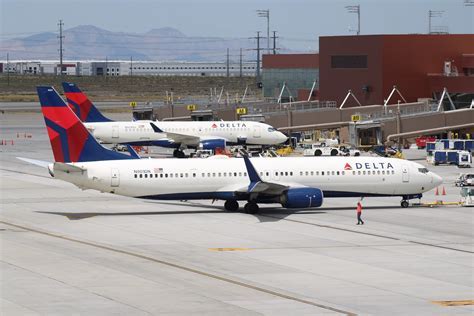
While American Airlines had comfortably held the second spot from 2021 to 2023, its position eroded following multiple route cancellations and strategic retractions. During the peak pandemic years, American’s network remained broader in Austin, but changing market dynamics and Delta’s calculated additions reshaped the competitive landscape. Notably, Delta added 16 new direct routes since 2023, with standout recent launches including service to Cancún, San José del Cabo, and Palm Springs. In contrast, American has axed 35 non-stop routes since early 2023, retreating from several high-demand leisure destinations, such as the Bahamas, Costa Rica, and Jamaica.
Delta’s Strategic Network Expansion Fuels Growth
Delta’s rise in Austin owes much to its targeted network growth. The carrier capitalized on opportunities left open by American’s retrenchment, seizing routes that align with strong demand patterns and leisure travel booms. Key domestic additions have included connections to cities like Indianapolis, Jacksonville, Las Vegas, Memphis, Nashville, New Orleans, Orlando, Panama City, and Tampa.

This calculated growth demonstrates Delta’s agile strategy in secondary markets, particularly in regions where it lacks a formal hub. Despite Texas hosting no Delta hub, the airline’s focus on Austin reveals its intent to solidify a presence in high-growth Sun Belt cities. The carrier’s Austin expansion complements broader network plans that emphasize point-to-point connectivity over traditional hub dependency.
The Competitive Landscape: Southwest Remains King
Despite Delta’s gains, Southwest Airlines maintains a commanding lead at AUS. The Dallas-based low-cost giant carried 2.6 million passengers in the first four months of 2025, accounting for 41.6% of all airport passengers. Southwest’s deep roots in Texas, coupled with its vast network and frequency advantages, continue to set a high bar for rivals. American and Delta, by comparison, represented 17.4% and 16.1% market shares respectively over the same period.
Delta’s strategy may not be to unseat Southwest in the near term but to solidify itself as a premium alternative in key domestic and leisure markets. The popularity of routes such as Austin to Atlanta—served by Delta, Frontier, and Southwest—demonstrates the demand depth that supports multiple competitors.
American’s Retreat: A Changing Strategy in Austin
American Airlines’ pullback from Austin reflects broader network recalibrations. The carrier trimmed routes that underperformed or no longer aligned with its network goals. This included cuts across both domestic and international leisure destinations. American’s remaining Austin schedule focuses on key hubs and high-yield business markets, including Dallas/Fort Worth, Chicago-O’Hare, Miami, Los Angeles, and New York-JFK.
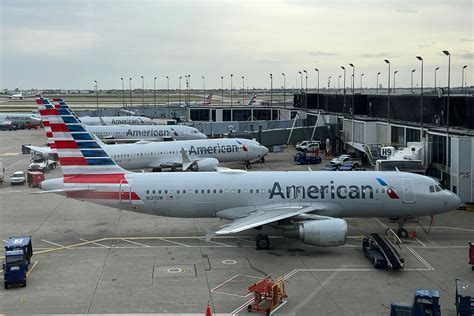
While American’s reductions provided Delta with growth opportunities, the move also signals American’s prioritization of efficiency over breadth in non-hub cities. This recalibration could pave the way for Delta to strengthen its foothold further if demand in secondary markets remains robust.
Passenger Trends and Route Performance at AUS
Austin’s growth as a tech hub and cultural destination has fueled increasing air travel demand. The city’s airport saw its busiest routes in 2024 connect passengers to Atlanta, Denver, and Dallas/Fort Worth, each with over 500,000 annual passengers. These routes highlight both business and leisure travel significance, with carriers like Delta well-positioned on the Austin-Atlanta corridor.
Moreover, the competition between Delta and American for the second-place position at AUS is likely to remain tight. April’s numbers gave Delta a slight edge, but year-to-date figures through April still saw American ahead by a narrow margin. The dynamic is fluid, influenced by ongoing route adjustments, market demand, and airline operational decisions.
Looking Ahead: Delta’s Opportunity in Austin
Delta’s recent gains at Austin Bergstrom underscore its ability to seize market share in strategic secondary cities. By offering a mix of business-friendly schedules, leisure destinations, and reliable service, Delta appeals to a broad traveler base in Austin. Its Austin growth aligns with a larger trend of airlines targeting high-growth metropolitan regions where population and economic expansion support sustained demand.
If Delta continues adding strategic routes while maintaining high service standards, it could further consolidate its position as Austin’s preferred legacy carrier alternative. The continued reshaping of Austin’s air service market illustrates the dynamic nature of U.S. aviation, where opportunity favors the agile and adaptable.