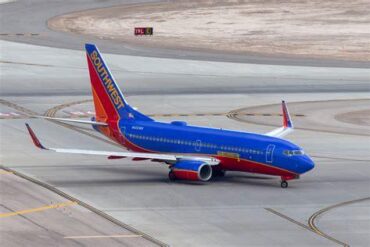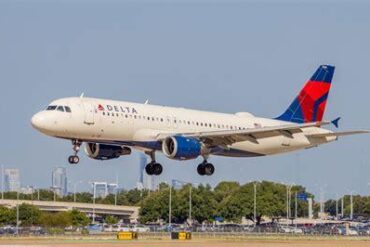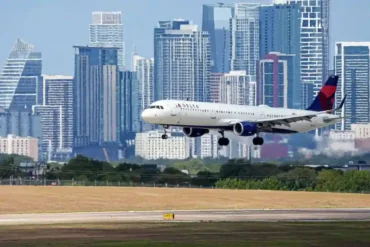
Austin-Bergstrom International Airport (AUS) has become a battleground for dominance in the rapidly growing Texas air travel market, and Delta Air Lines is now firmly in the spotlight. In a striking development, Delta has officially overtaken American Airlines to become the second-largest carrier at AUS, trailing only Southwest Airlines, which maintains its lead as the dominant operator. This seismic shift is more than a numbers game — it signals a deliberate, strategically executed push by Delta to entrench itself deeper in key domestic markets, backed by a series of bold growth decisions and tactical pivots.
Austin’s Sky Traffic Transformed: The Rise of Delta
Delta’s ascension in Austin doesn’t stem from isolated decisions but from an orchestrated blend of fleet upgrades, frequency boosts, and market-sensitive route expansion. The airline has rapidly increased its seat share at AUS, climbing to an impressive 15% of total airport capacity, according to May 2025 scheduling data. This marks a sharp contrast with American Airlines, which has seen a modest decline in its share, hovering around 13%, due in part to shifting corporate priorities and recalibrated route strategies.
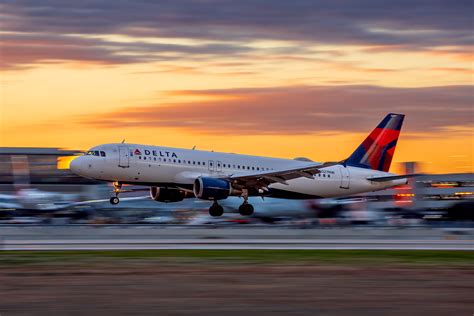
Delta’s growth isn’t a simple case of more planes on tarmacs. It reflects a multi-pronged strategy that includes:
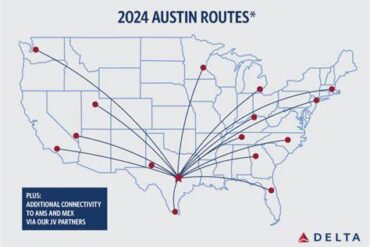
- Aggressively increasing frequencies on key domestic routes, particularly to hubs like Atlanta (ATL), Los Angeles (LAX), and New York-LaGuardia (LGA).
- Introducing new nonstop destinations tailored to both business and leisure demand, including additions like Raleigh-Durham (RDU) and Cincinnati (CVG).
- Deploying more fuel-efficient aircraft on medium-haul routes to manage operational costs while increasing capacity.
Strategic Positioning in a Competitive Market
Austin’s population surge and booming tech economy have transformed the city into a strategic battleground for airlines vying for premium traffic. With Silicon Hills increasingly mirroring the passenger profiles of Silicon Valley, carriers see AUS as a gateway to high-yield corporate travelers. Delta’s strategy aligns precisely with this demographic shift.
By leveraging its corporate partnerships and loyalty programs, Delta has captured a significant portion of this elite clientele. Programs like Delta SkyMiles Medallion and the American Express co-branded card alliance have proven instrumental in retaining frequent flyers, especially as business travel regains momentum in 2025.

Meanwhile, American Airlines has taken a more conservative posture in Austin, shifting resources toward Fort Worth and Dallas, and slowing its frequency growth in AUS. This pivot has allowed Delta to step into the void, offering more consistent schedules and better service continuity.
Operational Excellence and the Loyalty Factor
Delta’s internal emphasis on operational reliability has also contributed to its edge at Austin-Bergstrom. In the first five months of 2025, Delta led the U.S. major carriers in on-time performance, maintaining a 90.2% rate, far outpacing American’s 84.7%. This consistency is pivotal for time-sensitive travelers — a demographic Delta has actively courted.
Moreover, Delta’s revamped Austin Sky Club, which doubled in size in late 2024, has quickly become a major draw for frequent travelers. Offering everything from chef-curated meals to panoramic runway views, it reflects Delta’s commitment to elevated customer experience.
Capacity Versus Quality: A Tactical Tradeoff
What makes Delta’s rise in Austin especially noteworthy is that it’s not simply pursuing volume. It’s pursuing value-rich traffic, focusing on routes with proven revenue potential and margin strength. Rather than saturating the airport with low-yield short hauls, Delta has chosen to:
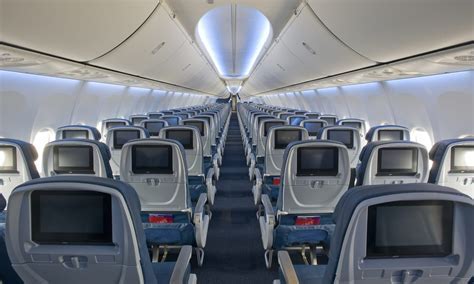
- Increase gauge on existing flights by deploying larger Airbus A321neos and Boeing 737-900s.
- Focus on time-of-day optimization for business travelers — early departures and late returns.
- Expand premium cabin offerings, including Delta One seats on selected longer-haul routes.
This is in stark contrast with Southwest’s volume-centric model and American’s more static presence. Delta is choosing precision over proliferation.
Delta’s Nationwide Realignment: Impacts From the JFK-Tel Aviv Suspension
Delta’s growth at Austin also reflects a broader strategic rebalancing across its network. In a high-profile move, the airline recently announced the suspension of flights from New York-JFK to Tel Aviv through August 2025, citing escalating geopolitical risks in the Middle East. This difficult but calculated decision has freed up aircraft and crew capacity, which Delta has redirected into domestic markets showing robust demand — like Austin.
This pivot underscores a key element of Delta’s strategy: flexibility and responsiveness. By reallocating assets from volatile regions to growth corridors like Texas, the airline demonstrates its commitment to stability, profitability, and passenger safety — all while reinforcing its domestic network.
Infrastructure Support and City Partnerships
Austin-Bergstrom’s willingness to support Delta’s growth has also played a part. The airport’s Terminal Expansion Plan, which includes five new gates set to open by late 2025, is timed perfectly for Delta’s scaling ambitions. Delta has reportedly secured preferential access to at least two of these gates, providing the physical capacity needed for its expanded presence.
City officials, recognizing Delta’s contribution to job creation and connectivity, have also extended favorable leasing terms and operational support, reinforcing a symbiotic partnership. Delta’s increased flights have directly contributed to a 9.3% year-over-year increase in AUS passenger throughput, according to the airport’s May 2025 traffic report.
Impact on Competitors and Industry Dynamics
As Delta’s influence grows, American Airlines finds itself under increasing pressure to reassert its relevance in Austin. There are signs of strategic recalibration — including a rumored uptick in American’s AUS-based flight crew hiring and possible reintroduction of select West Coast routes.
United Airlines, by contrast, has remained on the periphery of this duel, focusing more on Houston and Denver. Meanwhile, Alaska Airlines and JetBlue are concentrating on niche markets rather than directly challenging Delta’s AUS advance.
Delta’s rise is also impacting low-cost carriers. Frontier and Spirit have both seen a modest erosion of market share, unable to match Delta’s premium service levels or schedule consistency. For many travelers, especially those traveling for business or upscale leisure, the value proposition of Delta is becoming increasingly hard to ignore.
Future Outlook: Expansion, Fleet Modernization, and Sustainability Goals
Looking forward, Delta’s AUS strategy is likely to intensify. The airline has already filed scheduling requests for new nonstop routes to Salt Lake City and Detroit starting in Q4 2025. These additions would bolster connectivity to its national hub network, enabling more one-stop international connections.
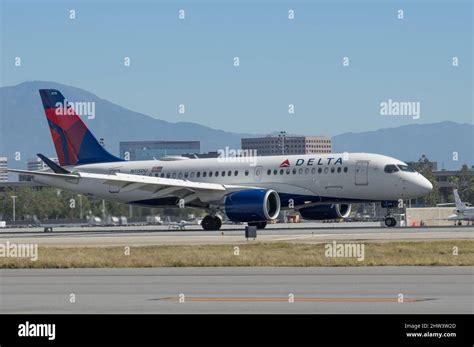
Additionally, Delta is set to begin deploying the Airbus A220-300 on select Austin routes, part of a broader fleet modernization effort aimed at reducing emissions and improving fuel efficiency. This aligns with its ambitious carbon neutrality targets, which include net-zero emissions by 2050.
Delta has also committed to enhancing its sustainability reporting transparency, recently becoming the first major U.S. airline to release an independently verified annual emissions audit. This appeals strongly to environmentally conscious corporate clients — another key segment in Austin’s fast-evolving business landscape.
Conclusion: A New Chapter in Austin Aviation
The skies over Austin are no longer merely contested — they are being reshaped. Delta Air Lines’ decisive, multi-layered expansion has transformed the competitive landscape at Austin-Bergstrom, edging past American Airlines with both precision and ambition. With superior operational reliability, savvy fleet utilization, and a clear commitment to high-value passengers, Delta is not just chasing market share — it is redefining what dominance looks like in a regional hub.
As 2025 unfolds, all signs point toward Delta entrenching itself further as the preferred premium carrier in Austin, setting a new benchmark for airline strategy in secondary U.S. markets. Whether this momentum can be sustained depends on the next moves by its rivals — but for now, Delta is flying higher than ever over Central Texas.