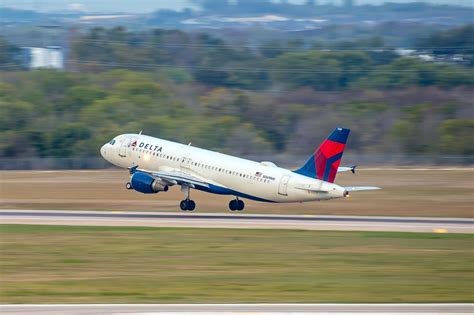
Delta Air Lines is making a decisive move in its Texas network strategy by announcing the termination of all flights at Midland International Air and Space Port (MAF) this November. The decision will cut the short-lived route between Austin-Bergstrom International Airport (AUS) and Midland-Odessa, marking the airline’s full exit from Midland and underscoring its broader pivot toward strengthening operations in Austin.
Delta’s Final Departure from Midland
The carrier launched the Austin–Midland service in April 2024 with as many as three daily flights. Despite its promise on paper, the route never gained traction. According to data from the U.S. Department of Transportation (DOT), load factors lingered below 60% throughout the past year, dipping under 55% during certain months. For an airline heavily focused on yield and efficiency, such figures made the route unsustainable.
Delta’s last flight on the route is scheduled for November 8, 2025, a day before the airline introduces new Austin–Denver flights. This timeline signals that the Midland route may have been a placeholder strategy, serving less as a commercial success and more as a tactical maneuver to maintain valuable gate access at Austin while broader expansion plans were finalized.
The move leaves Southwest Airlines as the only carrier linking Austin and Midland, operating a single daily flight. Given Southwest’s dominance in both airports and nearly half of Midland’s total market share, Delta’s withdrawal hands even more control of this regional connection to its rival.
The Strategic Role of Austin in Delta’s Growth
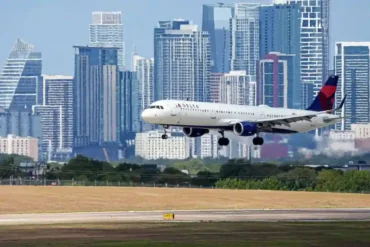
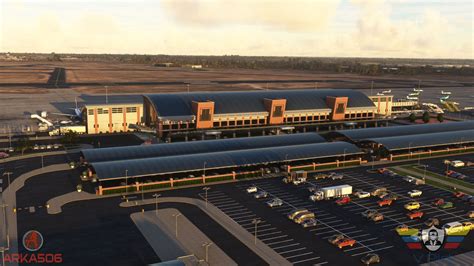
While Delta retreats from Midland, Austin has become a focal point for the airline’s Texas ambitions. In recent announcements, Delta revealed new nonstop destinations and capacity growth at Austin-Bergstrom, confirming that the city is now among its most critical non-hub growth markets.
By next summer, Delta will add Denver (DEN), Columbus (CMH), and Kansas City (MCI) to its Austin route map. In addition, it will increase frequencies to San Francisco (SFO) and Indianapolis (IND). This network diversification enhances Austin’s role as a competitive alternative for travelers who might otherwise choose Dallas-Fort Worth or Houston as their primary Texas gateway.
New and Expanded Routes from Austin
Delta’s expansion is both aggressive and carefully structured, with a mix of short-haul regional connections and high-demand city pairs. Here is a breakdown of the upcoming service launches:
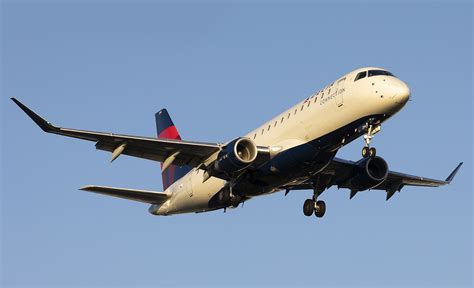
- Austin–Denver (DEN): Begins November 9, 2025, operating twice daily with Embraer 175 aircraft.
- Austin–Columbus (CMH): Starts June 7, 2026, operating once daily with Embraer 175 aircraft.
- Austin–Kansas City (MCI): Launches June 7, 2026, operating twice daily with Embraer 175 aircraft.
- Austin–San Francisco (SFO): Expands to two daily flights from April 13, 2026, up from one daily flight, using Airbus A319 aircraft.
- Austin–Indianapolis (IND): Expands to three daily flights from June 7, 2026, up from one daily flight, using Embraer 175 aircraft.
Beyond these domestic additions, Delta is preparing to launch its first two international routes from Austin in December 2025, offering nonstop flights to Cancun (CUN) and Cabo San Lucas (SJD). These routes will complement its already diverse domestic portfolio, signaling Austin’s emergence as Delta’s secondary hub-like operation in Texas.
Passenger Growth and Market Positioning
Austin’s status in Delta’s network has grown remarkably in recent years. In 2025 alone, the airline carried over one million passengers through Austin, representing a 12% increase year-on-year. This achievement solidifies Delta as the second-largest airline at Austin, just ahead of American Airlines, though still far behind Southwest Airlines, which commands the majority of the market.
By 2026, Delta plans to serve nearly 30 nonstop destinations from Austin, ranging from regional cities to leisure destinations and international sun spots. This rapid scaling represents one of the most ambitious expansions by any U.S. airline outside its traditional hubs in recent years.
Political and Economic Backing in Texas
Delta’s Austin growth has not gone unnoticed by state officials. In October 2025, the airline will open a permanent flight attendant base at Austin-Bergstrom, which is expected to generate hundreds of local jobs. Texas Senator Ted Cruz publicly praised the expansion, calling it a move that will “open more travel choices for Texans and bring hundreds of good-paying jobs to the state.”
The establishment of a crew base also highlights the airline’s long-term commitment to Austin, reinforcing that this is not a short-term play but a sustained investment in a fast-growing region.
Midland’s Limited Options Post-Delta
For Midland-Odessa, Delta’s exit reduces the already limited connectivity available. The airport currently supports only eight nonstop destinations across four airlines, with Southwest accounting for nearly half of all flights. With the loss of Delta, Midland will become even more dependent on Southwest for both regional connectivity and competitive fare structures.
While United, American, and Allegiant also maintain a presence, their route networks from Midland are relatively small and do not offer the same breadth of connections. For business travelers in the oil-rich Permian Basin, this reduced choice could translate into higher fares and fewer scheduling options, particularly on peak days.
Balancing Expansion with Efficiency
Delta’s strategy reflects a balancing act between protecting its operational efficiency and pursuing aggressive expansion. The Midland route, though strategically valuable in the short term, became a casualty of poor load performance. In contrast, Austin offers scale, profitability, and the ability to grow both domestic and international markets.
By trimming underperforming routes like Austin–Midland, Delta frees up aircraft capacity, crew scheduling flexibility, and financial resources to funnel into high-demand markets where passenger volumes and yields justify the investment.
Conclusion: A Calculated Withdrawal
Delta Air Lines’ decision to cut all flights to Midland International Airport represents more than just the end of a single route. It reflects a calculated withdrawal from a marginal market in order to double down on a city with exponential growth potential. As Austin emerges as one of the fastest-growing airports in the United States, Delta’s network expansion there shows a clear intent: to position itself as the premium alternative to Southwest in Texas.
For Midland travelers, the loss of Delta underscores the fragility of air service in smaller markets. For Austin, it signals yet another chapter in the city’s rapid ascent as a critical player in domestic and international aviation.