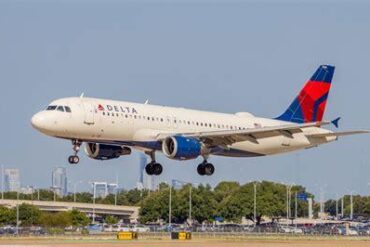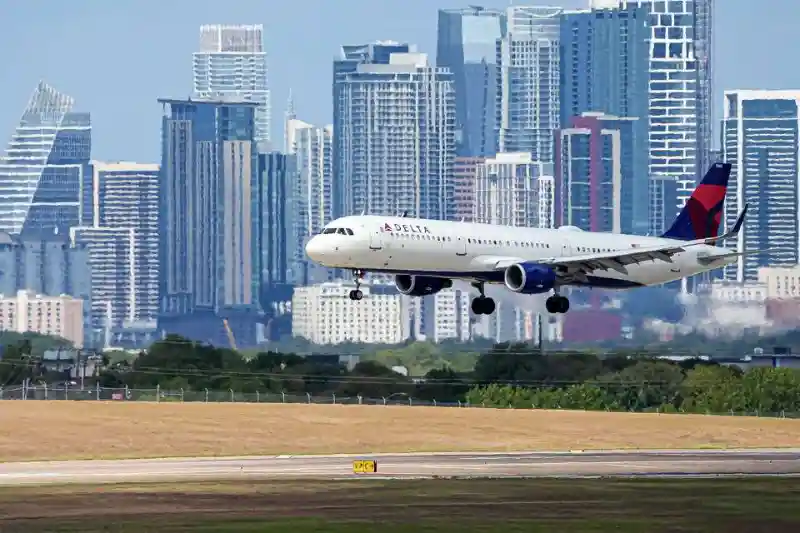
Delta Air Lines is rapidly increasing its presence at Austin-Bergstrom International Airport (AUS), fueling speculation that the Texas capital could become the airline’s next major growth city. While Delta has not announced plans to establish a traditional hub in Austin, its expanding schedule, additional airport facilities, and potential international ambitions suggest the carrier sees significant opportunity in one of America’s fastest-growing metropolitan areas.
The airline’s Austin strategy has attracted attention because of the scale of its growth. Delta is expected to operate significantly more flights from Austin than it did just a few years ago, with estimates showing an 85% increase in flights compared with 2023 levels. The expansion comes as Austin continues to strengthen its position as a major technology, business, and tourism center, creating increasing demand for nonstop air service.
Delta Air Lines Builds A Stronger Presence In Austin
Delta’s expansion at Austin is being supported by major airport improvements. As Austin-Bergstrom International Airport undergoes a substantial terminal expansion project, Delta is positioned to gain additional gates that will allow it to grow operations more efficiently. The airline is also preparing for an upgraded passenger experience with a new Delta Sky Club, giving the carrier a stronger premium presence at the airport.
The growth represents a shift in Austin’s competitive airline market. Historically, Southwest Airlines has been the dominant operator at AUS, benefiting from its extensive domestic network and long-standing presence in Texas. However, Delta has increasingly challenged that position by adding flights to important business and leisure destinations across the United States.
The airline has already announced new routes connecting Austin with Phoenix Sky Harbor International Airport and San Jose International Airport. Aviation observers have also suggested Delta may introduce its first international service from Austin, potentially opening a new chapter in the carrier’s Texas strategy. At the same time, Delta plans to discontinue some routes, including services to Memphis and New Orleans, reflecting a broader effort to adjust capacity toward stronger markets.
Austin Could Become A Strategic Focus City For Delta
Calling Austin a future Delta hub may be premature, but the city fits the airline’s broader network strategy. Delta has previously developed strong focus-city operations without creating traditional hubs, allowing it to capture demand in important markets while avoiding the complexity of building a full connecting operation.
Austin offers several advantages. The city has experienced rapid population growth, a booming technology sector, and increasing demand from corporate travelers. Companies relocating or expanding in the region have created a larger customer base for airlines seeking premium business traffic.
For Delta, additional Austin flights provide passengers with more nonstop travel options and reduce dependence on connecting through existing hubs such as Atlanta, Salt Lake City, Minneapolis, or Detroit. A stronger Austin network could help Delta compete more directly against other major carriers serving Texas.
Nine New Austin Routes Highlight Delta’s Growth Plans
Delta’s expansion plans are reflected in its growing route map. According to aviation data provider Cirium, the airline is increasing its seat capacity from Austin by approximately 14% year over year, making it one of the fastest-growing carriers at the airport.
New destinations are broadening Delta’s reach from Texas. The airline is adding service to cities such as Phoenix, San Jose, Miami, Destin, Fort Walton, Bozeman, Denver, Kalispell, Columbus, and Kansas City. These routes provide a mix of business connectivity, tourism access, and regional links that support Austin’s diverse economy.
Delta’s Austin network now includes important year-round destinations such as Atlanta, Boston, Cincinnati, Denver, Detroit, Los Angeles, Minneapolis-St. Paul, New York-JFK, Seattle, San Francisco, and Tampa. Seasonal services expand the airline’s appeal to leisure travelers with destinations including Bozeman, Cancún, Palm Springs, and San José del Cabo.
The scale of operations is also notable. In June, Delta scheduled nearly 1,800 nonstop flights from Austin, including more than 1,150 flights operated by mainline aircraft. Additional services were provided by regional partners SkyWest Airlines and Endeavor Air, demonstrating the depth of Delta’s investment in the market.
Why Austin Makes Sense For Delta’s Texas Strategy
Texas is one of the most important aviation markets in the United States, but Delta has historically had a smaller presence compared with competitors. American Airlines dominates Dallas/Fort Worth International Airport, while United Airlines maintains a powerful hub at Houston George Bush Intercontinental Airport.
Austin provides Delta with an opportunity to expand without directly challenging those established hubs. The city is large enough to support significant demand but still has room for airlines to grow. In June, Delta already ranked ahead of other major legacy competitors in Austin departures, highlighting how quickly its position has changed.
The airport’s international potential also strengthens the case for expansion. Austin already supports nonstop international routes to major destinations including London Heathrow, Frankfurt, and Amsterdam. A Delta transatlantic route could further increase the airport’s global importance and give the airline a new gateway into Europe.
Delta’s Austin Future Remains A Major Aviation Story
Delta Air Lines has not confirmed plans to transform Austin into a full hub, but its actions show a clear commitment to the market. New routes, increased capacity, expanded facilities, and possible international service indicate that Austin has become a key part of Delta’s growth strategy.
Whether Austin becomes a true Delta hub or remains a powerful focus city, the airline’s expansion is reshaping competition at one of America’s fastest-growing airports. Aviation analysts and travelers will continue watching closely as Delta’s Texas ambitions develop.