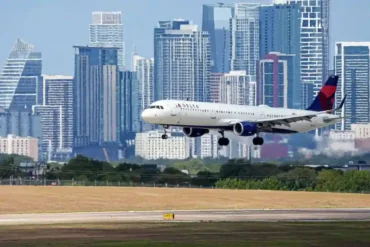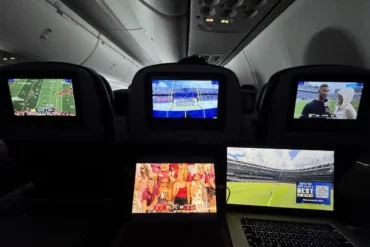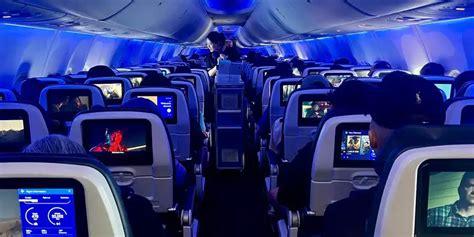
United Airlines is entering a pivotal phase in the evolution of inflight connectivity, and passengers are noticing the turbulence long before the aircraft reaches cruising altitude. As the carrier rapidly deploys SpaceX Starlink internet across portions of its domestic and regional network, mounting frustrations surrounding older Panasonic Avionics systems on long-haul routes are creating a stark contrast in passenger experience. The widening performance gap has intensified speculation throughout the aviation industry that United could eventually scale back its reliance on Panasonic for future widebody connectivity.
For years, inflight WiFi was treated as a convenience feature rather than a core component of the travel experience. That era has ended. Travelers now board aircraft expecting seamless digital access comparable to what they use at home or in the office. International passengers increasingly depend on stable internet for cloud applications, real-time collaboration tools, video streaming, VPN access, and messaging platforms during flights lasting well over a dozen hours.
On premium international routes, poor connectivity is no longer viewed as an unavoidable technical limitation. Instead, passengers increasingly interpret unreliable WiFi as a sign that an airline is falling behind technologically. That perception is becoming particularly important for United Airlines, whose global network places it in direct competition with carriers aggressively investing in next-generation onboard internet systems.
United’s transpacific operation is among the largest in the world, connecting hubs such as San Francisco, Newark, and Los Angeles with destinations including Singapore, Seoul, Sydney, Hong Kong, and Tokyo. Many of these flights exceed 14 hours in duration, creating immense demand on onboard connectivity systems as hundreds of passengers attempt to remain connected simultaneously across vast oceanic regions.
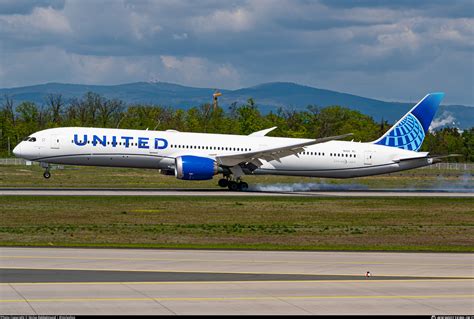
Recent complaints from travelers suggest those systems are increasingly struggling under modern usage demands. Passengers flying aboard United Boeing 777s, 787 Dreamliners, and 767 aircraft equipped with Panasonic connectivity have reported severe slowdowns, intermittent outages, and complete service failures during long-haul flights.
Social media discussions have amplified the criticism dramatically. Some travelers have mockingly labeled affected aircraft “NoWiFly” jets, a nickname reflecting growing dissatisfaction with recurring internet outages on routes where passengers often expect to work or communicate continuously for more than half a day.
One traveler described experiencing three consecutive long-haul United flights without functioning WiFi, ultimately stating they would choose alternative airlines even if it required inconvenient connections. Such complaints are increasingly damaging because connectivity expectations have fundamentally changed across the airline industry.
Starlink Is Reshaping Passenger Expectations Across United’s Fleet
The rapid expansion of Starlink across United’s regional fleet is accelerating comparisons between older satellite technology and newer low-earth-orbit connectivity systems. That comparison is not flattering for legacy providers.
Traditional inflight internet systems, including many supplied by Panasonic Avionics, typically rely on geostationary satellites positioned roughly 22,000 miles above Earth. While effective for earlier generations of inflight browsing, these systems inherently suffer from higher latency and bandwidth limitations. Data must travel enormous distances between aircraft, satellites, and ground stations, resulting in slower response times and inconsistent performance during periods of heavy usage.
Starlink operates using low-earth-orbit satellites positioned far closer to the planet. That reduced distance dramatically lowers latency while improving overall responsiveness and throughput. The result is a browsing experience that more closely resembles terrestrial broadband internet.
Passengers aboard Starlink-equipped aircraft have reported being able to stream video, participate in video calls, refresh social media feeds instantly, and use corporate cloud platforms without the frustrating buffering commonly associated with older inflight systems.
United says more than 300 regional aircraft now feature Starlink service, representing approximately a quarter of its daily departures. According to the airline, those aircraft have already supported more than 167,000 flights with the new system installed.
The carrier also reports significant improvements in customer satisfaction scores tied specifically to onboard internet performance. That metric matters enormously because WiFi quality increasingly influences airline loyalty among both leisure and business travelers.

As more passengers experience high-speed connectivity on shorter domestic flights, expectations naturally carry over to international travel. Travelers who enjoy fast, uninterrupted internet on a two-hour regional route become far less tolerant when stepping aboard a 15-hour transpacific flight plagued by buffering screens and dropped connections.
That contrast is making United’s older Panasonic-equipped fleet appear increasingly outdated despite the airline’s broader technology investments.
Panasonic Still Holds Deep Roots Inside United’s Widebody Fleet
Despite rising criticism, Panasonic Avionics remains deeply integrated into United’s long-haul aircraft infrastructure. The relationship extends well beyond internet access alone.
Panasonic systems support portions of inflight entertainment architecture, cabin management technology, and integrated passenger experience systems across several aircraft types. Replacing those systems is not as simple as swapping antennas atop an aircraft fuselage.
Widebody retrofits involve extensive engineering modifications, software integration, structural certification, and maintenance downtime. Every hardware change on a commercial aircraft requires rigorous regulatory approval processes, particularly when installations affect avionics systems or fuselage structures.
That complexity helps explain why Starlink deployment has moved far faster across regional aircraft than on large long-haul jets such as the Boeing 777 and 787 Dreamliner.
Industry discussions suggest FAA certification reviews continue surrounding certain widebody Starlink installations. Large international aircraft face more demanding certification requirements due to their operational profiles, power systems, electromagnetic considerations, and long-duration flight conditions.
As a result, United’s international fleet remains heavily dependent on Panasonic-supported systems while certification and engineering work progresses.
Why United Is Unlikely To Cut Ties With Panasonic Overnight
Although speculation surrounding a future “divorce” between United and Panasonic continues to grow, the reality is likely to be far more gradual and operationally complex.
United has already indicated that Starlink expansion will continue through at least the end of 2027. That timeline strongly suggests many long-haul aircraft will continue operating legacy connectivity systems for another two years or longer.
The airline also faces major financial considerations. Retrofitting widebody fleets is extraordinarily expensive, particularly when aircraft already contain functioning connectivity infrastructure. Airlines must balance technological upgrades against maintenance schedules, aircraft utilization rates, and capital expenditures.
In many cases, carriers prefer phased transitions that allow aircraft to receive upgrades during scheduled maintenance checks rather than removing jets from service solely for connectivity retrofits.
There is also the possibility that some United aircraft could eventually operate hybrid or mixed-platform connectivity solutions during the transition period. Aviation technology strategies increasingly prioritize flexibility, especially as satellite communication networks evolve rapidly.
Panasonic itself is unlikely to disappear from the airline connectivity market entirely. The company maintains extensive relationships with major carriers worldwide and continues investing in upgraded satellite solutions designed to improve speed and reliability. However, the competitive landscape has shifted dramatically since Starlink entered commercial aviation.
The arrival of low-earth-orbit satellite networks has fundamentally altered passenger expectations regarding onboard internet performance. Airlines are now under pressure to deliver connectivity capable of supporting modern digital lifestyles rather than simply offering basic browsing access.
The Competitive Stakes Are Rising Across Global Aviation
United’s connectivity transition reflects a broader transformation taking place throughout commercial aviation. High-speed inflight internet is rapidly becoming a competitive differentiator rather than an optional premium feature.
Carriers that successfully deploy fast, reliable, low-latency WiFi across their fleets may gain advantages in customer loyalty, premium cabin demand, and overall passenger satisfaction. Meanwhile, airlines struggling with inconsistent legacy systems risk appearing technologically outdated even when offering otherwise strong onboard products.
This challenge becomes especially visible on ultra-long-haul flights where passengers spend 12 to 18 hours onboard and digital connectivity becomes intertwined with productivity, entertainment, and comfort.
For United Airlines, the growing contrast between Starlink-equipped aircraft and Panasonic-supported long-haul jets is placing the carrier squarely in the middle of aviation’s next major technology transition. The question no longer centers on whether legacy connectivity systems will eventually be replaced. The real uncertainty lies in how quickly airlines can modernize massive global fleets without disrupting operations or absorbing overwhelming costs.
Until that transition accelerates, some United passengers may continue boarding flights expecting broadband-like internet only to discover that crossing the Pacific still occasionally means going offline for hours at 35,000 feet.