American Airlines is preparing for one of the most significant inflight connectivity upgrades in the aviation industry, announcing plans to equip more than 500 aircraft with SpaceX Starlink WiFi beginning in early 2027. The move places the Fort Worth-based carrier squarely in the center of the escalating battle over onboard internet quality, where airlines are no longer competing simply on whether WiFi is free, but on whether it performs well enough to rival a home broadband connection at 35,000 feet.
The rollout will initially focus on American Airlines’ Airbus narrowbody fleet, particularly aircraft operating domestic and transcontinental routes where passengers increasingly expect uninterrupted streaming, gaming, video conferencing, and cloud connectivity. The airline’s decision represents a dramatic shift in strategy after years of lagging behind rivals in the race to modernize the passenger digital experience.
For years, American Airlines maintained a fragmented inflight internet model built around multiple providers, paid access systems, and uneven performance across aircraft types. While competitors such as JetBlue aggressively marketed free onboard internet and Delta Air Lines rolled out complimentary connectivity across large portions of its network, American appeared cautious. That caution is now giving way to urgency as passenger expectations evolve faster than traditional satellite systems can handle.
The airline’s adoption of Starlink signals recognition that inflight internet has transformed from a premium extra into an essential utility. In today’s market, passengers increasingly evaluate airlines based not only on seat comfort or loyalty benefits, but on whether they can remain continuously connected throughout a flight.
After years of trailing rivals, American Airlines is now attempting to leap directly into the next generation of aviation connectivity.
American Airlines Moves Beyond Basic Free WiFi
Earlier this year, American Airlines launched free WiFi for AAdvantage loyalty members across much of its domestic fleet through an AT&T-sponsored initiative. The announcement covered more than two million flights annually and represented a long-awaited modernization effort for the airline.
However, free access alone no longer differentiates an airline in the US market.
Passengers have become increasingly frustrated with slow speeds, unreliable coverage, overloaded networks, and systems that struggle to support bandwidth-heavy applications. Streaming video, cloud-based collaboration tools, multiplayer gaming, and real-time business applications place immense pressure on traditional aviation satellite systems, especially older Ku-band technology.
American’s existing connectivity ecosystem illustrates the challenge clearly.
The carrier’s domestic narrowbody aircraft equipped with Viasat’s Ka-band systems generally provide stronger performance because those satellites can support greater passenger demand simultaneously. Travelers on those aircraft often experience smoother browsing, faster downloads, and more reliable streaming capabilities.
The situation changes dramatically on much of the airline’s widebody fleet.
Many Boeing 777 and Boeing 787 aircraft still rely on older Panasonic Avionics systems using legacy Ku-band technology. These systems were designed during an earlier era of inflight connectivity, when passengers primarily checked email or loaded simple webpages rather than participating in Zoom calls or streaming high-definition content.
As a result, American Airlines currently operates with noticeable inconsistency across its fleet. One passenger may enjoy high-speed streaming on a domestic Airbus flight, while another on a long-haul international route faces sluggish speeds and limited reliability.
Starlink is intended to narrow that performance gap.
According to American Airlines Chief Customer Officer Heather Garboden, the new system is designed to deliver an “at-home level” internet experience. That phrase reflects the airline industry’s growing realization that passengers no longer compare onboard WiFi to older airline standards. They compare it to the internet experience they already have on the ground.
Why Starlink Has Become Aviation’s Most Powerful WiFi Brand
SpaceX’s Starlink system has rapidly emerged as the most disruptive force in airline connectivity because of its low-Earth-orbit satellite architecture. Unlike traditional geostationary satellites positioned tens of thousands of miles above Earth, Starlink satellites orbit much closer to the planet, dramatically reducing latency while increasing responsiveness.
This matters enormously for real-time applications.
Passengers attempting video calls, collaborative work sessions, online gaming, or live streaming notice delays immediately when satellite latency is high. Traditional systems often introduce noticeable lag that makes modern applications frustrating or nearly unusable.
Starlink’s lower latency changes that equation.
The company’s Aero Terminal hardware can reportedly support speeds approaching 1 Gbps per antenna under optimal conditions, enabling airlines to deliver connectivity levels previously unimaginable on commercial flights. Airlines already using Starlink have showcased passengers simultaneously streaming videos, playing online games, and participating in virtual meetings without major disruptions.
That performance advantage has quickly turned Starlink into a strategic marketing tool.
United Airlines has heavily promoted its Starlink rollout as part of a broader premium passenger experience strategy. Hawaiian Airlines has already equipped Airbus A321neo and A330 aircraft with the technology. Southwest Airlines is aggressively pursuing its own rollout plans, while Alaska Airlines is integrating Starlink into future fleet modernization efforts.
American Airlines could not afford to remain absent from this competitive shift much longer.

Airbus Narrowbody Aircraft Become The First Priority
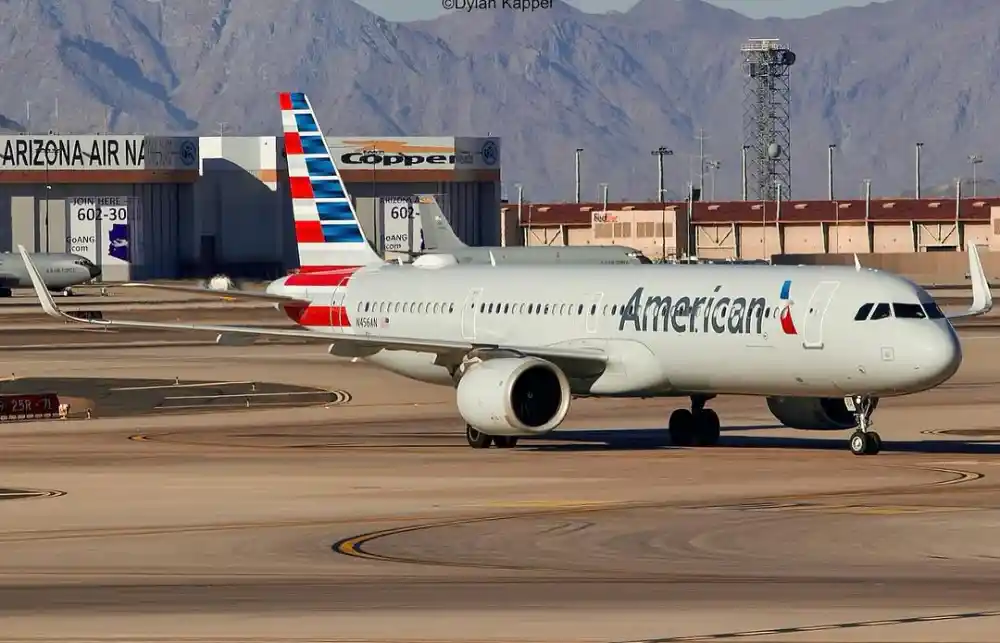
The initial Starlink rollout will center on American Airlines’ Airbus narrowbody fleet, including both current aircraft and future deliveries.
The airline currently operates nearly 500 Airbus narrowbody aircraft across multiple variants, including the Airbus A319, A320, A321ceo, A321neo, and the long-range Airbus A321XLR. More than 150 additional Airbus aircraft remain on order, giving American an opportunity to integrate Starlink during production and delivery processes rather than retrofitting every aircraft later.
The Airbus A321neo and A321XLR stand out as particularly important targets.
These aircraft are becoming the backbone of American Airlines’ future domestic and international narrowbody operations. The A321XLR, in particular, will enable thinner long-haul routes across the Atlantic and deeper into Latin America, where passengers spend significantly longer periods onboard. On those flights, weak internet connectivity becomes far more noticeable and damaging to the customer experience.
Installing Starlink on these aircraft before delivery also simplifies integration and minimizes operational downtime.
Interestingly, American Airlines is not limiting upgrades solely to its newest aircraft.
The carrier continues investing heavily in older Airbus A319 and A320 aircraft through cabin modernization programs that include larger overhead bins, seat power installations, refreshed interiors, and updated passenger amenities. Those investments strongly suggest the airline plans to keep these older aircraft operating well into the next decade.
As a result, even Airbus aircraft approaching 25 or 30 years of age may eventually receive Starlink upgrades rather than being phased out.
That decision reflects how central inflight connectivity has become to airline competitiveness. Reliable internet access is no longer treated as an optional luxury feature attached only to flagship aircraft. It is increasingly viewed as a baseline expectation across the entire fleet.
American Airlines Still Faces A Complex Mixed-Fleet Problem
Despite the scale of the Starlink announcement, American Airlines’ connectivity strategy remains highly fragmented for the foreseeable future.
The carrier operates more than 400 Boeing narrowbody aircraft, including large fleets of Boeing 737-800s and 737 MAX 8s. None of those aircraft are currently included in the Starlink rollout announcement.
Similarly, American’s long-haul Boeing 777 and Boeing 787 fleets remain outside the initial plan.
This creates a complicated operational reality.
Over the next several years, passengers flying on American Airlines may encounter dramatically different WiFi experiences depending on aircraft type, route, or fleet assignment. One flight may offer ultra-fast Starlink connectivity capable of supporting seamless streaming and productivity applications, while another may continue using older systems with more limited capabilities.
That inconsistency could become a branding challenge.
As passengers become familiar with Starlink-equipped flights, expectations will rise across the network. Travelers who experience superior connectivity on one aircraft may become increasingly dissatisfied when assigned to aircraft still using older technology.
The airline has not yet clarified whether passengers will be able to identify Starlink-equipped aircraft during booking. That detail may become surprisingly important.
Consumers already compare seat configurations, premium cabin products, and onboard entertainment systems when selecting flights. In the future, WiFi provider information may become another competitive differentiator influencing booking behavior.
The US Airline WiFi War Is Entering A New Phase
The inflight connectivity market is now splitting into two major strategic camps.
One group of airlines is embracing Starlink’s low-Earth-orbit network as the fastest path toward immediate performance improvements. United, Southwest, Alaska, Hawaiian, and now American Airlines are all moving toward Starlink deployments in varying stages.
The second camp is aligning with Amazon’s emerging low-Earth-orbit initiative known as Amazon Leo, formerly Project Kuiper.
Delta Air Lines and JetBlue have become major backers of Amazon’s platform, which takes a broader technological approach that extends beyond internet connectivity alone. Amazon aims to integrate airline connectivity with cloud infrastructure, operational analytics, data management systems, and future digital passenger services.
For airlines like Delta, that broader ecosystem could eventually create deeper long-term value than bandwidth improvements alone.
However, Amazon’s satellite infrastructure remains far behind Starlink in deployment scale and operational maturity. Starlink already possesses thousands of satellites in orbit and extensive operational experience across aviation, maritime, and consumer broadband markets.
That head start matters.
Airlines deploying Starlink in the near term may enjoy several years of measurable passenger experience advantages before Amazon Leo reaches comparable maturity. Delta and JetBlue are effectively betting that Amazon’s integrated ecosystem will ultimately outweigh the short-term benefits of Starlink’s immediate performance edge.
American Airlines appears unwilling to wait.
The carrier has spent years being perceived as reactive rather than proactive in the inflight connectivity race. Its Starlink decision represents an effort to reposition itself as a serious technology competitor before customer perception hardens further.
Starlink Could Reshape Passenger Expectations Permanently
The most important aspect of American Airlines’ Starlink rollout may not be the technology itself, but how it changes passenger behavior.
As high-speed onboard internet becomes widely available, passengers increasingly treat flights as uninterrupted extensions of daily life rather than disconnected travel periods. Business travelers expect stable collaboration tools. Leisure travelers expect streaming entertainment. Families expect multiple connected devices functioning simultaneously without performance collapse.
That shift fundamentally alters how airlines compete.
Historically, carriers differentiated themselves through seat comfort, meals, schedules, lounges, and loyalty programs. Connectivity is now joining that list as a central pillar of the passenger experience.
For American Airlines, this transition arrives later than many competitors would have preferred. Yet the airline’s decision to commit Starlink to more than 500 aircraft demonstrates recognition that the competitive landscape has permanently changed.
Free WiFi opened the door. High-performance WiFi is becoming the next battleground.
American Airlines may have entered the race behind several rivals, but its massive Starlink investment ensures it will remain a major player in defining what passengers expect from inflight connectivity during the next decade of commercial aviation.