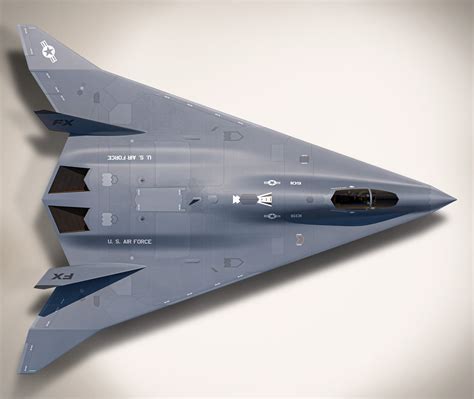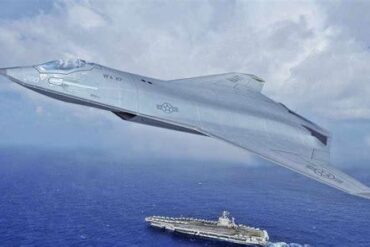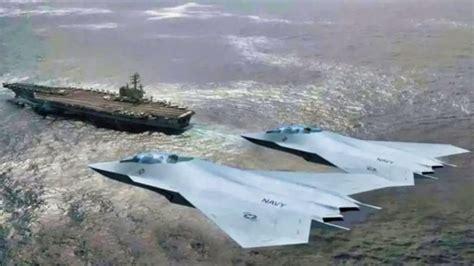
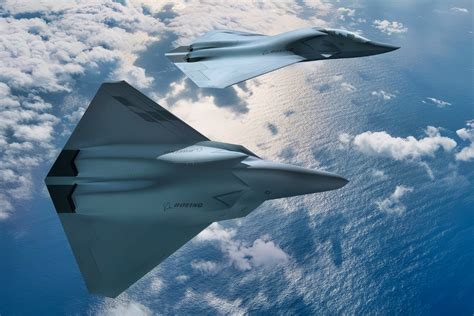
The Pentagon’s Fiscal Year 2026 budget delivers a clear and deliberate message: the future of American air dominance lies in the U.S. Air Force’s F-47 sixth-generation stealth fighter, while the U.S. Navy’s F/A-XX carrier-based jet is placed on indefinite hold. This decision signals a seismic shift in priorities, redefining the trajectory of American tactical airpower and spotlighting Boeing’s F-47 as the Department of Defense’s preferred spearhead into sixth-generation warfare.
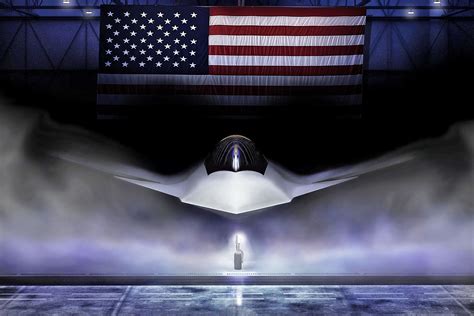
Pentagon Prioritizes the F-47 in Budget Shakeup
With $3.5 billion allocated to the F-47 program, the Department of Defense is making a historic investment in what will be the first manned sixth-generation stealth fighter. This dramatic financial commitment, announced following President Trump’s directive in March 2025, places Boeing in the lead of a program that’s expected to redefine aerial warfare with a focus on advanced stealth, AI integration, and multi-domain command capabilities.
At the same time, the Navy’s long-anticipated F/A-XX program has been sidelined, retaining a token $74 million in funding. This is meant only to keep the design effort alive for possible future revival, preserving a faint ember of hope for carrier aviation advocates.
According to a senior defense official, the decision to go all-in on the F-47 stems from an acknowledgment that the U.S. defense industrial base lacks the bandwidth to develop and produce two next-gen fighters simultaneously. “We are making a deliberate decision to get the F-47 right,” the official said. “Trying to build two at once risks spreading our engineering and manufacturing resources too thin.”
Industry Pushback and Political Undercurrents
While the Pentagon’s rationale centers on industrial capacity, this position has sparked criticism from major defense players. Boeing Defense CEO Steve Parker publicly refuted the claim, stating that the industry is capable of delivering both the F-47 and F/A-XX concurrently. Northrop Grumman, still a contender for the F/A-XX program after exiting the Air Force’s NGAD competition in 2023, also maintains confidence in parallel development paths.
Even with internal resistance, the writing appears to be on the wall. Momentum around the Navy’s program has steadily dissipated. As far back as March, a contract award announcement was expected shortly after the F-47 unveiling—but it never came. A Bloomberg report recently revealed a redirection of $500 million from the Navy’s F/A-XX to the Air Force’s F-47, underscoring the Pentagon’s shift in allegiance.
F-35 Cutbacks Reinforce the Pivot to Next-Gen
The Air Force’s pivot to the F-47 also comes at the cost of previously planned F-35 Joint Strike Fighter acquisitions. The FY2026 budget slashes procurement from 74 to 47 units, a reduction exceeding 35%. This contraction reflects not a loss of faith in the F-35 platform but rather a prioritization of sustainment, modernization, and the F-47’s more advanced capabilities.
Instead of sheer numbers, the Pentagon is reallocating resources toward critical upgrades:
- Block 4 modernization, a sweeping update package including a new radar, electronic warfare improvements, and enhanced weapons payload.
- Technology Refresh 3 (TR-3), an essential prerequisite for Block 4 implementation, plagued by delays and technical setbacks.
- A $1 billion investment in spare parts to boost fleet readiness and address the long-standing logistical quagmire dogging the F-35 program.
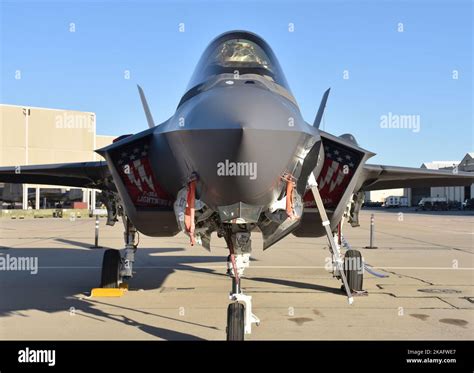
These changes aim to prop up F-35 readiness rates, which have languished due to spare part shortages, software integration woes, and maintenance complexity. The Department of Defense now appears to treat the F-35 as a stopgap until F-47 units reach operational maturity.
Why the F-47 Wins and the F/A-XX Waits
The F-47’s winning edge lies not only in timing and presidential backing but also in its land-based design advantages. While both the F-47 and F/A-XX were expected to play similar roles—including functioning as aerial command hubs for unmanned systems—the realities of carrier-based operations significantly complicate naval design requirements.
A stark reminder of this challenge can be found in the F-35 program itself: despite superficial similarities, only 20% of parts are shared between the F-35A (Air Force), F-35B (Marines), and F-35C (Navy). Naval fighters face harsher demands for landing gear durability, tailhook integration, folding wings, and catapult/barrier compatibility—all of which drive up cost and complexity.
It’s this divergence that ultimately doomed the near-term future of the F/A-XX. The Navy had reportedly insisted on pursuing F/A-XX as an independent effort, distinct from the Air Force’s NGAD (Next Generation Air Dominance) initiative, which birthed the F-47. But with budgetary pressures mounting and timelines tightening, unity—not divergence—won the day.
F-15EX, Drone Projects Get Boost Amid Fighter Cuts
While the Air Force trims its F-35 buy, it is simultaneously expanding its F-15EX Eagle II fleet. The FY2026 budget includes $3 billion to increase the planned number of F-15EX units from 98 to 129. Though not a stealth fighter, the F-15EX provides an immediately available, highly capable platform equipped with modern sensors, long-range weapons, and extended range.
Additionally, the Air Force is doubling down on its Collaborative Combat Aircraft (CCA) program with $870 million earmarked for further development. The program aims to integrate loyal wingman drones like the General Atomics YFQ-42A and Anduril YFQ-44A into future air combat operations, complementing manned assets like the F-47 with swarming AI-enabled support.
These investments signal a layered approach to future air dominance—manned, unmanned, and legacy platforms each serving unique roles within an interconnected force architecture.
Congressional Skepticism and Legislative Roadblocks
Despite the Pentagon’s commitment to the F-47 path, the budget remains subject to Congressional approval, where it could encounter turbulence. Lawmakers have voiced growing concerns over dwindling tactical aircraft inventories across services. At a recent hearing, Sen. Tom Cotton asked Gen. David Allvin, Chief of Staff of the Air Force, whether he would consider acquiring upgraded F-16s to supplement shortfalls. Allvin said he would review the possibility.
F/A-XX funding has previously drawn scrutiny from Congress, and this year may be no different. With legislative dynamics in play and looming elections, there’s always the potential for budget reshuffling. That said, the current administration appears laser-focused on fast-tracking the F-47, presenting it as the central pillar of U.S. airpower for the coming decades.
Lockheed Martin’s Hail Mary: The F-35 “Ferrari” Upgrade
As the defense ecosystem reshapes around the F-47, Lockheed Martin, the F-35’s prime contractor, has floated a radical concept to stay in the game: a high-performance upgrade dubbed the “Ferrari” or “NASCAR package” for the F-35. This initiative would theoretically offer 80% of sixth-gen capability at half the cost—a bold, unverified claim.
Though the concept is still embryonic, it highlights industry concern over being sidelined by the F-47’s rise. If F-47 development suffers unforeseen delays—or if the Navy demands an immediate next-gen solution—the F-35 upgrade path could serve as a contingency hedge.
Future of Sixth-Generation Warfare Centers on F-47
For now, the Pentagon’s direction is unmistakable: the F-47 is the cornerstone of sixth-generation airpower. Whether the Navy eventually adopts a navalized variant or revives F/A-XX at a later date remains speculative. Still, the focus is squarely on executing the F-47 program with speed and precision.
“The department is dedicated to sixth-generation capability,” a senior military official declared. “Right now, the F-47 is the leading agent of that.”
In a budget cycle that reshapes the airpower landscape, the F-47 has emerged as the Department of Defense’s golden child, Boeing’s biggest strategic win in years, and the vanguard of American dominance in skies to come.