
United Airlines’ plan to take a $100 million minority stake in Azul Linhas Aéreas has entered an unexpected holding pattern after Brazil’s antitrust authority halted final approval, reopening a review that many in the industry believed was already complete. The pause, initiated by CADE—Brazil’s Administrative Council for Economic Defense—has reintroduced regulatory uncertainty into a deal that sits at the intersection of foreign investment, airline competition, and post-pandemic financial recovery in Latin America’s largest aviation market.
At its core, the transaction is modest. United is not seeking control, management authority, or a merger pathway. The proposed investment would lift United’s holding from roughly 2% to about 8%, reinforcing a commercial partnership that already exists between the two carriers. Yet in today’s regulatory climate, even non-controlling equity stakes can raise red flags, particularly when they involve network coordination on high-value international routes.
The sudden reassessment reflects a broader tension shaping global aviation policy: regulators are increasingly wary of partnerships that fall short of mergers but still have the potential to reshape competitive dynamics. In Brazil, where aviation consolidation has long been politically and economically sensitive, that caution has now been placed squarely on United’s Latin American strategy.

Regulatory Optimism Gives Way to Procedural Reality
Early reporting had suggested that CADE had effectively cleared United’s investment, creating a sense that the deal was entering its final, administrative phase. That assumption proved premature. A request from IPC Consumo, a consumer advocacy organization, prompted one of CADE’s internal bodies to escalate the case to the agency’s tribunal, triggering a formal suspension of final approval.
CADE President Gustavo Augusto Freitas de Lima made clear that the pause is procedural rather than punitive. IPC Consumo has been granted a non-extendable 15-day window to submit documentation supporting its concerns. Failure to do so would result in the request being summarily dismissed. Until that process concludes, however, the investment cannot be finalized.
This distinction matters. The deal has not been rejected, nor has CADE reversed earlier findings. Instead, the regulator is signaling that it wants a more complete evidentiary record before allowing a foreign carrier to deepen its financial ties with one of Brazil’s most strategically important airlines.

Why a Minority Stake Still Draws Scrutiny
From a purely numerical standpoint, United’s planned stake in Azul appears unlikely to confer decisive influence. There is no proposal for board dominance, voting control, or management integration. Yet CADE’s focus appears to be on cumulative influence, not formal control. Equity ownership, when layered on top of an existing commercial partnership, can subtly alter incentives in ways that are difficult to unwind.
United already operates a substantial Brazil–US network and relies on Azul’s dense domestic footprint to funnel passengers from secondary Brazilian cities into international gateways. Regulators are now examining whether a deeper financial alignment could reduce competitive tension on certain routes, influence pricing behavior, or discourage Azul from pursuing alternative partnerships.
In Brazil’s regulatory philosophy, aviation competition is not assessed solely by ownership thresholds. Market structure, route overlap, and long-term strategic behavior all matter. CADE’s tribunal review gives the agency room to explore these dimensions without presuming that the outcome must be negative.
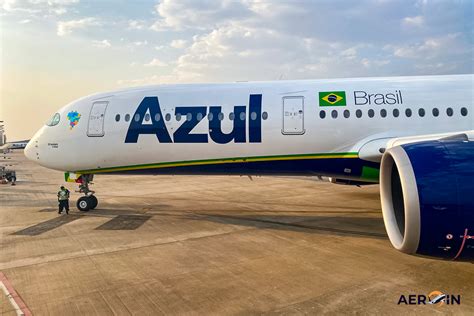
United’s Latin American Logic
For United, the Azul investment fits neatly into a broader pattern. Rather than pursuing mergers—which are politically fraught and operationally complex—the airline has favored targeted equity investments that enhance network reach while preserving local autonomy. Similar approaches have been deployed in other regions, allowing United to extend its global footprint without absorbing balance-sheet risk or regulatory backlash associated with full consolidation.
Brazil is particularly important in this calculus. Azul’s network reaches dozens of cities that United cannot serve economically with its own aircraft. By strengthening ties with Azul, United effectively expands its addressable market in Brazil beyond São Paulo and Rio de Janeiro, capturing traffic flows that would otherwise be inaccessible.
This is not about domination; it is about connectivity density. In an era where long-haul profitability depends heavily on feed from secondary markets, Azul represents a strategically elegant solution for United’s Latin American ambitions.
Azul’s Financial Stakes Are Higher
While United can afford patience, Azul’s position is more delicate. The Brazilian carrier has been navigating a challenging financial landscape shaped by high leverage, currency volatility, and the lingering aftershocks of pandemic-era restructuring. The proposed $100 million infusion was widely interpreted as both a financial stabilizer and a symbolic endorsement from a major global airline.
Such endorsements matter. They influence creditor confidence, investor sentiment, and the carrier’s ability to negotiate future financing on reasonable terms. A prolonged regulatory delay does not derail Azul’s operations, but it complicates strategic planning and injects uncertainty into a balance sheet that has little appetite for surprises.
The timing is also notable. Talks between GOL and Azul over a potential merger collapsed recently, underscoring how politically sensitive airline consolidation remains in Brazil. Against that backdrop, CADE is acutely aware that even incremental moves can be perceived as steps toward market concentration.
A Signal of Broader Regulatory Trends
The pause in United’s Azul investment is not an isolated event. Across jurisdictions, regulators are recalibrating how they assess airline partnerships that stop short of mergers but still deepen coordination. These arrangements often promise consumer benefits through better connectivity, yet they also blur the line between cooperation and consolidation.
Brazil has historically taken a firm stance on aviation competition, particularly on international routes where pricing power can quickly concentrate. CADE’s decision to elevate the review to its tribunal aligns with this tradition. It reflects caution, not hostility, and suggests that any eventual approval may come with behavioral conditions designed to preserve competitive independence.
What Happens Next
Once IPC Consumo submits its documentation—or fails to do so—CADE’s tribunal will evaluate whether further remedies are required. There is no fixed timeline. The review could conclude swiftly or extend for months, depending on the complexity of the issues raised and the data requested from United and Azul.
Possible outcomes range from unconditional approval to conditional clearance requiring specific commitments. These could include limits on coordination, transparency obligations, or safeguards ensuring that Azul retains strategic flexibility in its partnerships.
Despite the delay, neither airline has signaled an intention to walk away. United’s interest in Brazil remains structurally sound, and Azul remains one of the most compelling partners in the region. The current pause underscores how even well-calibrated, minority investments must now navigate a regulatory environment that prizes caution over speed.
In the end, CADE’s final decision will shape more than a single transaction. It will help define how Brazil views foreign airline investment in an era where influence is measured not just in shares owned, but in networks aligned.