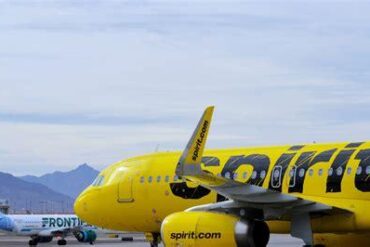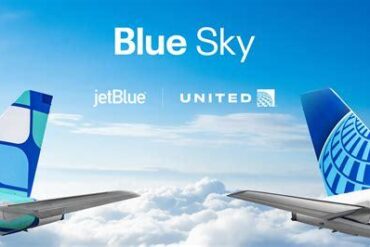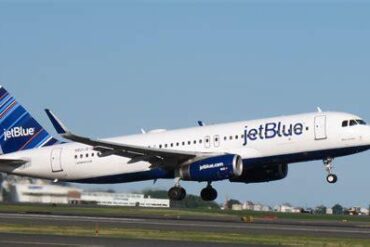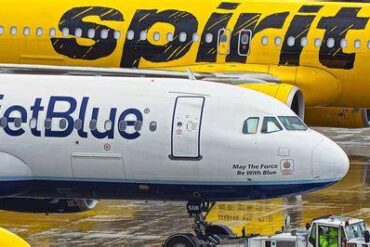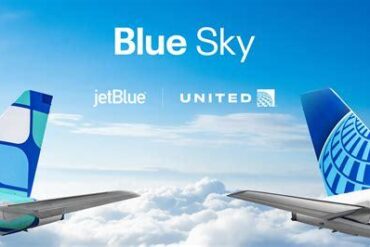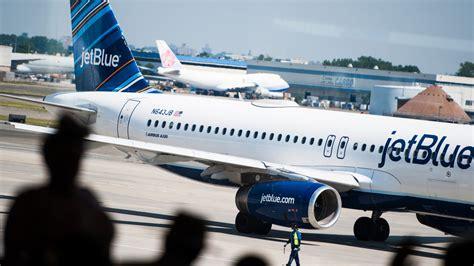
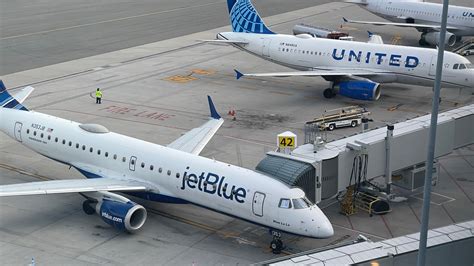
The evolving landscape of the U.S. aviation industry is once again under scrutiny as Spirit Airlines raises formal objections to the proposed “Blue Sky” alliance between JetBlue Airways and United Airlines. The budget carrier has filed a complaint with the U.S. Department of Transportation (DOT), voicing serious antitrust concerns over the potential collaboration that could reshape market dynamics in critical regions such as New York’s JFK Airport and Boston Logan International Airport (BOS).
Spirit Airlines Targets ‘Blue Sky’ Proposal with Antitrust Alarm Bells
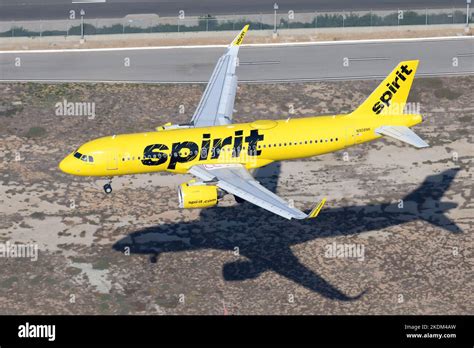
Spirit Airlines, long recognized for its ultra-low-cost carrier model, is no stranger to regulatory showdowns in the competitive skies of North America. In its latest salvo, Spirit has demanded that the DOT extend its review period for the JetBlue–United proposal and ensure the partnership undergoes rigorous public scrutiny.
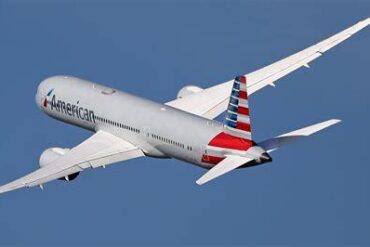
Spirit’s concern stems largely from the alliance’s apparent similarity to the now-defunct Northeast Alliance (NEA) between JetBlue and American Airlines. That arrangement, which aimed to coordinate schedules, loyalty programs, and operations in the Northeast, was dissolved by a U.S. District Court in 2023 after being deemed in violation of federal antitrust laws.
What alarms Spirit is the perceived structural echo of the NEA embedded within the new “Blue Sky” partnership. According to Spirit, this arrangement could potentially blur competitive boundaries, entrench legacy carriers, and erode independent pricing strategies — all at the expense of passengers and market diversity.
JetBlue’s Evolving Role: Subsidiary or Strategic Partner?
At the heart of Spirit’s objection lies a provocative claim: that JetBlue, through the “Blue Sky” alliance, risks operating more like a subsidiary of United Airlines than an independent competitor. Spirit argues that this arrangement undermines JetBlue’s autonomy, compelling it to prioritize alliance synergies over price competitiveness.
One of the core concerns revolves around loyalty reciprocity. The proposed alliance suggests that JetBlue’s customers could earn and redeem United MileagePlus points, effectively binding JetBlue’s financial performance to United’s loyalty ecosystem. Spirit warns that such integration obligates JetBlue to purchase United miles, a cost likely to cascade down to consumers through higher fares and reduced pricing flexibility.
Beyond the loyalty framework, Spirit raises the alarm on slot access and airport dominance. In congested hubs like JFK and Boston Logan, where runway capacity and gate availability are limited, alliances between major carriers could entrench their market power, making it increasingly difficult for smaller or new entrants to gain a foothold.
A Cautionary Parallel: The Northeast Alliance Fallout
Spirit’s opposition is rooted in recent legal precedent. In 2023, a U.S. judge struck down the Northeast Alliance (NEA) after finding that JetBlue and American Airlines’ coordination distorted competition across key markets. The court highlighted how shared corporate accounts, integrated loyalty programs, and coordinated schedules effectively reduced consumer choice, elevated fares, and suppressed rival airlines.
In its filing to the DOT, Spirit cleverly points to United Airlines’ own previous opposition to the NEA, where United championed full transparency and called for public scrutiny of competitive impacts. Spirit now demands the same level of regulatory rigor for the “Blue Sky” initiative.
While public details about “Blue Sky” remain scarce, the structural blueprint suggests overlaps with NEA’s criticized model, especially in terms of loyalty alignment, corporate travel programs, and synchronized operations in congested, high-value airports.
The High-Stakes Battle Over Airport Slots and Market Access
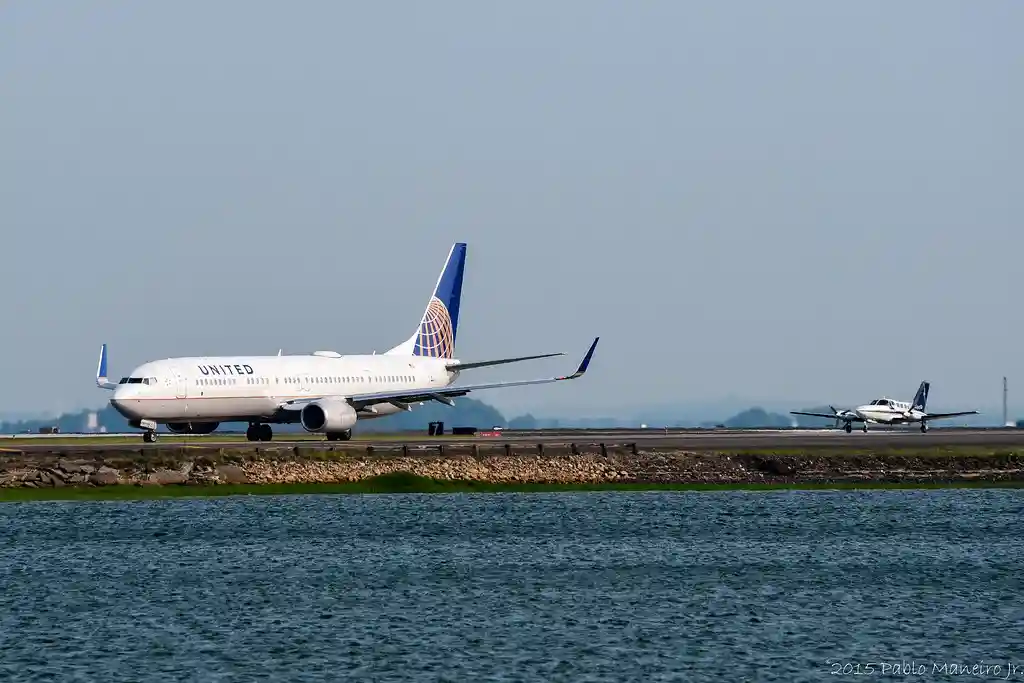
One of the most critical factors in this dispute is airport slot access, particularly at JFK and BOS. These constrained hubs operate under slot-controlled systems, where carriers must possess designated takeoff and landing rights. Such limitations naturally create competitive choke points, making slot ownership a powerful tool to dominate regional air travel.
Spirit warns that the “Blue Sky” alliance could enable United to reassert control over these coveted slots, either by directly regaining lost positions or indirectly leveraging JetBlue’s footprint. This consolidation of slot control, Spirit argues, could reduce operational space for low-cost carriers and new entrants, undermining competition and diminishing consumer benefits.
Scale Versus Competition: The Structural Shift in U.S. Aviation
Spirit’s challenge is emblematic of a broader industry trend where scale and network integration increasingly eclipse price competition as the dominant forces shaping airline economics. Loyalty programs, co-branded credit card partnerships, and global alliances have become indispensable revenue streams, creating a system where unaligned, low-cost carriers struggle to survive.
In this context, the “Big Four” — American Airlines, Delta Air Lines, United Airlines, and Southwest Airlines — have cemented formidable market positions through expansive networks, lucrative partnerships, and deep-rooted loyalty ecosystems. Smaller carriers like Spirit, Frontier, or Allegiant often lack these structural advantages, leaving them vulnerable to market consolidation that subtly sidelines them.
Spirit’s Dilemma: Compete, Consolidate, or Challenge the System?
While Spirit’s antitrust warnings underscore legitimate concerns about competitive fairness, they also expose the harsh realities of operating outside the dominant network-driven framework. Without expansive partnerships, robust loyalty programs, or global alliances, ultra-low-cost carriers risk marginalization.
Some industry analysts suggest that the solution may not lie in prohibiting partnerships like “Blue Sky” outright, but rather encouraging consolidation among smaller carriers to level the playing field. Spirit’s failed merger with JetBlue, which was blocked by the U.S. Department of Justice in 2023, reflects both the challenges and complexities of such consolidation efforts.
Ironically, had the Spirit–JetBlue merger succeeded, Spirit might now be advocating for partnerships rather than opposing them. Instead, Spirit faces an uphill battle to defend its turf against increasingly coordinated, loyalty-driven giants.
Looking Ahead: Regulatory Scrutiny and the Future of ‘Blue Sky’
The fate of the “Blue Sky” alliance will hinge on how regulators interpret its structural implications and whether the DOT and other oversight bodies believe the partnership crosses the antitrust threshold. The parallels to the Northeast Alliance case, combined with the current climate of heightened antitrust enforcement under the Biden administration, suggest a challenging path ahead for United and JetBlue.
Moreover, the aviation industry faces mounting public and political pressure to preserve competition, affordability, and accessibility. In this environment, any alliance that risks consolidating market power or diminishing consumer choice is likely to face fierce regulatory resistance.
Spirit’s proactive challenge positions it as both a defender of low-cost competition and a symbol of the systemic headwinds facing independent carriers. The outcome of this dispute will not only shape the future of the “Blue Sky” alliance but also signal how the U.S. aviation sector balances the twin imperatives of scale and competition in an increasingly consolidated market.
The coming months will reveal whether the DOT grants Spirit’s request for an extended review period and public comment window. For now, the battle lines are drawn, with legacy carriers on one side and low-cost challengers on the other, each vying to define the future competitive landscape of American air travel.