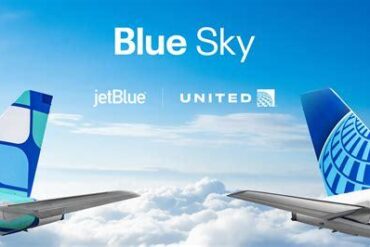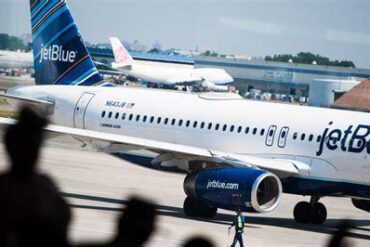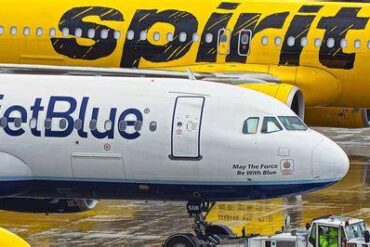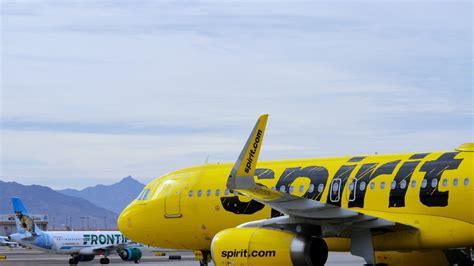
In a bold move to defend their strategic partnership, JetBlue Airways and United Airlines have filed formal requests urging the U.S. Department of Transportation (DOT) to dismiss Spirit Airlines’ protest against their newly launched ‘Blue Sky’ alliance. The airlines argue that their agreement is a conventional interline and loyalty integration pact, far removed from any anti-competitive collusion, as alleged by Spirit.
DOT Complaint Sparks Industry-Wide Attention
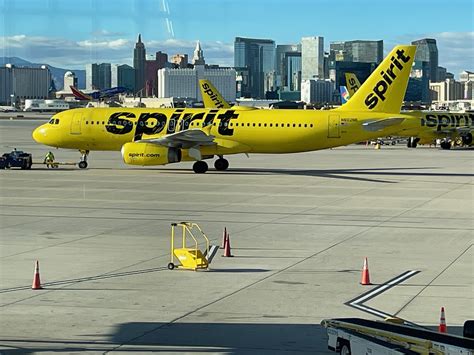
At the heart of the matter lies a complaint filed by Spirit Airlines, which claims that the ‘Blue Sky’ alliance is a covertly anti-competitive maneuver designed to consolidate market power under the guise of interline cooperation. Spirit contends that the pact risks marginalizing smaller carriers and may lead to a slippery slope of market domination by legacy giants.
Spirit’s concerns stem from the belief that JetBlue’s dependency on United’s expansive global network might compromise its independence and force smaller airlines to enter similarly unequal partnerships. The low-cost carrier argues that the alliance is essentially a strategic tethering, detrimental to fair market play.
JetBlue and United Define the ‘Blue Sky’ Alliance
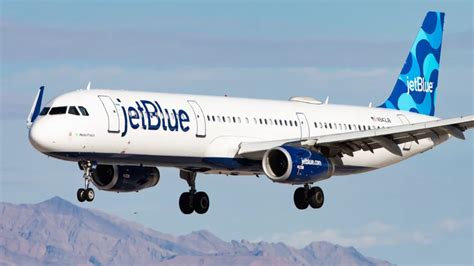
JetBlue and United, however, are steadfast in their characterization of the alliance as a routine interline agreement that brings mutual benefits and convenience for passengers, without crossing regulatory boundaries. The agreement, made public in May 2025, outlines key features:
- Slot Allocation at JFK: United will receive a set of JetBlue’s slots at New York JFK Airport, effective 2027. Both airlines assert this will improve gate efficiency and reduce delays.
- Schedule Coordination at Newark: Flight schedules at Newark Liberty International Airport will be aligned to minimize connection times and maximize operational synchronization.
- Frequent Flyer and Booking Integration: Components of each airline’s frequent flyer programs and booking systems will be merged, aiming to deliver a seamless customer experience.
The airlines argue that these components represent industry norms, rather than a step toward monopolistic behavior. Unlike the Northeast Alliance (NEA)—a previous JetBlue-American Airlines partnership blocked due to antitrust violations—there is no revenue sharing, joint network planning, or combined scheduling in ‘Blue Sky.’
Spirit Airlines: The Lone Dissenting Voice
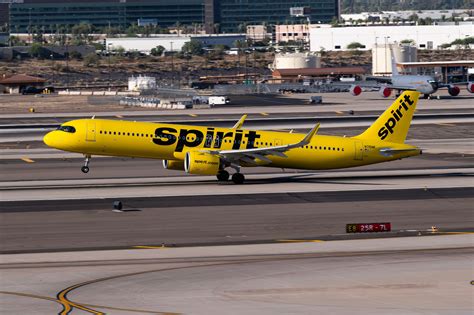
Spirit’s opposition arises from a deeply competitive context. As one of the few remaining ultra-low-cost carriers (ULCCs) in the United States, its ability to maintain low fares hinges on the preservation of independent competition in critical hub markets. Spirit fears that this alliance sets a precedent that could make it harder for ULCCs to secure viable slots or negotiate equitable partnerships in the future.
It warns that JetBlue could become an extension of United, creating an uneven playing field for independent operators. Spirit’s complaint is not only legal—it’s strategic. By attempting to block the alliance, Spirit is drawing a line in the sand against further industry consolidation.
JetBlue’s Post-Pandemic Gamble
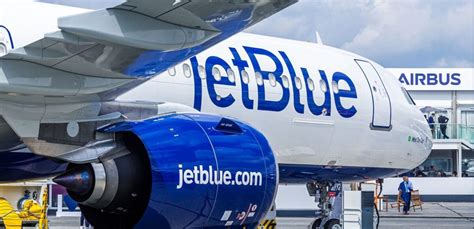
This alliance comes at a pivotal time for JetBlue. The airline has struggled financially since the onset of the COVID-19 pandemic, logging nearly $3 billion in losses and managing only two profitable quarters out of the last nine. It has failed to achieve an annual profit since 2019.
In response, JetBlue has rolled out its ‘JetForward’ recovery strategy, which is laser-focused on returning to profitability, improving operational resilience, and re-establishing competitive footing. Executives within JetBlue argue that the ‘Blue Sky’ initiative is central to JetForward’s long-term vision, especially in recapturing market share in the heavily trafficked New York and Newark corridors.
Regulatory Scrutiny: DOT’s Defining Role
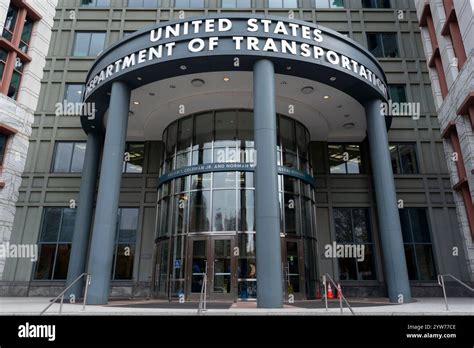
The Department of Transportation now finds itself in a critical decision-making position. The DOT’s regulatory review is being guided by antitrust principles and federal statutes designed to safeguard open competition in the air transport sector. The department will evaluate:
- Whether the terms of the agreement signal undue consolidation.
- The impact on passenger choice, ticket pricing, and network accessibility.
- Potential long-term shifts in slot control and operational authority at two of the nation’s most pivotal airports.
Legal analysts suggest that the DOT’s decision could set a precedent for how much interline cooperation is permissible before it crosses into anti-competitive territory. In an aviation ecosystem still recovering from COVID-era shocks and ongoing pilot shortages, this decision carries more than regulatory significance—it’s a bellwether for the future structure of airline alliances.
Market Dynamics: Context Behind the Collaboration
The need for such collaboration stems from congested Northeast airspace, ongoing FAA staffing shortages, and volatile consumer demand. Airlines are increasingly pushed toward operational efficiency without incurring excessive capital expenditure. By enabling resource-sharing at Newark and JFK, the ‘Blue Sky’ alliance is pitched as a means to reduce redundancies, improve connectivity, and boost regional traffic flow.
From an economic standpoint, analysts argue that JetBlue is under pressure to regain investor confidence, while United benefits by extending its footprint at JFK—an airport where slots are increasingly difficult to obtain. This mutual alignment of objectives may offer short-term efficiency but risks raising flags about long-term structural dominance.

Echoes of the Northeast Alliance Collapse
Regulators and industry watchers inevitably compare the ‘Blue Sky’ deal to the now-defunct Northeast Alliance (NEA) between JetBlue and American Airlines. That deal, terminated in 2023 after a federal court ruled it violated antitrust laws, included broad elements like joint scheduling, revenue pooling, and extensive code-sharing.
JetBlue and United have worked to distance ‘Blue Sky’ from NEA, explicitly avoiding integrated revenue management and emphasizing that the agreement focuses strictly on customer service enhancements and limited infrastructure coordination.
However, critics argue that even without revenue pooling, coordinated scheduling and slot transfers inherently reshape market behavior, especially in slot-restricted airports like JFK and Newark. The question remains: How much integration is too much before an alliance begins to suppress meaningful competition?
Future Implications for Airline Alliances
The DOT’s decision on this case will likely influence not just JetBlue and United, but also other U.S. carriers contemplating similar tactical agreements. If ‘Blue Sky’ is approved without significant modification, it could usher in a wave of new-generation alliances that skirt traditional antitrust definitions while achieving many of the same outcomes as full joint ventures.
On the other hand, if the DOT sides with Spirit, it may place a regulatory ceiling on how far U.S. airlines can go in sharing assets and coordinating operations without entering full mergers.
Ultimately, the ‘Blue Sky’ agreement could either become a model for post-pandemic airline survival strategies or be remembered as a cautionary tale of regulatory overreach—or underreach.
Conclusion: A Crossroads for Competitive Integrity
As the aviation industry navigates a fragile recovery and seeks to rebuild profitability in an increasingly saturated marketplace, partnerships like ‘Blue Sky’ are both a strategic lifeline and a regulatory minefield. While JetBlue and United make a compelling case for operational innovation, Spirit’s challenge serves as a reminder that in the airline industry, freedom to collaborate must be balanced with the imperative to compete.
The U.S. DOT now stands as the final arbiter in what could be the most consequential aviation policy decision of the post-pandemic era. Whether ‘Blue Sky’ soars or stalls will shape not only these three carriers’ futures—but the entire structure of American air travel partnerships moving forward.