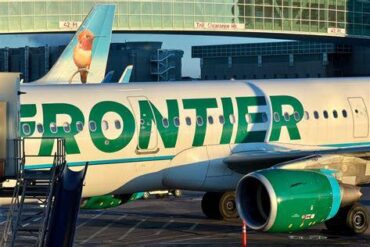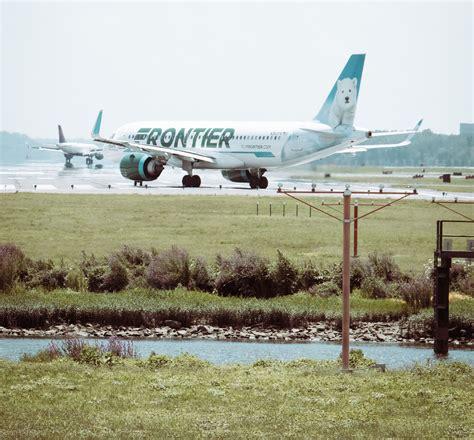
Frontier Airlines has executed a sweeping retreat at New York John F. Kennedy International Airport (JFK), dismantling nearly its entire route network and raising serious doubts about its planned relocation to the airport’s new Terminal 6. The ultra-low-cost carrier is eliminating nine nonstop routes, leaving behind a skeletal operation that bears little resemblance to the growth narrative once attached to its JFK ambitions. What was positioned as a foothold in one of the world’s most competitive aviation markets now looks increasingly like a strategic withdrawal shaped by cost pressures and shifting economics.
The scale of the reduction is striking. Frontier is ending service to major destinations including Chicago O’Hare, Dallas/Fort Worth, Denver, Las Vegas, Los Angeles, Miami, Orlando, San Juan, and Tampa. By April, these routes will either have already concluded or will formally disappear from the schedule. In practical terms, this move erases the backbone of Frontier’s JFK presence and leaves the airline with just one daily flight—to Hartsfield–Jackson Atlanta International Airport. For a carrier that had positioned itself for a transition into a brand-new terminal facility by spring 2026, the optics and operational logic have shifted dramatically.
The retreat is not a minor schedule adjustment. It represents a structural recalibration of Frontier’s role in New York. With only a single daily departure remaining, the airline’s footprint at JFK becomes marginal—functionally reduced to a token presence rather than a strategic base.
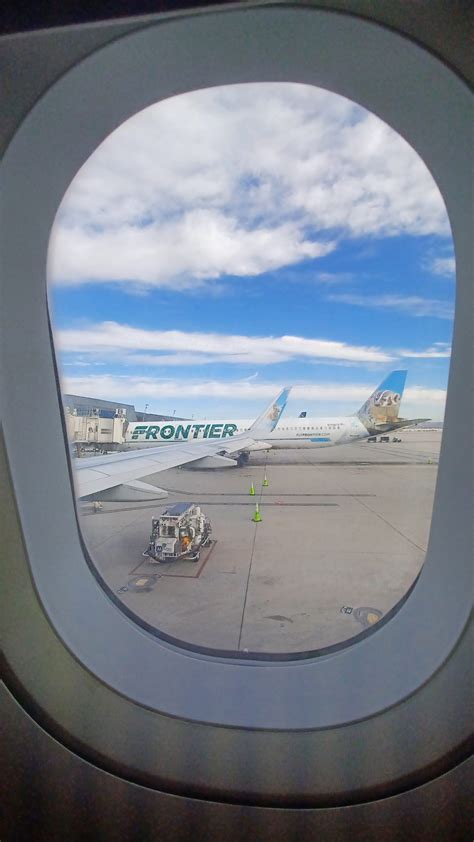
Nine Route Cuts Redefine Frontier’s JFK Strategy
JFK has long been defined by high operating costs, slot constraints, and intense competition. For legacy carriers and global network airlines, the airport remains indispensable. For ultra-low-cost operators such as Frontier, the calculus is more delicate. Every gate, every turnaround, and every departure must justify itself against a cost structure that is among the highest in the United States.
The nine-route cancellation effectively dismantles Frontier’s JFK network architecture. These were not peripheral markets; they were core domestic trunk routes connecting New York to major population centers and leisure destinations. Removing them signals a deliberate decision to abandon scale at JFK rather than simply trimming underperforming frequencies.
In recent commentary on the airline’s financial posture, Frontier’s leadership emphasized a focus on “right-sizing” the fleet and refining the go-forward plan. That language reflects a broader effort to preserve margins in a period marked by softer yields and cautious consumer demand. In that context, maintaining a high-cost outstation with limited pricing flexibility becomes difficult to justify.
Terminal 6 Commitment Faces Mounting Questions
The timing of Frontier’s contraction is particularly consequential given JFK’s sweeping redevelopment. Terminal 7, where Frontier currently operates, is scheduled for closure as part of the airport’s multi-billion-dollar transformation. The airline had been slated to transition into the new Terminal 6, a modern facility designed to support sustained, multi-year growth from participating carriers.
Terminal planning is driven by throughput forecasts, gate utilization assumptions, and passenger volume projections. Airlines securing space in new terminals typically do so with an expectation of stable or expanding operations. A single daily departure does not align with those assumptions. The economic rationale for allocating valuable gate space to an airline with minimal frequency becomes tenuous, especially as other carriers pursue expansion at JFK.
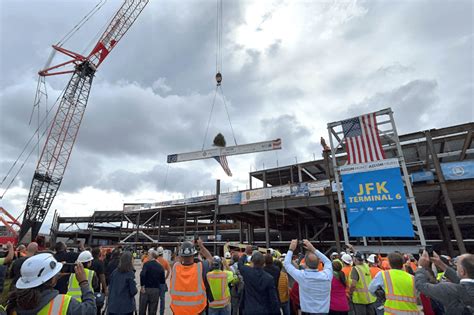
Should Frontier ultimately scale back further or withdraw entirely, its planned footprint in Terminal 6 could be reassigned to airlines with stronger growth trajectories. That would not only alter the competitive balance within the terminal but could accelerate further consolidation among operators positioned to capitalize on JFK’s international connectivity.
New York Flying Shifts Toward Lower-Cost Airports
Frontier’s move does not signal an exit from the broader New York market. Instead, it underscores a strategic pivot toward airports better aligned with the airline’s ultra-low-cost DNA. The carrier continues to operate multiple routes from LaGuardia Airport and maintains a presence at Newark Liberty International Airport, where it serves four routes.
The contrast is telling. LaGuardia and Newark, while still competitive, offer operating economics that more closely fit Frontier’s model. Fees, congestion patterns, and yield dynamics differ enough to make them more sustainable platforms for a carrier built on lean cost structures and ancillary revenue streams.
This recalibration mirrors a broader trend among U.S. budget airlines. As yields soften and competition intensifies, carriers are reassessing exposure to high-fee, slot-restricted airports. The ultra-low-cost model depends on stimulating demand through low fares while tightly controlling expenses. When airport costs rise faster than achievable yields, retrenchment becomes a rational, if disruptive, choice.
Fleet Right-Sizing and Financial Pressures
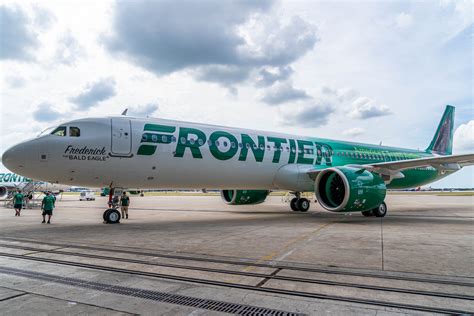
Frontier’s JFK pullback coincides with significant fleet adjustments. The airline has announced plans to return leased Airbus A320neo aircraft and defer dozens of deliveries into the next decade. Such decisions are not cosmetic; they reshape capacity growth trajectories and signal a more cautious stance on expansion.
By reducing fleet commitments and trimming high-cost operations, Frontier appears focused on preserving liquidity and stabilizing margins. In that framework, maintaining symbolic presence at JFK offers little strategic value. Profitability, not prestige, governs deployment decisions.
Historically, Frontier has demonstrated flexibility in major hubs, scaling up during favorable economic cycles and retreating when cost pressures mount. JFK now appears to be the latest example of that pattern. The difference this time lies in the airport’s transformation timeline. With Terminal 7 closing and Terminal 6 nearing completion, long-term commitments are becoming less theoretical and more binding.
A Structural Pullback, Not a Temporary Pause
The magnitude of Frontier’s reductions suggests a deliberate repositioning rather than a short-term seasonal adjustment. Nine routes eliminated, a lone daily departure retained, and a pending terminal relocation hanging in uncertainty—these are not incremental tweaks. They represent a strategic narrowing of focus.
For JFK stakeholders, the implications extend beyond one airline. Gate allocation, terminal design assumptions, and competitive dynamics all hinge on reliable operator commitments. Frontier’s retreat injects ambiguity into a redevelopment process built on long-range growth projections.
Whether Frontier eventually rebuilds a meaningful JFK presence will depend on shifts in cost structures, demand recovery, and competitive responses. For now, the evidence points to consolidation elsewhere and caution at one of America’s most expensive gateways. The airline’s planned move into Terminal 6, once framed as a step forward, now stands at a crossroads shaped by economics rather than aspiration.