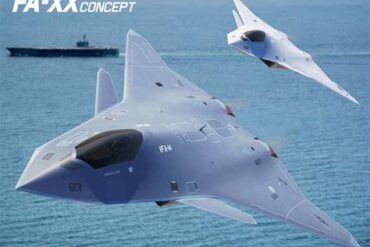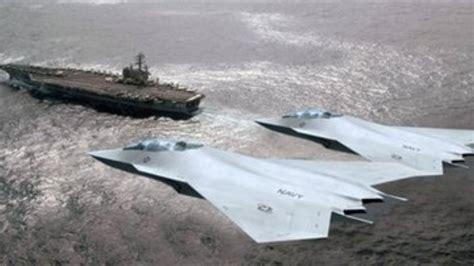
The Pentagon has ignited intense debate within defense circles and Capitol Hill by proposing to reallocate $500 million from the U.S. Navy’s F/A-XX sixth-generation fighter program to the U.S. Air Force’s F-47 stealth jet, a move that highlights shifting priorities in America’s next-generation air dominance strategy. This proposed funding realignment not only threatens to delay the Navy’s future air wing plans but also underscores deeper concerns about the capacity of the U.S. industrial base to simultaneously develop two cutting-edge fighter platforms.
Strategic Prioritization: F-47 Takes the Lead
The Department of Defense’s formal request to Congress stresses the risk of under-delivering on both programs if pursued in parallel. Pentagon planners advocate for a phased approach, giving the F-47 initiative—recently awarded to Boeing—an immediate financial and industrial focus, while deferring the F/A-XX effort to allow for “technical maturity and development.”
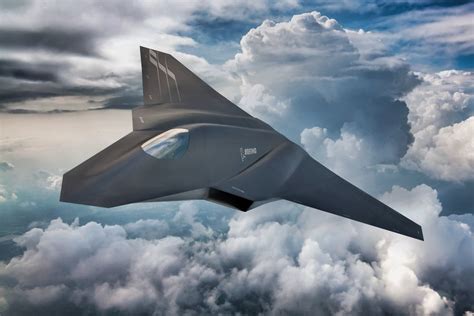
The rationale offered hinges on the mounting schedule delays and cost inflation affecting multiple major airframe development projects, including the ongoing B-21 Raider stealth bomber by Northrop Grumman. Prioritizing the Air Force’s platform is seen as a hedge against further risk, especially in the event that Boeing or another top-tier contractor is overcommitted.
Congressional Resistance and Intra-Branch Tensions
Congressional response has been mixed, with the House Armed Services Committee (HASC) resisting the fund transfer. Committee spokesperson Heather Vaughan stated that the Pentagon has not provided adequate justification, nor presented updated information on mission needs, capability gaps, or revised acquisition strategies for the F/A-XX. This resistance underscores a broader debate about the balance of power projection between air and naval forces in future high-end conflict scenarios.
Adding to the complexity, Secretary of Defense Pete Hegseth finds himself locked in a political standoff with key congressional figures. Meanwhile, the Senate Armed Services Committee (SASC) appears more supportive of continued Navy fighter development, having recently proposed $750 million to accelerate F/A-XX.
Navy Insistence: F/A-XX Still Critical
Despite internal Pentagon hesitation, Navy officials remain adamant that the F/A-XX is indispensable for the future of carrier aviation. During a recent House Armed Services Committee hearing, Dr. Brett A. Seidle, Acting Assistant Secretary of the Navy for Research, Development, and Acquisition, reiterated that the Navy has a “strong requirement” for a sixth-generation aircraft.
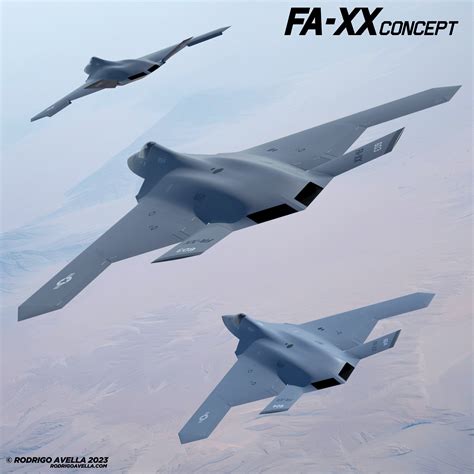
This sentiment was echoed by Adm. James W. Kilby, acting Chief of Naval Operations, who stressed that the F/A-XX must counter emerging threats from the People’s Republic of China in the Indo-Pacific. Kilby highlighted advanced features such as low observability, extended range, and the integration of new propulsion systems as mission-critical to future survivability.
Boeing’s Dual Role and Industry Strain
A central concern fueling the Pentagon’s caution is the capacity of the defense industrial base. Boeing, the prime contractor for the F-47 and one of the top contenders for the F/A-XX, may be stretched too thin to handle both simultaneously. Additionally, Northrop Grumman, another potential F/A-XX developer, remains deeply engaged in testing the B-21 Raider.
Should Boeing end up handling both sixth-generation jets, any misalignment in resources or delays in deliverables could have profound implications on U.S. force readiness. Conversely, spacing out the two programs would not only help avoid bottlenecks but also provide breathing room for suppliers and subcontractors who support advanced aerospace platforms.
The Trump Administration’s Influence
The F-47 program has gained traction under President Donald Trump’s administration, which views it as central to revitalizing American air dominance and enhancing allied partnerships. Trump’s advocacy even extends beyond U.S. borders, having pitched an export version of the F-47 to Japan, positioning it as a complement—or alternative—to the Global Combat Air Program (GCAP) pursued by Japan, the U.K., and Italy.

With “full presidential support,” the F-47 benefits from political backing that the F/A-XX lacks, at least for now. The program also aligns with broader economic stimulus goals embedded within Trump’s sweeping $3.9-trillion tax break package, under which the F/A-XX was initially boosted.
F/A-XX Capabilities and Carrier Aviation Future
Initially conceived to replace the F/A-18E/F Super Hornet and EA-18G Growler, the F/A-XX is envisioned as a multi-domain platform featuring cutting-edge stealth, speed, and sensor fusion capabilities. It is also expected to collaborate seamlessly with unmanned systems, including the Navy’s developing fleet of Collaborative Combat Aircraft (CCA).
However, some skepticism has emerged after disclosures that the F/A-XX might offer just a 25% increase in range over current tactical jets. This has raised eyebrows, given the Navy’s clear strategic imperative to extend the reach of carrier-based aircraft in high-threat environments like the South China Sea.
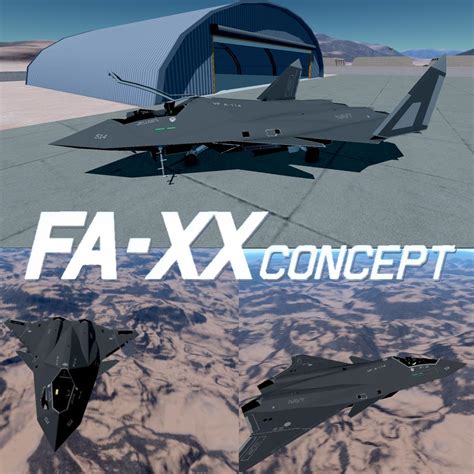
Nevertheless, the Navy views the F/A-XX as central to future carrier air wing composition, emphasizing its criticality in any confrontation with near-peer adversaries. This makes the potential delay or defunding of the program all the more consequential.
Alternatives and Stopgap Measures
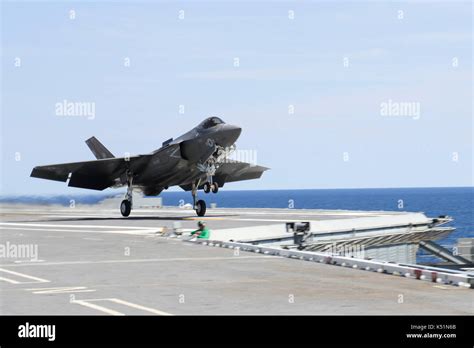
In the event of significant delays, the Navy could be forced to lean longer on aging Super Hornets and Growlers. While a final batch of 17 Super Hornets has been funded for delivery by 2027, the production line is scheduled for closure unless more orders are placed soon. Another option involves further investment in the F-35C and its advanced derivatives, which Lockheed Martin has hinted could undergo a major performance upgrade.
Still, none of these are seen as true substitutes for the advanced and tailored capabilities of a sixth-gen fighter designed explicitly for the maritime domain. The Navy’s CCA program, meanwhile, remains embryonic, with strict cost targets and uncertain timelines, especially when compared to the Air Force’s more aggressive drone wingman initiatives.
The Road Ahead: Uncertain but Urgent
Despite conflicting signals from the Pentagon and Congress, it is clear that the U.S. military cannot afford to stumble in its transition to sixth-generation air combat. Whether by prioritizing the Air Force’s F-47 or advancing the Navy’s F/A-XX on a delayed timeline, hard choices must be made to avoid industrial overload, capability shortfalls, and strategic vulnerabilities.
The next few months will prove pivotal. As Congress continues to negotiate the final shape of the defense budget and its tax-related provisions, America’s vision for air dominance in the 2030s and beyond is being forged—one appropriations battle at a time.