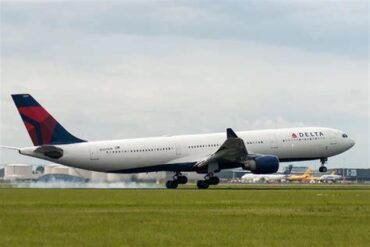
Delta Air Lines, one of the United States’ most prominent carriers, has agreed to pay $8.1 million to settle allegations brought by the U.S. Department of Justice over its purported misuse of pandemic relief funds. The payment addresses claims that the airline violated executive compensation caps tied to the Payroll Support Program (PSP), a critical part of the CARES Act relief package enacted to stabilize the aviation industry during COVID-19.
The CARES Act, PSP, and the Billion-Dollar Lifeline
In March 2020, as the aviation sector faced unprecedented economic collapse, the U.S. government initiated the Coronavirus Aid, Relief, and Economic Security Act. The centerpiece for airlines was the Payroll Support Program, which aimed to ensure that carriers could maintain their workforce by subsidizing employee compensation.
Under the PSP, U.S. passenger airlines were granted over $50 billion in federal relief. These funds came in the form of grants—which did not need to be repaid—and low-interest loans. In return, recipients agreed to a list of non-negotiable terms:
- No involuntary furloughs or layoffs during the support period
- No stock buybacks or dividend payments
- Strict executive compensation caps—notably, executives who made over $425,000 in 2019 could not receive raises beyond pre-pandemic limits
Delta received approximately $11.9 billion under this program, of which at least $8.2 billion came as grants. These funds, backed by taxpayer dollars, were meant to prevent layoffs and keep paychecks flowing to thousands of employees.
Whistleblower Lawsuit Uncovers Alleged Violations
The current settlement stems from a whistleblower lawsuit filed under the False Claims Act by a third-party researcher. The complaint alleged that between March 2020 and April 2023, Delta paid certain executives more than allowed under PSP rules. Moreover, the airline allegedly falsely certified compliance with those terms in documentation submitted to the federal government.
In response, the U.S. Attorney’s Office for the Northern District of Georgia launched an investigation into the airline’s financial practices during the relief period. Although the DOJ has stated clearly that the settlement resolves allegations without determining liability, the implication is severe: a major U.S. airline misrepresented its adherence to federally mandated restrictions in a time of national emergency.
U.S. Attorney Theodore Hertzberg said:
“When companies accept federal assistance, especially generous pandemic-relief funds like those at issue here, they owe a duty to the American people to respect the conditions placed on those funds.”
Delta Maintains Innocence But Settles To Avoid Legal Costs
In its official statement, Delta rejected the premise of wrongdoing:
“We strongly believe we fully complied with all requirements of the CARES Act. We dispute the government’s claim, which lacks merit, but are choosing to settle this matter to avoid the time and expense of protracted litigation.”
The airline further emphasized its commitment to transparency and compliance. Still, critics note that such a settlement—while not an admission of guilt—raises serious concerns about corporate governance during a critical public assistance program.
The PSP rules were not arbitrary. They were constructed with bipartisan support in Congress to ensure that relief did not merely serve corporate interests, but primarily benefited rank-and-file employees and protected taxpayer dollars. Violating these terms is not simply a breach of contract; it threatens the integrity of public trust in large-scale economic relief efforts.
A Look at PSP Distribution Across Airlines
Delta was not alone in receiving massive government support during the pandemic. In fact, among the so-called Big Three U.S. carriers, it received the second-largest PSP funding package:
| Airline | Total PSP Funding | Share of Total PSP |
|---|---|---|
| American Airlines | $12.8 billion | 24% |
| Delta Air Lines | $11.9 billion | 22% |
| United Airlines | $10.9 billion | 20% |
| Southwest Airlines | $7.2 billion | 13% |
What separates Delta from its competitors, however, is the approach to executive pay compliance.
- United Airlines delayed incentive-based payments until the cap period expired.
- Southwest Airlines creatively restructured compensation as long-term performance-based equity.
- Alaska Airlines took the most conservative path, clawing back stock grants and awarding delayed bonuses post-deadline.
Delta, in contrast, allegedly failed to report overpayments and submitted false certifications—an approach that has now culminated in millions of dollars in legal settlement costs.
Legal Trouble Mounts For Delta
This $8.1 million settlement is not the only legal challenge confronting Delta. The airline is embroiled in at least 16 lawsuits stemming from a crash involving Delta Flight 4819 at Toronto Pearson International Airport earlier this year. Plaintiffs claim gross negligence, inadequate crew training, and poor oversight by Delta’s management.
Adding to this legal storm, Delta is also the subject of a class action lawsuit related to the CrowdStrike global IT outage. In July of the previous year, a faulty software update crippled Delta’s operations, resulting in nearly 7,000 flight cancellations. The plaintiffs allege Delta offered only partial refunds in exchange for waived legal rights and that its recovery was notably slower than other affected carriers.
In a dramatic reversal, Delta has turned around and sued CrowdStrike for $500 million, claiming that CrowdStrike’s untested software failed standard protocols. CrowdStrike has countered, arguing Delta’s “antiquated” IT systems prolonged the crisis. A federal judge has permitted both lawsuits to move forward.
A Fragile Trust Between Airlines and the Public
What Delta’s settlement underscores is the fragile balance between public funding and corporate integrity. The CARES Act was not simply a bailout—it was an emergency rescue package designed to preserve the livelihoods of hundreds of thousands of airline workers. Its conditions were intended to keep that money from enriching those already at the top.
Delta’s alleged violation, even if settled without admission of guilt, sends a signal that corporate compliance with pandemic relief safeguards may have been more porous than regulators anticipated. It raises important questions:
- How effective were government audits during the relief program’s lifecycle?
- Were other airlines subject to similar violations but escaped detection?
- What improvements must be implemented for future federal assistance programs?
The U.S. Department of Justice has made clear that it will continue to pursue similar violations, signaling increased scrutiny for other major PSP recipients in the coming months.
What Happens Next For Delta Air Lines
While $8.1 million may be a fraction of Delta’s pandemic-era support, it is a symbolic blow—an indelible mark on its record as a trusted federal relief recipient. More significantly, this case reflects the government’s growing commitment to clawing back misused public funds, even years after they’ve been disbursed.
Delta’s legal team, undoubtedly seasoned by now, will continue to juggle multiple complex court proceedings. Meanwhile, passengers, regulators, and stakeholders will be watching closely as the airline navigates the post-pandemic world—not just in terms of flight operations, but in corporate ethics and accountability.
In an era where transparency and responsibility are paramount, Delta’s case may serve as a warning for other companies that pandemic-era deals are not immune from long-arm regulatory consequences.
Final Thoughts
The Delta PSP settlement is not merely a legal footnote—it is a powerful illustration of what can happen when crisis funding intersects with corporate decision-making. The consequences, both financial and reputational, stretch far beyond the dollar figure. As new challenges continue to test the resilience of the airline industry, lessons from the pandemic remain more relevant than ever.