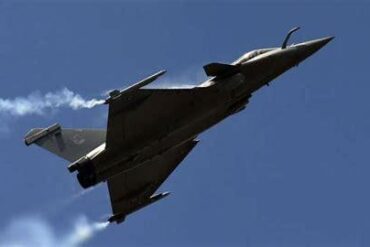
On April 28, 2025, India finalized a significant $7.5 billion defense agreement with France to procure 26 Rafale M (Marine) fighter jets for its navy, marking the largest defense deal ever signed between the two countries. The contract, sealed in New Delhi, underscores India’s strategic push to bolster its maritime air capabilities amid escalating regional tensions, particularly with China in the Indian Ocean.
Strategic Importance of the Rafale M for India’s Navy
The deal aims to enhance the operational readiness of India’s two aircraft carriers, INS Vikrant and INS Vikramaditya, by integrating these advanced, carrier-capable multirole fighters. This procurement is a critical component of India’s broader naval modernization strategy, driven by the urgent need to counterbalance China’s expanding naval reach in the Indo-Pacific region.
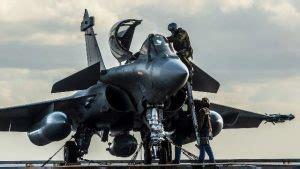
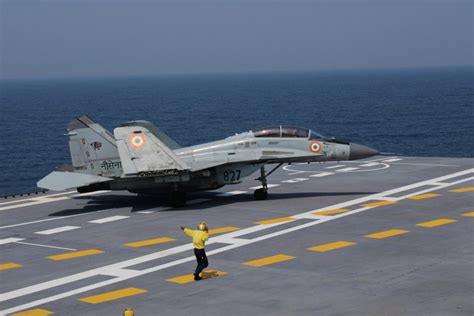
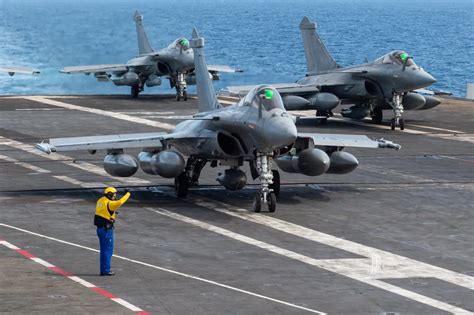
The Rafale M jets, developed by Dassault Aviation, are designed specifically for carrier-based operations, featuring reinforced landing gear, folding wings, and tailhooks to enable operations on Short Take-Off But Arrested Recovery (STOBAR) carriers like the INS Vikrant. These features distinguish the Rafale M from land-based fighters, making it particularly suited for India’s current carrier fleet.
Key Features and Capabilities of the Rafale M
The Rafale M is a formidable 4.5-generation multirole fighter, known for its versatility and combat effectiveness. Key features include:
- Speed and Range: Top speed of Mach 1.8 and a combat range exceeding 1,850 kilometers with external fuel tanks.
- Powerplant: Powered by two Safran M88-2 engines, each delivering 16,860 pounds of thrust.
- Advanced Avionics: Equipped with an active electronically scanned array (AESA) radar for enhanced detection and tracking capabilities.
- Electronic Warfare: Protected by the Spectra electronic warfare suite, providing robust defense against missile threats.
- Weapons Suite: Capable of deploying a wide range of advanced munitions, including:
- Meteor air-to-air missiles (range 120-150 kilometers)
- Exocet AM39 anti-ship missiles
- SCALP cruise missiles for precision ground strikes
The package also includes extensive support elements, such as weapons, simulators, crew training, and a five-year performance-based logistics support program. Notably, the deal involves significant technology transfers aimed at bolstering India’s defense self-reliance, aligning with the “Make in India” initiative.
The High Cost of Capability
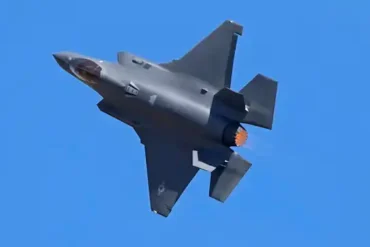
The cost of each Rafale M in this deal averages around $288 million per aircraft, making it one of the most expensive fighter jets ever exported. This price covers not just the aircraft but also the broader support ecosystem required for carrier operations, including training, spare parts, and infrastructure. However, this figure has drawn scrutiny given that fifth-generation alternatives like the U.S.-made F-35C are available at comparable or even lower costs.
For context, the base price of an F-35C is approximately $120-150 million, though fully equipped variants can reach $200-250 million. The Boeing F/A-18 Super Hornet, another potential alternative considered by India, is priced at $70-100 million per unit, while Russia’s Su-35 costs roughly $85 million. These comparisons highlight the premium India is paying for the Rafale M’s proven carrier capability and logistical commonality with the Indian Air Force’s Rafale fleet.
Rationale Behind the Selection
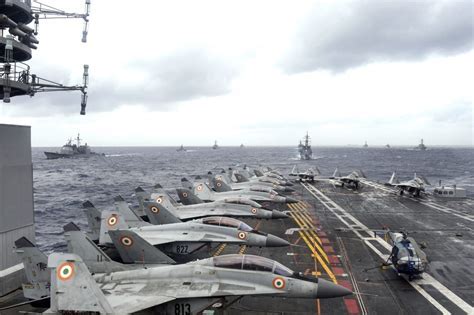
India’s choice to opt for the Rafale M, despite its high cost, reflects a balance between immediate operational needs and long-term strategic goals. The Rafale M’s superior performance in naval trials and the operational benefits of shared logistics with India’s existing Rafale fleet were decisive factors. The Indian Navy currently operates 40 MiG-29K jets, which have faced significant serviceability issues, supply chain disruptions, and maintenance challenges, further aggravated by the ongoing conflict in Ukraine.
Additionally, the Rafale M’s ability to integrate indigenous weapons like the Astra Mk1 air-to-air missile and Rudram anti-radiation missile supports India’s push for defense self-reliance. The integration of these systems reduces dependence on foreign suppliers and strengthens India’s indigenous defense industry.
Strategic Implications and Regional Dynamics
The geopolitical context also played a critical role in this decision. China’s growing naval presence, supported by its three operational aircraft carriers—Liaoning, Shandong, and the advanced Fujian—has heightened security concerns in the region. Beijing’s increasing assertiveness, including military bases in Djibouti and logistical support facilities in Pakistan, has prompted India to enhance its maritime deterrence.
India’s investment in the Rafale M also signals a broader realignment with France, reflecting shared strategic interests and a deepening defense partnership that spans decades. This collaboration is further underscored by offset agreements requiring 50% of the contract value—approximately $3.75 billion—to be reinvested in India, bolstering local defense manufacturing and creating thousands of jobs.
Conclusion: Strategic Choice or Costly Compromise?
As India moves to strengthen its naval aviation capabilities, the decision to invest in the Rafale M is a calculated bet on proven technology and immediate operational readiness. However, as China continues to modernize its own carrier strike capabilities and the U.S. advances its sixth-generation fighter programs, India’s long-term air power strategy will be closely scrutinized.
Ultimately, the Rafale M’s high cost must be justified not just by its technical performance but by its strategic impact in maintaining India’s dominance in the Indian Ocean, a critical theater in the broader Indo-Pacific security architecture.