India’s landmark $7.5 billion defense deal with France to acquire 26 Rafale M fighter jets marks a decisive step in bolstering its naval aviation capabilities, while simultaneously igniting intense debate over cost-effectiveness and strategic foresight. Signed on April 28, 2025, in New Delhi, the agreement elevates India-France defense ties to unprecedented heights, but it also raises critical questions: is India paying a premium for geopolitical alignment, or securing an indispensable asset amid rising regional tensions?
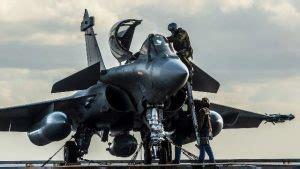
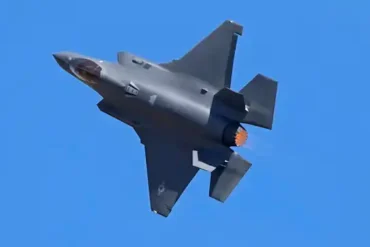
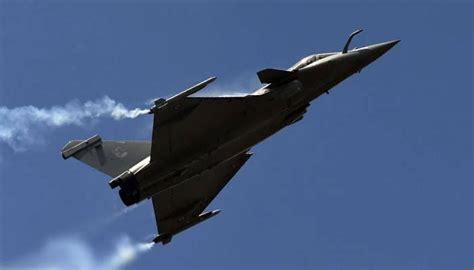
The Rafale M, a naval variant of France’s famed Rafale multirole fighter, will serve as the backbone of India’s carrier-based air power, deployed aboard the INS Vikrant and INS Vikramaditya. At a unit cost of $288 million per aircraft, the acquisition not only surpasses the price of many fifth-generation stealth fighters like the U.S.-made F-35C, but it also positions India as the first export customer of the Rafale M, a platform traditionally confined to French Navy operations.
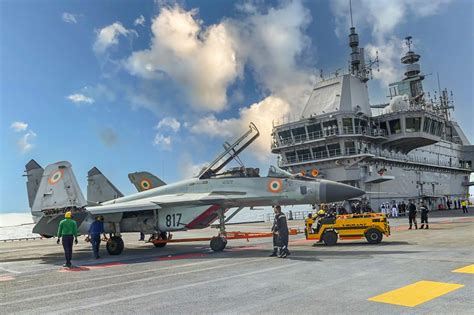
India’s decision stems from an urgent need to replace its aging MiG-29K fleet, which has been plagued by poor availability rates, technical shortcomings, and disrupted Russian supply chains—issues exacerbated by Moscow’s ongoing war in Ukraine. According to retired Admiral Arun Prakash, the MiG-29K’s declining operational readiness jeopardized India’s maritime security posture at a time when China’s expanding naval footprint in the Indian Ocean posed increasing challenges.
The deal encompasses more than airframes. It includes a comprehensive support package: weapons systems, simulators, crew training, a five-year performance-based logistics agreement, and critical technology transfers. Notably, the contract mandates the establishment of a Rafale fuselage production facility and maintenance, repair, and overhaul (MRO) centers in India—an alignment with “Aatmanirbhar Bharat”, India’s push for defense self-reliance. Approximately 50% of the contract value ($3.75 billion) will be reinvested into the Indian defense ecosystem through industrial offsets.
The Rafale M: Capabilities and Carrier Adaptation
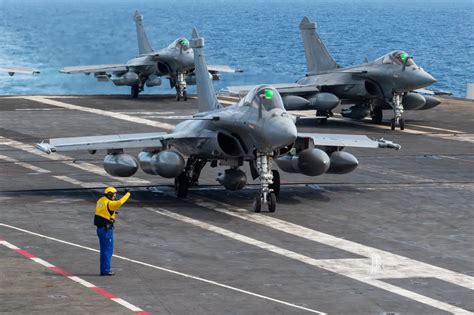
The Rafale M brings formidable capabilities to India’s naval aviation arsenal. Powered by twin Safran M88-2 engines delivering 16,860 pounds of thrust each, the fighter achieves speeds up to Mach 1.8 and boasts a combat range exceeding 1,850 kilometers with external fuel tanks. Its design integrates reinforced landing gear, folding wings, and a tailhook system essential for operations on India’s Short Take-Off But Arrested Recovery (STOBAR) carriers.
Central to its combat prowess is the Thales RBE2 AESA radar, enhancing target detection and tracking, while the SPECTRA electronic warfare suite offers advanced self-protection against radar-guided and infrared missile threats. The Rafale M’s weapons loadout includes the Meteor beyond-visual-range air-to-air missile (120-150 km range), Exocet AM39 anti-ship missile, and SCALP cruise missile for precision strikes, augmented by India’s indigenous Astra Mk1 and Rudram missiles.
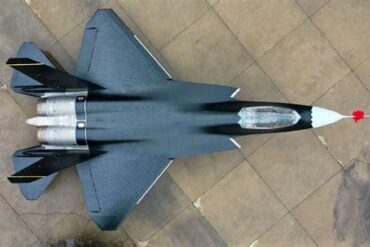
Despite these advantages, critics point to its technological limitations compared to stealth-enabled platforms. Unlike the F-35C, which integrates stealth, sensor fusion, and network-centric warfare, the Rafale M relies on avionics and electronic countermeasures to mitigate detectability. Its 1990s-era airframe constrains further stealth adaptations, raising concerns about survivability in future contested environments.
Cost Controversies and Comparative Pricing
The contract’s headline figure—$288 million per aircraft—has sparked scrutiny across defense circles. This price includes not only the airframes, estimated at $100-120 million each, but also munitions, spares, ground support equipment, infrastructure upgrades, and long-term sustainment.
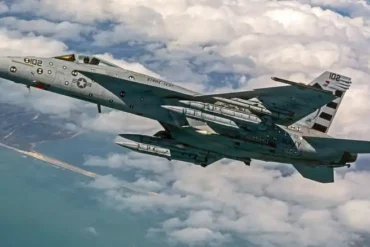
By comparison, the F-35C, the U.S. Navy’s stealth carrier-based fighter, has a base price between $120-150 million, though mission-ready variants climb to $200-250 million. Meanwhile, Boeing’s F/A-18E/F Super Hornet, a direct competitor in India’s 2022 trials, comes in at $70-100 million per unit, and Russia’s Su-35 is priced around $85 million, albeit without carrier adaptation.
Proponents argue that the Rafale M’s integration with India’s existing Air Force Rafale fleet (36 aircraft procured in 2016) offers logistical and maintenance synergies, reducing life-cycle costs. The shared supply chain, training pipelines, and “buddy-buddy” aerial refueling capacity across air and naval forces further enhance operational efficiency.
Strategic Imperatives: Facing China’s Naval Rise
India’s procurement decision cannot be divorced from the strategic backdrop of China’s naval modernization. With three operational carriers—Liaoning, Shandong, and Fujian—and over 60 carrier-based J-15 fighters, China’s naval air power is expanding rapidly. Its logistical facilities in Pakistan and Djibouti further extend its operational reach into the Indian Ocean.
“China’s carriers have yet to operate in force in our backyard, but that time is coming,” warned Admiral Prakash. “Without a capable carrier-based fighter, our deterrence will be undermined.” The Rafale M’s long-range precision strike capability and multi-role flexibility offer a counterweight to China’s growing expeditionary capacity, reinforcing India’s ability to secure critical sea lanes in the Indo-Pacific.
France’s Defense Diplomacy and Geopolitical Implications
Beyond operational considerations, the Rafale M deal reflects a broader Franco-Indian geopolitical alignment. France has positioned itself as an advocate for European defense autonomy, offering nations like India an alternative to U.S.-dominated platforms. Dassault Aviation’s reliance on exports to sustain Rafale production underscores the importance of deals like India’s; other major contracts include Indonesia (18 Rafales), Serbia (12 Rafales), and a landmark $19 billion UAE deal for 80 Rafales in 2021.
The agreement bolsters France’s influence in the Indo-Pacific while challenging U.S. dominance in the high-end fighter market. It signals India’s intent to diversify its defense partnerships amid shifting global alliances and rising multipolar competition.

A Costly Bridge or Strategic Necessity?
The Rafale M’s high acquisition cost raises difficult questions about India’s defense procurement priorities. Some experts argue that for $7.5 billion, India could have acquired a larger fleet of Super Hornets or accelerated development of its indigenous Twin-Engine Deck-Based Fighter (TEDBF), projected to enter service in the mid-2030s. Others suggest that investing in the Advanced Medium Combat Aircraft (AMCA) program could yield greater technological dividends.
However, India’s naval aviation gap is immediate. The MiG-29K’s declining availability and China’s growing assertiveness leave India with little room for delays. The Rafale M represents an interim capability, bridging the gap until domestic alternatives mature, while enhancing interoperability with existing assets and aligning with industrial self-reliance goals.
By 2030, India will field a combined fleet of 62 Rafales, spanning air and naval forces—a unique configuration among global operators. The integration of indigenous weapons, local production facilities, and technology transfers will create a layered ecosystem supporting future aviation programs.
In conclusion, the Rafale M’s acquisition embodies the complex trade-offs between immediate operational needs, cost considerations, and strategic ambitions. While its price tag outpaces stealth rivals, its value lies in reinforcing India’s naval air power at a critical geopolitical juncture. As defense landscapes evolve toward sixth-generation fighters, AI-driven systems, and unmanned platforms, the Rafale M will serve as both a potent deterrent and a stepping stone in India’s pursuit of air power dominance in the Indo-Pacific.