The COVID-19 pandemic forced airlines into survival mode. With international demand collapsing by more than 90% and no clear timeline for recovery, carriers around the world rushed to slash costs, simplify fleets, and retire aircraft that appeared unlikely to generate acceptable returns in the future. Across the United States, major airlines made dramatic decisions that permanently altered their long-haul strategies. Yet among the country’s largest carriers, United Airlines took a remarkably different path.
While competitors focused on shrinking, United focused on preserving capability. Rather than aggressively eliminating widebody aircraft, the Chicago-based airline chose to retain nearly all of its long-haul fleet. At the time, the strategy appeared risky. Widebody jets are expensive assets to maintain, store, and eventually reactivate. Keeping dozens of aircraft that had little immediate use during a global travel shutdown required confidence that international demand would eventually return—and return quickly.
That confidence ultimately became one of the most consequential strategic decisions made by any airline during the pandemic era. As borders reopened and international travel rebounded faster than many industry analysts expected, United suddenly possessed something its rivals lacked: a massive inventory of ready-to-return long-haul aircraft capable of supporting rapid expansion across both the Atlantic and Pacific oceans.
Instead of rebuilding from a reduced fleet, United was positioned to grow immediately.
United’s Unique Approach to Fleet Preservation
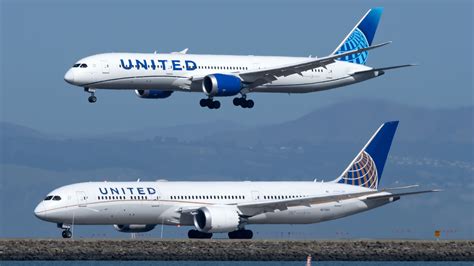
Although United did retire a limited number of aircraft during the pandemic, its reductions were relatively modest compared with those of its competitors. The most notable departures were a small group of Pratt & Whitney-powered Boeing 757-200s that had primarily served premium transcontinental routes. These aircraft were older, less efficient, and operationally distinct from the larger Rolls-Royce-powered 757 fleet inherited from Continental Airlines.
Beyond those retirements, United largely resisted the temptation to make sweeping cuts.
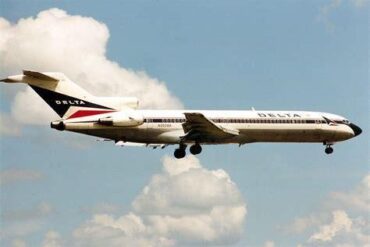
This contrasted sharply with developments elsewhere. American Airlines retired multiple aircraft types, including the Airbus A330 family, Boeing 757s, Boeing 767s, Embraer E190s, and Bombardier CRJ200s. Delta Air Lines removed its Boeing 777 fleet and accelerated the retirement of aging McDonnell Douglas MD-88 and MD-90 aircraft.
From a financial perspective, those decisions were understandable. Airlines faced unprecedented uncertainty, and reducing fleet complexity offered immediate savings in maintenance, training, spare parts inventories, and operational costs.
United’s situation, however, was different. Unlike some competitors, the airline did not operate a large number of niche fleet types. Most of its aircraft fit neatly into broader fleet families, making retention more practical. Even the carrier’s relatively small fleet of 16 Boeing 767-400ERs, often viewed as an outlier fleet, remained available for future service despite being temporarily stored.
When demand returned, United did not need to spend years rebuilding lost capacity. The airplanes were already there.
Why Widebody Aircraft Became United’s Competitive Weapon
Before the pandemic, United already possessed one of the largest widebody fleets in the world. The carrier’s network strategy depended heavily on long-haul flying from major hubs such as Newark, Washington Dulles, Chicago O’Hare, Houston, Denver, Los Angeles, and San Francisco.
By preserving that fleet, United essentially protected its future growth options.
When international travel surged back, many airlines discovered they lacked sufficient aircraft to restore schedules quickly. Aircraft that had been retired could not simply be reactivated overnight. Pilot training pipelines required time. Maintenance programs needed rebuilding. Some fleet types had disappeared permanently.
United faced fewer of these challenges.
As a result, the airline moved aggressively into markets where competitors had limited capacity. It expanded routes, increased frequencies, and launched new destinations across Europe at a pace few airlines could match.
The strategy proved particularly effective in the Mediterranean region, where demand for leisure travel exploded after pandemic restrictions disappeared. Travelers eager to visit Southern Europe created opportunities that United was uniquely positioned to capture.
How United Expanded Across Southern Europe
One of the clearest examples of United’s post-pandemic advantage can be seen in its Mediterranean network.
The airline launched and expanded service to destinations that previously received limited attention from U.S. carriers. Rather than concentrating exclusively on traditional gateways such as London, Paris, and Frankfurt, United invested heavily in high-demand leisure destinations throughout Southern Europe.
Spain became a major focus. Portugal received unprecedented attention. Italy emerged as another cornerstone of the airline’s expansion strategy.
The results were striking.
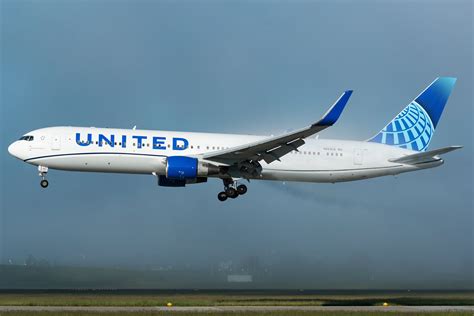
For the 2026 summer season, United plans to serve 36 European destinations, more than any other U.S. airline. Fourteen of those destinations are not served by any other American carrier. The airline’s European footprint includes six destinations in Portugal, five in Spain, and six in Italy, demonstrating a deliberate emphasis on Mediterranean markets.
This approach reflects changing travel patterns. While traditional business centers remain important, premium leisure demand has become one of the strongest growth segments in international aviation. Wealthier travelers increasingly seek direct flights to vacation destinations, and United has tailored its network accordingly.
Routes such as Chicago-Athens, Newark-Johannesburg, and Washington Dulles-Amman illustrate the carrier’s willingness to deploy widebody aircraft beyond conventional transatlantic hubs.
These markets often have less competition, allowing United to establish strong positions before rivals can respond.
Overtaking Delta in Europe
For years, Delta Air Lines maintained one of the strongest transatlantic networks in the United States. Supported by partnerships with Air France, KLM, and Virgin Atlantic, Delta developed a formidable European presence that generated substantial premium revenue.
United’s pandemic-era fleet strategy changed that competitive balance.
Because the airline retained so many widebody aircraft, it could add routes and capacity more rapidly than Delta during the recovery period. As frequencies increased and new destinations appeared, United gradually expanded its market share across Europe.
The carrier ultimately became the leading U.S. airline across the Atlantic, pushing Delta into second place in several key measurements.
Although Delta is expected to regain the lead in total seats offered during parts of the 2026 summer season, United will still operate more European flights overall. A major reason is its flexible deployment of narrowbody aircraft such as the Boeing 737 MAX 8 and Boeing 757-200 on thinner transatlantic routes where widebodies would be excessive.
This flexibility enables United to serve a broader range of cities while maintaining profitability.
The result is a European network that combines large-volume hub routes with niche destinations that competitors often overlook.
The Massive Aircraft Orders That Reinforced the Strategy
Keeping widebodies during the pandemic was bold. Ordering hundreds of additional aircraft while the industry was still recovering was even bolder.
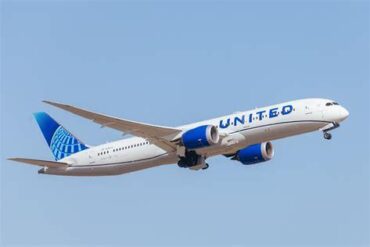
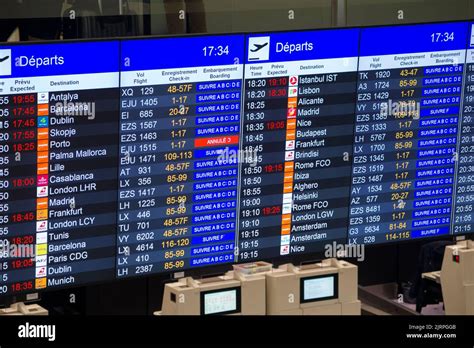
In 2021, United announced a landmark order for 270 narrowbody aircraft, one of the largest purchases in aviation history. The following year, the carrier ordered 100 Boeing 787 Dreamliners with options for another 100.
Later, United exercised options for an additional 50 aircraft, bringing its planned Dreamliner acquisition to 150 units.
The scale of this investment reveals how management views the future.
Rather than merely replacing aging aircraft, United intends to expand. The incoming Dreamliners are expected to replace older Boeing 767s and 777-200 variants while simultaneously supporting network growth.
These aircraft also offer significant economic advantages. The 787 family consumes less fuel, requires less maintenance, and provides greater range than many older widebody designs.
The newest premium-focused Dreamliners further highlight United’s strategic priorities. Some recently delivered aircraft feature 64 Polaris Suites and 35 Premium Plus seats, reflecting the airline’s belief that premium international travel will remain a major revenue driver for years to come.
United’s Widebody Fleet Remains an Industry Giant
Even before its latest deliveries, United operated one of the world’s largest widebody fleets.
Its current inventory includes:
- 53 Boeing 767s
- 96 Boeing 777s
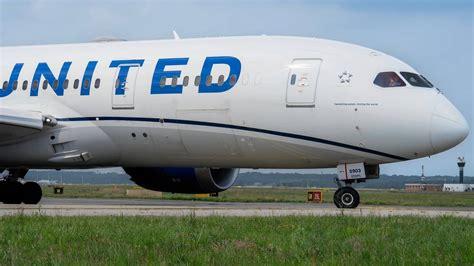
- 87 Boeing 787s
Combined, that represents well over 230 widebody aircraft, a scale unmatched by most global airlines.
The breadth of the fleet provides operational flexibility that competitors often struggle to match. Different aircraft can be assigned to routes based on demand, seasonality, and market characteristics.
A high-density Boeing 777 may serve a major international gateway, while a smaller Boeing 787 can efficiently connect secondary cities. The Boeing 767 continues to fill important roles on medium-demand transatlantic routes.
This fleet diversity gives United tools for expansion that many airlines simply do not possess.
The Growing Role of the Airbus A321XLR
While widebodies remain central to United’s strategy, the airline is simultaneously reshaping parts of its long-haul network through next-generation narrowbody aircraft.
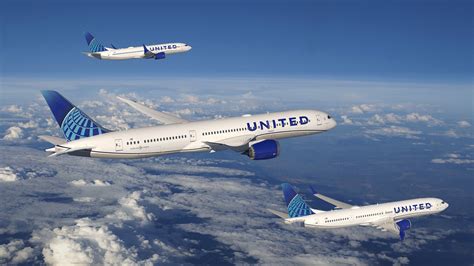
The arrival of the Airbus A321XLR represents a particularly significant development.
These aircraft offer transatlantic range while operating with substantially lower costs than traditional widebodies. They are ideally suited for thinner routes where demand is strong enough for nonstop service but insufficient to justify a larger aircraft.
United plans to complement the A321XLR with a large fleet of Airbus A321neos configured for premium domestic and international missions.
Together, these aircraft will gradually replace many of the duties currently performed by the aging Boeing 757-200 fleet.
The strategy effectively expands United’s reach into markets that previously would have been difficult to serve profitably.
Delta’s Response and Renewed International Ambitions
Delta has not ignored United’s advances.
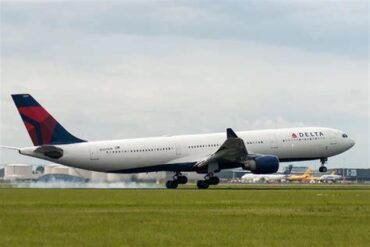
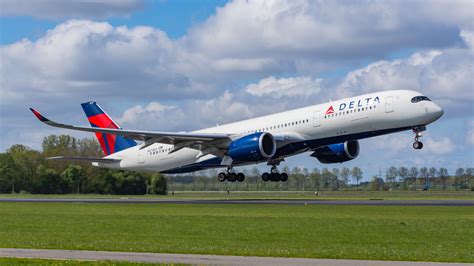
After retiring its Boeing 777 fleet during the pandemic, Delta found itself with fewer long-haul aircraft available during the recovery. To address the gap, the airline leased former LATAM Airbus A350-900s and expanded orders for additional A350s and A330neos.
The carrier also placed orders for 20 Airbus A350-1000s, reinforcing its commitment to long-haul growth.
Delta’s future international strategy increasingly revolves around the Airbus A350 family. Across the Pacific, the airline intends to rely heavily on A350 operations while gradually removing older Boeing 767-300ERs from service.
Recent route launches to Brisbane, Melbourne, Auckland, and Taipei demonstrate Delta’s renewed focus on long-haul expansion. The carrier is also pursuing opportunities in the Middle East and Asia, including planned service to Riyadh and potential future growth in India and the Philippines.
Nevertheless, rebuilding capacity after eliminating an entire fleet type is inherently more challenging than retaining those aircraft in the first place.
That reality continues to influence competitive dynamics today.
American Airlines and the Cost of Retrenchment
Among the three major U.S. network carriers, American Airlines has faced the greatest scrutiny regarding its pandemic fleet decisions.
The airline retired large portions of its long-haul fleet, including Airbus A330s and Boeing 767s. While many of those aircraft were approaching retirement age, the removal of younger A330-200s attracted particular attention.
Unlike United, American has not pursued a major widebody expansion strategy. Deliveries of Boeing 787s continue, but the airline has not announced large-scale new widebody orders capable of dramatically increasing international capacity.
Instead, American remains focused on a more measured approach, relying heavily on strategic partnerships with carriers such as British Airways and Japan Airlines to extend its global reach.
This model reduces the need for massive fleet growth but also limits the airline’s ability to expand independently into new international markets.
As United and Delta invest heavily in long-haul capacity, American’s more conservative approach increasingly stands apart.
A Pandemic Decision That Changed the Competitive Landscape
The aviation industry’s recovery has demonstrated that fleet decisions made during crises can shape competition for years afterward.
United Airlines chose a path that many considered risky in 2020. Instead of aggressively shrinking, it preserved capability. Instead of abandoning widebodies, it protected them. Instead of waiting for demand to return, it prepared for its eventual comeback.
When international travel rebounded, that preparation translated directly into market share gains, particularly across Europe and the Mediterranean. The airline expanded faster, opened more routes, and leveraged a fleet that competitors could not easily replicate.
Today, United’s dominance in many transatlantic markets is not merely the result of post-pandemic growth. It is the product of decisions made during aviation’s darkest period, when uncertainty was at its highest and confidence was in short supply.
The carrier’s willingness to hold onto its widebody fleet transformed what appeared to be a costly burden into one of the most valuable competitive advantages in modern airline history.