Frankfurt Airport has long functioned as one of Europe’s gravitational centers of air travel—a place where continents intersect through aluminum fuselages and tightly choreographed departure banks. Today, the airport’s identity is inseparable from Lufthansa and the Star Alliance ecosystem. Yet rewind the clock a few decades and the landscape looked markedly different. Among the foreign carriers that once embedded themselves deeply into Frankfurt’s operational fabric was Delta Air Lines, an American legacy carrier not typically associated with overseas hubs.
The existence of a Delta Frankfurt hub now feels like an aviation paradox. Delta is synonymous with fortress hubs on US soil—Atlanta, Detroit, Minneapolis, Salt Lake City, New York-JFK. The idea that it once ran a fully fledged European connecting operation seems almost like an evolutionary branch that aviation history quietly pruned away. But for a time, Frankfurt served as a strategic hinge point in Delta’s global ambitions.
Understanding what happened requires zooming out beyond a single airport. The story is ultimately about fleet technology, alliance politics, profitability math, and the changing geometry of long-haul travel.
Frankfurt Airport: The European Superhub That Drew Global Carriers
Frankfurt Airport (FRA) did not become one of the world’s busiest hubs by accident. Its geographic positioning in central Europe made it an ideal connecting node long before modern alliances formalized such logic. Airlines could funnel passengers from North America, Africa, the Middle East, and Asia through a single high-efficiency gateway.
Spanning more than 5,600 acres, Frankfurt evolved into Germany’s busiest airport and one of Europe’s most critical aviation arteries. With four runways and multiple passenger terminals, the facility handles tens of millions of travelers annually—over 61 million passengers in 2024 alone, ranking it among Europe’s elite alongside Heathrow, Charles de Gaulle, Schiphol, Istanbul, and Madrid.
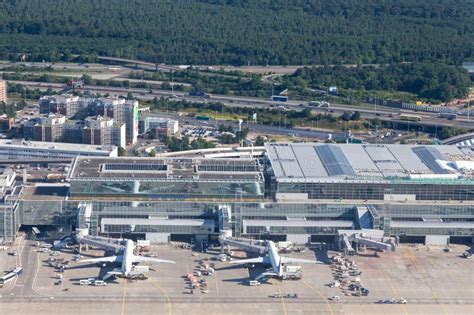
Its infrastructure scale enabled enormous route diversity. More than 330 destinations across five continents became reachable via Frankfurt’s banks of departures. The airport’s history as a US military installation—active from 1947 until 2005—also shaped its long-haul DNA, embedding transatlantic connectivity into its operational identity.
For airlines seeking a European foothold, Frankfurt offered three advantages: geographic centrality, high-yield business demand, and mature infrastructure. Delta saw opportunity in all three.
Why Delta Built A Hub Outside The United States
Delta’s decision to establish a Frankfurt hub reflected an earlier era of airline economics—one where fleet limitations and route range constraints made overseas bases operationally logical.
Widebody aircraft capable of crossing the Atlantic were fewer in number and less flexible. Jets like the Boeing 747 and Lockheed L-1011 TriStar carried enormous passenger loads but lacked the frequency agility airlines enjoy today. To maximize aircraft utilization, carriers often staged passengers through continental hubs rather than flying thinner nonstop routes.
Frankfurt became Delta’s European relay station.
From this German base, the airline could aggregate passengers arriving from the United States and redistribute them across Europe, the Middle East, and parts of Asia. It mirrored, in miniature, what Atlanta did domestically—only transplanted across the ocean.
This strategy aligned with Delta’s identity as a legacy carrier focused on business travelers. High-yield passengers demanded seamless connectivity, coordinated schedules, and premium cabin consistency. A centralized European hub made that orchestration feasible in a pre-alliance world.
Inside Delta’s Frankfurt Operations At Their Peak
At its height, Delta’s Frankfurt hub was expansive, functioning as both a transatlantic gateway and an intra-European connector. The route map extended well beyond Germany.
Flights radiated outward to major European and Eurasian destinations, including Athens, Istanbul, and Moscow. This network allowed Delta to sell single-ticket itineraries from US cities to secondary European markets—an advantage in the competitive corporate travel sector.
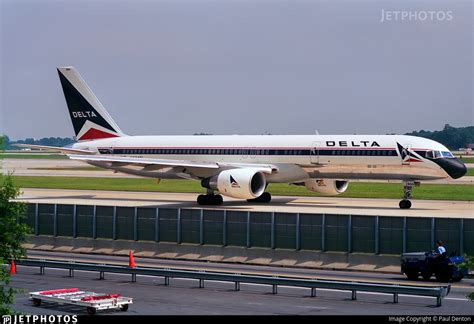
Transatlantic routes formed the backbone of the operation. Services linked Frankfurt with major US metros such as:
- Los Angeles
- Orlando
- Washington, D.C.
These flights fed the hub from the American side, delivering passengers into Delta’s European distribution system.
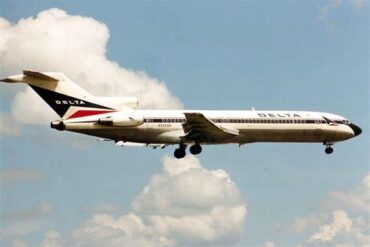
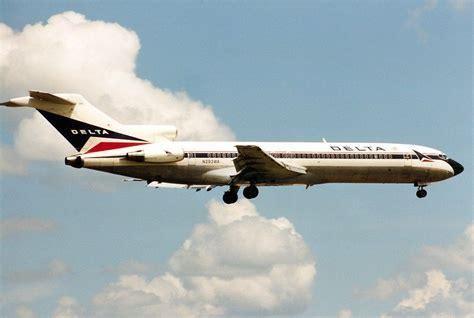
Intra-European flying often relied on narrowbody and trijet aircraft, including the Boeing 727. While operationally complex, this structure enabled Delta to behave almost like a European airline within the continent—an unusual posture for a US carrier.
Yet beneath the surface, structural inefficiencies were accumulating.
The Strategic Math Begins To Change
By the early 1990s, airline economics were undergoing tectonic shifts. Fleet modernization, deregulation aftershocks, and emerging alliances began rewriting network logic.
Delta’s planners conducted profitability modeling that produced an uncomfortable conclusion: the Frankfurt hub, while operationally impressive, was no longer financially optimal.
Internal projections suggested that dismantling the hub could increase operating profits by roughly $62 million, even after absorbing around $60 million in restructuring costs. For an airline navigating competitive pressures and capital expenditures, that delta mattered.
The cost side of the equation was heavy:
- European staffing and facilities
- Aircraft positioning inefficiencies
- Maintenance complexity abroad
- Currency and regulatory exposure
Up to 800 Europe-based Delta jobs, many centered in Frankfurt, were ultimately cut as the withdrawal unfolded.
The hub’s fate was sealed not by failure—but by comparative opportunity elsewhere.
Aircraft Utilization: The Quiet Dealbreaker
One of the least glamorous yet most decisive factors was aircraft productivity.
Jets assigned to intra-European routes from Frankfurt were generating lower returns than if deployed domestically in the United States. When Delta reassigned aircraft like the Boeing 727 back to US routes, utilization rates effectively doubled.
Aircraft are revenue engines only when airborne. Ground time, repositioning legs, and fragmented route structures dilute profitability. By concentrating assets within its US hub system, Delta extracted more value from each airframe.
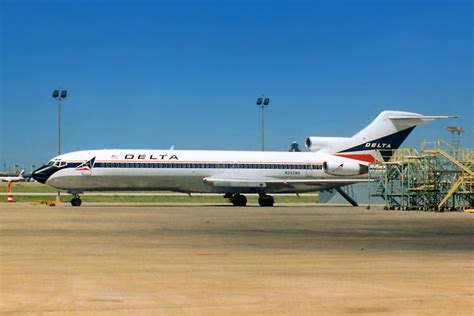
This reallocation strategy aligned with a broader industry realization: continental European hubs operated by foreign carriers were operational luxuries, not necessities, once long-range fleets expanded.
The Rise Of Fortress Hubs In America
As Frankfurt operations wound down, Delta simultaneously fortified its US gateways—particularly New York-JFK.
Rather than funneling passengers through Germany, Delta began launching nonstop transatlantic services directly from American hubs to European destinations such as:
- Istanbul
- Madrid
- Manchester
- Athens
- Rome
This restructuring consolidated international flows through airports where Delta controlled slots, staffing, and infrastructure. The model reduced complexity while improving brand consistency and scheduling power.
JFK, in particular, evolved into Delta’s premier Northeast transatlantic launchpad, complementing Atlanta’s massive southern connectivity engine.
The hub strategy was becoming domestically anchored, not globally dispersed.
Alliance Politics And Partnership Realignment
Another force quietly eroding Frankfurt’s relevance was alliance evolution.
While Delta once operated more independently in Europe, the rise of deep bilateral partnerships reshaped network planning. Cooperation could achieve what foreign hubs once did—without the overhead.
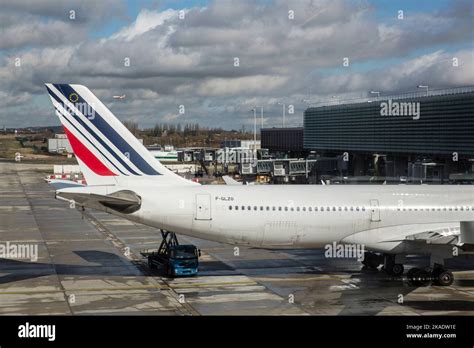
Delta strengthened coordination with Air France, shifting Paris operations from Orly to Charles de Gaulle to better integrate schedules and connections. This move foreshadowed the immunized joint ventures that now dominate transatlantic aviation.
Codeshare agreements also preserved connectivity without requiring Delta metal on every route. Cities like Bucharest and St. Petersburg remained accessible through partner airlines such as Austrian Airlines.
In effect, partnerships replaced physical hubs.
Why operate your own European mini-empire when alliance networks could provide feed traffic more efficiently?
Fleet Modernization Eliminated The Need
Technology delivered the final blow to the Frankfurt hub model.
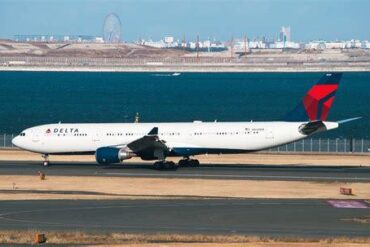
Delta’s long-haul fleet evolved rapidly, incorporating more capable aircraft such as the Boeing 767 and Airbus A330. These jets combined long range with right-sized capacity, enabling profitable nonstop service between US hubs and secondary European cities.
Instead of routing passengers via Frankfurt, Delta could fly them directly.
This shift transformed network geometry:
- Fewer connection points
- Shorter travel times
- Lower handling costs
- Stronger customer appeal
As next-generation widebodies entered planning discussions—including future Airbus and Boeing acquisitions—the strategic rationale for a standalone European hub evaporated almost entirely.
Aircraft range had collapsed the map.
Competitive Denials—And Competitive Reality
At the time, Delta leadership publicly downplayed competitive pressure from the growing Lufthansa–United Airlines alliance.
Chairman Ron Allen framed the withdrawal as an asset optimization decision rather than a defensive retreat. From a corporate communications standpoint, that framing made sense.
But aviation strategy rarely operates in a vacuum.
Frankfurt was Lufthansa’s fortress. Competing long-term against a dominant home carrier—armed with alliance feed and political leverage—posed structural disadvantages. Even if not the primary driver, competitive gravity undoubtedly influenced long-range planning.
Operating a hub in a rival’s stronghold is like opening a café inside someone else’s kitchen.
The Gradual Wind-Down
The withdrawal from Frankfurt was not abrupt. It unfolded through phased reductions—route cancellations, aircraft redeployments, staffing cuts, and partnership substitutions.
Transatlantic flights were trimmed first, followed by intra-European services. Facilities were downsized as operational intensity declined.
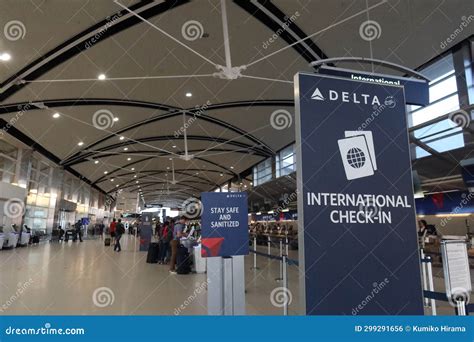
Passengers increasingly connected through US hubs or partner gateways rather than Delta-operated Frankfurt banks.
By the end of the transition, the once-robust hub had dissolved into a standard spoke destination within Delta’s broader network.
The infrastructure vanished, but the strategic lessons endured.
Aviation’s Structural Evolution On Display
The Frankfurt story illustrates a larger industry transformation: the shift from foreign hub dependency to alliance-driven global networks supported by ultra-long-range aircraft.
In earlier decades, airlines needed overseas staging points because:
- Aircraft lacked range flexibility
- Frequency economics favored consolidation
- Partnerships were shallow or nonexistent
Modern aviation inverted those constraints.
Today, Delta operates hundreds of widebodies capable of crossing the North Atlantic nightly. Passengers flow through US megahubs where Delta controls the customer experience end-to-end.
Foreign hubs became redundant artifacts of an earlier technological age.
What Replaced Frankfurt In Delta’s Strategy
Rather than maintaining a single European super-hub, Delta now relies on a hybrid model:
- Fortress hubs in the United States
- Deep joint ventures with European partners
- Point-to-point long-haul flying
- Schedule coordination across alliances
This structure distributes risk, reduces fixed costs, and maximizes aircraft productivity.
Paris Charles de Gaulle and Amsterdam Schiphol—through partnerships with Air France-KLM—now function as de facto European connection platforms for Delta passengers, without requiring Delta to own the hub infrastructure.
It’s influence without ownership. Reach without residency.
The Legacy Of Delta’s Frankfurt Era
Though operationally extinct, the Frankfurt hub remains strategically significant in Delta’s historical arc.
It represented:
- An experimental globalization phase
- A bridge between pre-alliance and alliance aviation
- A case study in fleet-driven network change
It also underscored how quickly airline strategy can pivot when technology, economics, and partnerships realign.
Airports that feel permanent in network maps are often temporary when viewed across decades.
The Bottom Line: Why The Hub Disappeared
Delta Air Lines did not abandon Frankfurt due to failure. It left because success became achievable more efficiently elsewhere.
Fleet modernization enabled nonstop flying. Alliances supplied connection feed. US hubs delivered higher margins. Aircraft utilization improved dramatically when redeployed domestically.
The Frankfurt hub belonged to an era when range was scarce, partnerships were shallow, and global networks required physical overseas anchors.
That era ended.
Today, Delta remains one of the world’s most powerful transatlantic carriers—just without a European hub bearing its name. The airline’s presence in Frankfurt continues through flights and partnerships, but the self-contained mini-empire it once operated has dissolved into aviation history.
What remains is a revealing strategic fossil: proof that even the largest airlines must continuously redraw their maps as technology, economics, and alliances reshape the skies.