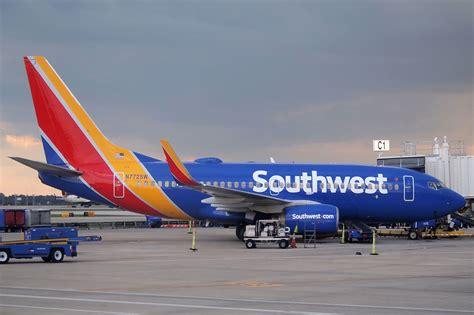
Southwest Airlines has long sold itself as the anti-airline airline. No first class. No baggage fees. No assigned seats. Just low fares, quick turnarounds, and a loyal following that treated boarding position like a competitive sport. But in 2012, the Dallas-based carrier made a calculated $60 million decision that seemed like operational genius at the time—only to reverse it more than a decade later in a dramatic pivot that revealed just how much the airline industry had changed.
This is the story of how a single extra row of seats became a symbol of Southwest’s evolution—and how a strategy built on volume ultimately collided with a market obsessed with premium revenue.
The 2012 “Evolve” Cabin: Six Seats, Millions in Revenue
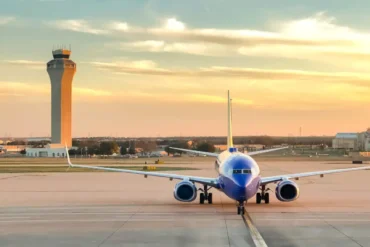
In 2012, Southwest Airlines introduced its redesigned “Evolve” cabin interior across its Boeing 737-700 fleet. At the time, the 737-700 formed the backbone of the airline’s operations, with more than 250 aircraft in service. The goal was simple but powerful: increase capacity without increasing fleet size.
By redesigning the seats using slimmer profiles and lighter materials, Southwest engineers found a way to add an entire extra row. The aircraft’s seating capacity increased from 137 to 143 passengers. On paper, that sounds modest. In practice, across hundreds of daily flights, it translated into millions of dollars in additional annual revenue.
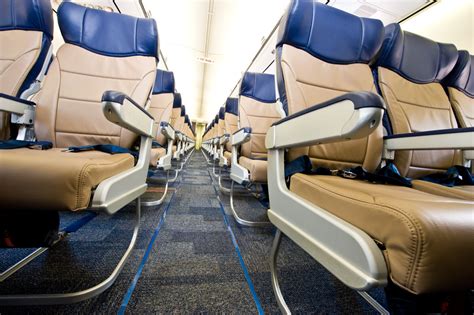
The adjustments were subtle but meaningful. Seat pitch—the distance between one seat and the seat in front—was reduced from 32 inches to 31 inches. Recline was trimmed from three inches to two. These were marginal changes that most passengers would struggle to quantify mid-flight. Yet collectively, they freed up just enough space to fit six additional seats per aircraft.
The brilliance of the move wasn’t just in the added seats. The redesigned cabin actually reduced each aircraft’s weight by approximately 635 pounds due to lighter materials. Less weight meant lower fuel burn. So Southwest wasn’t just increasing revenue per flight—it was improving efficiency simultaneously. Few operational decisions manage to pull off both.
The entire retrofit project wrapped up in under two years and cost around $60 million—roughly $85 million in 2026 dollars. Executives projected an additional $10 million in annual revenue from the change. It was the kind of decision that business schools love to frame as textbook optimization.
At that moment, the math worked beautifully.
Why Open Seating Made Adding Rows So Easy
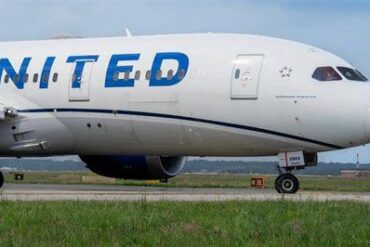
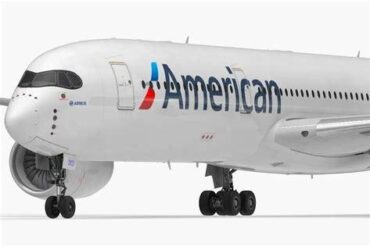
Southwest’s long-standing open seating model made the 2012 expansion operationally painless. Unlike legacy carriers such as Delta Air Lines, American Airlines, or United Airlines, Southwest did not segment its cabins. There was no first class, no premium economy, and no structured fare hierarchy beyond boarding positions.
Passengers received a boarding group and number. Once onboard, they simply chose any available seat. This model accelerated boarding times and reduced ground delays, which in turn maximized aircraft utilization. Aircraft in the air make money. Aircraft at the gate do not.
Because Southwest had no premium sections to rearrange or protect, adding a single row required no complex cabin redesign. The airline simply extended the all-economy layout by one row and continued selling tickets as usual. No fare buckets needed recalibration. No differentiated seating zones needed pricing models.
The extra seats seamlessly blended into a business model built on simplicity.
For years, that simplicity was a competitive advantage.
The Industry Shift Toward Premium Revenue
Airline economics rarely stand still. After the 2010s and particularly following the pandemic recovery, revenue strategies shifted dramatically. Airlines discovered something crucial: premium passengers and ancillary fees could generate disproportionate profit compared to base fares.
Ultra-low-cost carriers like Spirit and Frontier aggressively monetized seat assignments. Legacy airlines leaned into bundled fares, extra-legroom sections, and cabin upsells. Delta’s Comfort+, United’s Economy Plus, and American’s Main Cabin Extra became revenue machines.
Suddenly, a purely volume-based strategy looked incomplete.
Southwest’s open seating and all-economy layout limited its ability to capture this higher-margin revenue. There was no structured way to charge for better seats beyond early boarding purchases. Every inch of cabin space was being sold at roughly the same price, even though some seats—front rows, window seats, exit rows—had inherently higher value.
In economic terms, Southwest was underpricing its own product differentiation.
That six-seat gain from 2012, once a symbol of efficiency, began to look like a ceiling rather than an advantage.
The 2024 Bombshell: Assigned Seating and Extra Legroom
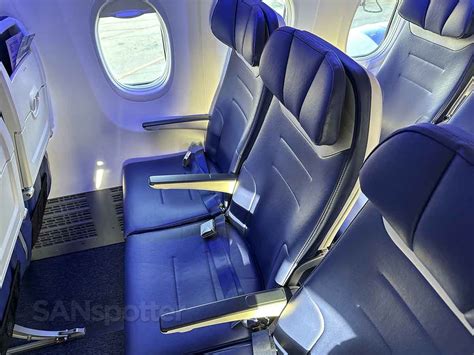
In 2024, Southwest announced the most significant transformation in its history. The airline would end open seating. Assigned seats would become standard. Extra-legroom sections would be introduced at the front of the cabin. Checked bags, once famously free, would now carry fees.
The shift wasn’t cosmetic—it was philosophical.
On the Boeing 737-800 and 737 MAX 8 fleets, Southwest introduced five rows of extra-legroom seating at the front of the aircraft, offering 36 inches of pitch. Standard seats elsewhere settled at 31 inches. This configuration allowed the airline to charge premium prices for front-cabin comfort while preserving high-density seating in the rear.
The 737-700, however, presented a complication.
Its 143-seat configuration, enabled by the 2012 retrofit, left little room for meaningful premium segmentation. To install extra-legroom rows at the front, something had to give.
That “something” was the very row Southwest had spent $60 million adding.
January 2026: Undoing a Decade-Old Decision
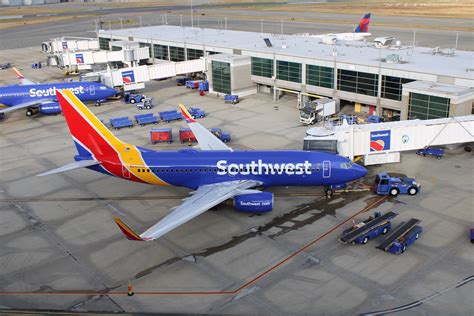
By early 2026, Southwest moved swiftly. In just one month, technicians across maintenance bases in Atlanta, Denver, Houston, and Phoenix reconfigured all 300 Boeing 737-700 aircraft back to 137 seats.
The extra row was removed.
The reversal was executed with surgical speed. Originally, management considered performing the work before the 2025 holiday season. But doing so would have reduced capacity during peak travel demand. Instead, Southwest delayed the reconfiguration and executed an accelerated January overhaul, minimizing revenue disruption.
From an operational standpoint, the process was impressive. From a strategic standpoint, it was symbolic.
A $60 million bet on maximizing seat count had been replaced by a commitment to maximizing yield per seat.
The airline was no longer optimizing for sheer passenger volume. It was optimizing for revenue density.
Fleet Modernization and the End of an Era
Southwest’s cabin overhaul aligns with broader fleet changes. As of 2025, the airline operates more than 800 Boeing 737 aircraft, making it the largest 737 operator in the world. Its fleet includes 300 737-700s, nearly 200 737-800s, and over 300 737 MAX 8s.
The average fleet age sits at approximately 11 years, with the 737-700 representing the oldest segment.
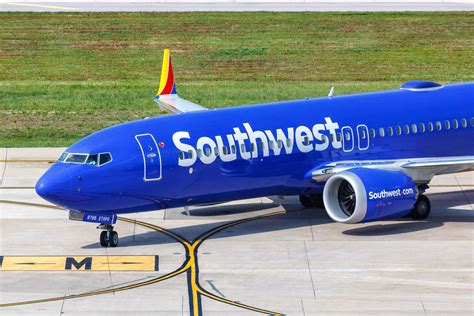
By 2031, Southwest plans to retire both the 737-700 and 737-800, replacing them with newer-generation 737 MAX 7 and additional MAX 8 aircraft. More than 250 MAX 7s and nearly 200 additional MAX 8s are expected to join the fleet in the coming years.
In that context, the 2012 investment appears less like a mistake and more like a bridge strategy. The extra seats generated incremental revenue for over a decade. They served their purpose during a period when Southwest’s competitive edge was cost discipline and operational efficiency.
But bridges eventually lead somewhere.
Passenger Reaction and Operational Growing Pains
The transition to assigned seating and baggage fees has not been frictionless. Some passengers report longer boarding times compared to the streamlined open-seating model. Others note increased competition for overhead bin space, especially since Southwest historically encouraged checked baggage with its two-free-bags policy.
Now, with a $35 checked bag fee in place, more travelers carry luggage onboard. Yet Southwest’s aircraft were not originally configured with the largest overhead bins available, as the airline had little incentive to maximize cabin storage in the past.
The result? More gate checks. More boarding friction. More operational variables.
Airline economics is a delicate ecosystem. Adjust one lever, and unintended consequences ripple outward.
Was the $60 Million Decision a Mistake?
Judging past decisions by present realities is tempting but intellectually lazy. In 2012, adding six seats per aircraft without degrading passenger perception was a savvy move. The retrofit paid for itself through years of incremental revenue and fuel savings.
The true lesson lies elsewhere.
Southwest’s reversal illustrates how airline strategy must evolve with consumer behavior. Travelers increasingly demonstrate willingness to pay for comfort, seat selection, and predictability. Premium economy and extra-legroom products are no longer niche—they are mainstream revenue drivers.
Southwest’s original philosophy prioritized simplicity and egalitarian cabin design. The new model acknowledges a more segmented market reality.
The airline did not abandon efficiency. It recalibrated what efficiency means.
Maximizing passengers per flight once defined success. Maximizing revenue per square foot now carries greater weight.
Will These Changes Endure?
Airlines are living organisms shaped by economic cycles, fuel prices, competitive pressure, and shifting traveler psychology. While some loyal customers mourn the loss of open seating, the financial incentives behind premium segmentation are powerful.
Could Southwest refine the model further? Possibly. A hybrid system where standard economy retains flexible seating while extra-legroom rows remain assigned is not unimaginable. But a full return to pure open seating appears unlikely.
The industry has spoken, and the language is revenue optimization.
Southwest’s $60 million cabin gamble did not “fail.” It succeeded in its era. What changed was the era itself.
In aviation, strategy is rarely about permanence. It is about timing. And sometimes the most telling move a company makes is not the bold investment—but the willingness to dismantle it when the world moves on.