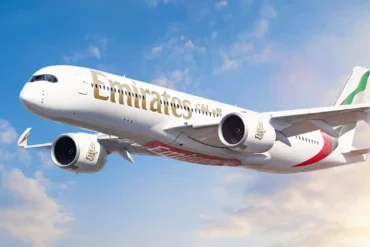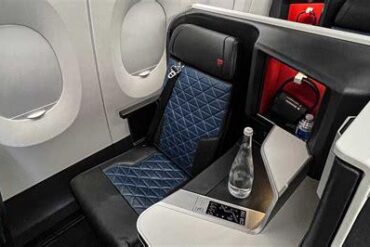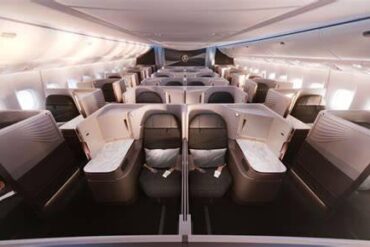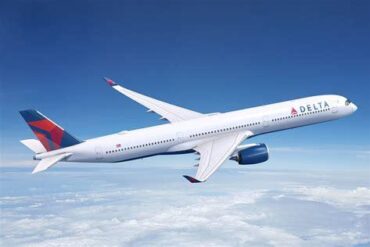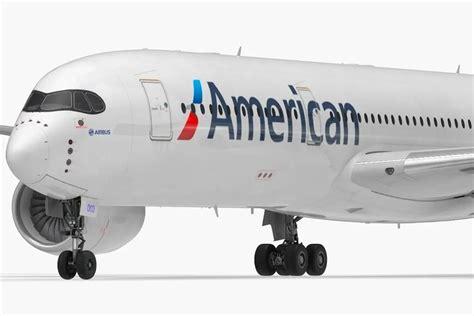
The decision by American Airlines to walk away from the Airbus A350 remains one of the most debated fleet choices in modern commercial aviation. On paper, the aircraft looked like a near-perfect match for a global network carrier: long range, excellent fuel efficiency, advanced materials, and a cabin well suited for premium-heavy international routes. Yet American not only declined to take delivery, it ultimately doubled down on a radically different long-haul philosophy.
Understanding why requires stepping back into the turbulent post-bankruptcy, post-merger era when American Airlines and US Airways were fused into a single airline with clashing fleet cultures, competing strategic instincts, and immense financial pressure. The A350 was not rejected because it was a bad aircraft. It was rejected because it did not fit the airline American wanted to become.
The Strategic Chaos After Bankruptcy and Merger
When American Airlines emerged from Chapter 11 bankruptcy in 2013, it did so in tandem with its merger with US Airways, creating the world’s largest airline by traffic. This was not a merger of equals in fleet philosophy. American historically favored Boeing widebodies, while US Airways had built its operation around Airbus narrowbodies and A330 widebodies.
The integration forced leadership to answer a deceptively simple question: should the new airline embrace a diversified fleet, or ruthlessly simplify? In an era defined by razor-thin margins, volatile fuel prices, and increasing pilot and maintenance costs, simplification carried enormous appeal.
The inherited A350 order sat squarely at the center of this debate. Accepting it would have meant committing to a new widebody type, new pilot training pipelines, new maintenance infrastructure, and long-term dependence on two manufacturers for long-haul flying. For American’s leadership, that was a strategic red flag.
US Airways and the Origins of the A350 Commitment
The A350 order was never American’s idea. It originated with US Airways in 2005, shortly after its merger with America West Airlines. At the time, US Airways was deeply aligned with Airbus. Its narrowbody fleet revolved around the A320 family, and its long-haul network relied on the A330, making the A350 a natural evolutionary step.
There was also a financial dimension. The A350 deal was tied to a $250 million loan from Airbus, helping US Airways stabilize after restructuring. In effect, the order served both operational and balance-sheet purposes. US Airways was even positioned to become an early A350 operator before Airbus fundamentally redesigned the aircraft into what would become the A350 XWB.
When the redesigned A350 program emerged in 2007, US Airways doubled down, expanding its commitment to 22 aircraft, primarily the now-canceled A350-800 variant. From the US Airways perspective, the aircraft promised the perfect blend of range, capacity, and efficiency to replace aging A330s and Boeing 767s.
The Merger Changed Everything
Once the merger closed, the A350 order effectively became American Airlines’ problem. Deliveries were deferred until 2017, buying time for reassessment. During that window, American’s leadership embarked on one of the most aggressive fleet renewal programs in airline history, ordering Boeing 787 Dreamliners and later the 777-300ER as the backbone of its intercontinental network.
This was not accidental. American believed that committing to a single widebody manufacturer would yield long-term savings that outweighed the benefits of fleet diversity. Training costs would drop. Maintenance would be streamlined. Scheduling flexibility would improve. In a network the size of American’s, even small efficiencies scale into hundreds of millions of dollars over time.
From that vantage point, the A350 looked less like an opportunity and more like an outlier.
Fleet Commonality Over Aircraft Performance
The irony is that few airlines questioned the technical excellence of the A350. By the mid-2010s, the aircraft was proving itself with carriers like Qatar Airways, Cathay Pacific, and later Delta Air Lines, delivering exceptional fuel burn and passenger comfort.
American’s objection was never about performance. It was about philosophy. The airline viewed long-haul flying as an ecosystem, not a collection of individual aircraft types. Introducing the A350 would fracture that ecosystem.
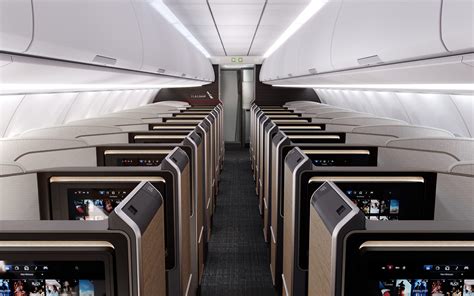
From an operational standpoint, American was already invested heavily in Boeing-specific systems, simulator infrastructure, and pilot career progression models. Adding the A350 would have created parallel tracks, increasing complexity at precisely the moment leadership wanted fewer moving parts.
The Economics That Made the Decision Controversial
Critics of the decision point to one uncomfortable fact: American likely could have acquired the A350 at a steep discount. The order had been placed years earlier, under very different market conditions. Comparable aircraft ordered later carried significantly higher price tags.
Walking away meant forfeiting favorable economics that many airlines would have fought to secure. From a pure spreadsheet perspective, the decision looked questionable. From a corporate strategy perspective, American was willing to accept higher unit costs in exchange for structural simplicity.
This trade-off is what continues to divide analysts. Some see discipline. Others see missed opportunity.
The Vasu Raja Factor and Public Perception
The debate intensified after comments from Vasu Raja, a senior executive deeply involved in American’s network and commercial strategy. His now-infamous analogy comparing the A350 to a lawn mower offered for free to someone living in a high-rise penthouse crystallized American’s thinking, but also inflamed critics.
The remark suggested that even a superior product is useless if it does not fit the environment. Airbus reportedly did not appreciate the comparison, and many in the industry viewed it as dismissive. Still, it revealed the airline’s mindset with unusual clarity. American was not shopping for the “best” airplane in isolation. It was designing a system.
COVID-19 and the Final Nail in the Coffin
The COVID-19 pandemic effectively closed the door on any lingering A350 reconsideration. As international travel collapsed, American accelerated fleet simplification, retiring aircraft types that no longer aligned with its core strategy. The Airbus A330, another US Airways legacy, was phased out entirely.
By the time global demand began to recover, American’s long-haul operation was exclusively Boeing. The A350, once a potential flagship, had no remaining advocates inside the airline.
Comparing American’s Path With Its Rivals
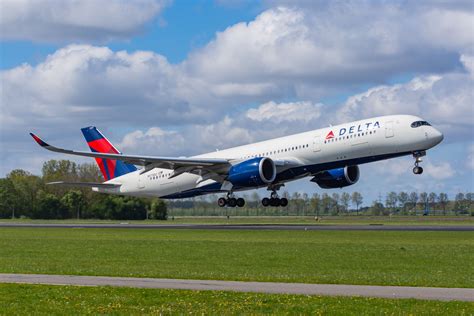
The contrast with Delta Air Lines is striking. Delta embraced the A350, integrating it alongside Airbus A330neos and older Boeing widebodies. That diversity allows Delta flexibility but comes with complexity American deliberately avoided.
United Airlines, meanwhile, took a middle path, operating both Boeing and Airbus widebodies while focusing heavily on the 787. Each carrier made choices reflecting its corporate DNA. American’s DNA favors uniformity, even when it means saying no to a highly capable aircraft.
What the A350 Success Elsewhere Says About American’s Choice
There is no denying the A350 has been a commercial success. Airlines praise its range, reliability, and passenger appeal. Its absence from American’s fleet is therefore conspicuous. Yet success elsewhere does not automatically translate to success everywhere.
American’s network emphasizes specific hub structures, route densities, and aircraft utilization patterns that align closely with its Boeing fleet. The airline optimized around those variables rather than reshaping them to accommodate the A350.
The Bigger Picture: Control Over Optionality
At its core, American’s decision reflects a belief that control beats optionality. By narrowing its fleet, the airline reduced the number of variables it must manage in an already complex global operation. That control comes at a cost: fewer levers to pull when market conditions shift.
The gamble is that long-term stability will outperform short-term flexibility. Whether that proves correct will only be clear decades from now, as aircraft replacement cycles and competitive dynamics evolve.
A Strategic Choice, Not a Technical Rejection
The most important takeaway is this: American Airlines did not reject the Airbus A350 because it was inadequate. It rejected the aircraft because it conflicted with a broader vision shaped by bankruptcy recovery, merger integration, and a relentless focus on simplification.
In aviation, the best airplane is not always the right airplane. Sometimes, the right airplane is the one that fits cleanly into a system designed to minimize friction, even if that means leaving a world-class jet on the tarmac elsewhere.