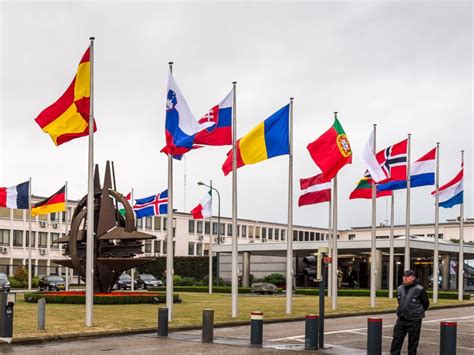
The idea of NATO without the United States has long lived in academic papers and late-night strategic seminars, dismissed as implausible or even heretical. Today, it has burst into the center of European political life with startling force. What once sounded like speculative geopolitics now looks like a real, unfolding dilemma—one driven by Washington’s shifting priorities, hardening rhetoric, and a transactional view of alliances that has shaken Europe’s security foundations.
At the heart of this crisis lies an uncomfortable truth: Europe’s defense architecture has been built around American power for more than seven decades. From nuclear deterrence to satellite intelligence, from airlift capacity to missile defense, the United States has been the alliance’s backbone. The sudden realization that this backbone may no longer be guaranteed has triggered panic, debate, and an urgent search for alternatives across European capitals.
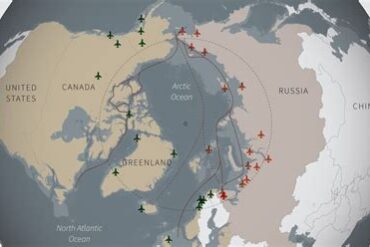
The flashpoint accelerating this reckoning is the unprecedented dispute over Greenland, a semi-autonomous territory of Denmark and a strategic Arctic outpost. Washington’s insistence that Greenland is vital to U.S. national security—and its willingness to frame the issue in coercive terms—has transformed a territorial question into a full-blown alliance crisis. For the first time in NATO’s history, European states are openly discussing how to defend a member’s territory from pressure by another member: the United States itself.
This rupture has forced Europe to confront the unthinkable: What if America walks away? And if it does, can Europe afford—politically, economically, and militarily—to stand on its own?
Greenland and the Arctic Shock That Rocked NATO
Greenland is no longer a frozen afterthought on the edge of the map. It has become a symbol of NATO’s deepest fracture. U.S. claims that control over Greenland is indispensable for missile defense, Arctic surveillance, and emerging “Golden Dome” security concepts have alarmed European allies, who see such assertions as undermining the alliance’s most sacred principle: the inviolability of member territory.
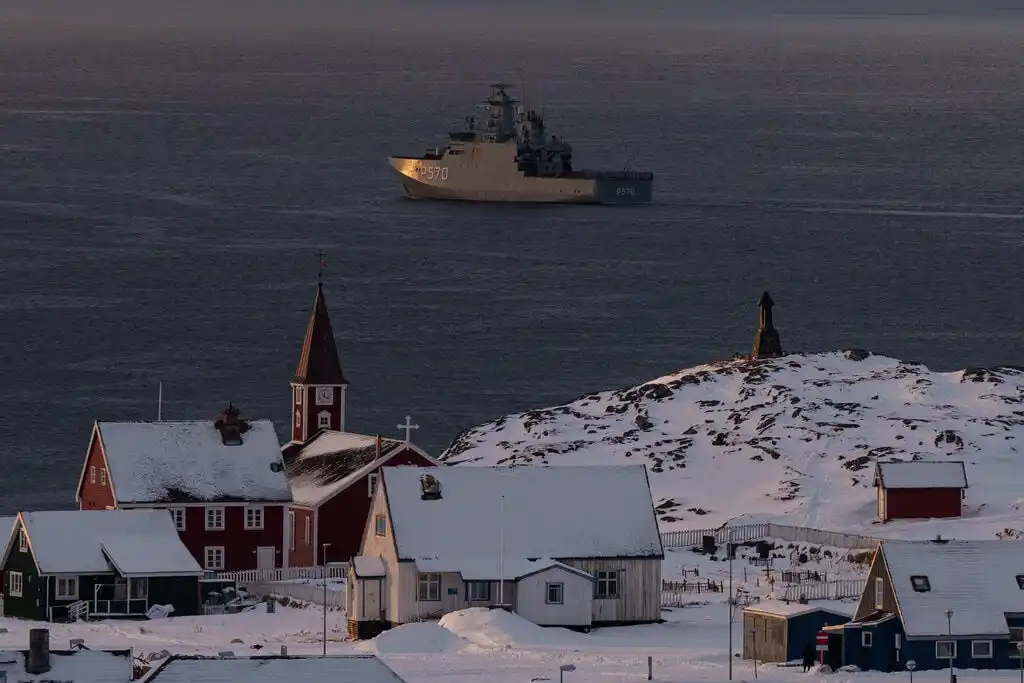
Poland’s warning that U.S. pressure on Greenland could “end the alliance” reflects a broader fear shared quietly in Berlin, Paris, and London. When French, German, Norwegian, and Swedish troops began arriving in Greenland under a European mission to reinforce its security, the message was unmistakable. Europe was signaling that collective defense no longer automatically means American leadership.
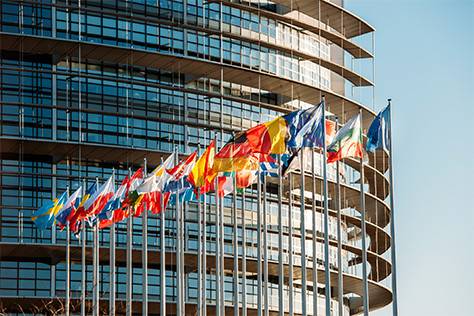
French President Emmanuel Macron’s confirmation that European forces were planting the EU flag in Nuuk was rich in symbolism. It marked the first visible step toward a Europe that is willing to assert its own security interests—even if that means standing apart from Washington.
The Strategic Earthquake of a NATO Without America
For 76 years, NATO has weathered disagreements, wars, and political upheavals. None, however, compare to the existential challenge now looming. The alliance was founded on two assumptions: a shared understanding of threats and the indivisibility of member security. Both are now under strain.
The return of Donald Trump to the White House sharpened these tensions. His insistence on reducing America’s financial burden, coupled with divergent views on Ukraine and open skepticism toward alliance commitments, has eroded trust. The Greenland dispute merely exposed what had been building beneath the surface—a profound mismatch between American priorities and European expectations.
A NATO without the United States would not simply be a smaller alliance. It would be a fundamentally different organization, stripped of its most powerful military actor and forced to redefine its purpose, capabilities, and deterrence posture from the ground up.
The $1 Trillion Question: Can Europe Buy Its Own Security?
According to the International Institute for Strategic Studies (IISS), replacing U.S. conventional military capabilities in Europe would come at an eye-watering cost of approximately $1 trillion over a 25-year lifecycle. This figure includes procurement, sustainment, and modernization across land, air, maritime, space, and cyber domains.
The number is staggering not because Europe lacks wealth, but because it lacks political consensus. Defense spending at Cold War levels—routinely exceeding 3 percent of GDP—would be required across the continent. For governments already strained by debt, aging populations, and social spending commitments, this represents a brutal fiscal trade-off.
Yet the alternative is starker still: strategic vulnerability in the face of an increasingly assertive Russia.
Industrial Bottlenecks and the Limits of Europe’s Arsenal
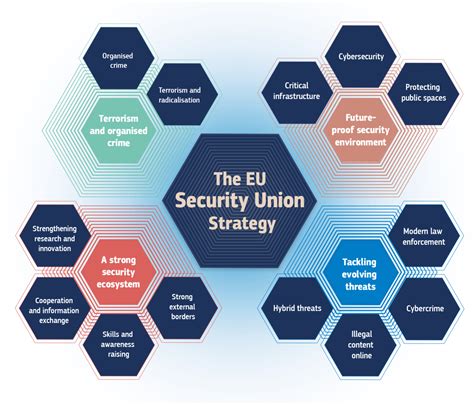
Money alone cannot solve Europe’s defense dilemma. The IISS report highlights severe defense-industrial constraints, particularly in aerospace and naval production. While land-based procurement has accelerated since the war in Ukraine, air power, missile defense, and maritime platforms remain dangerously underdeveloped.
European industry faces shortages in skilled labor, fragmented procurement rules, regulatory delays, and limited surge capacity. Replacing U.S. airlift, refueling, and advanced combat aircraft would require not just investment, but a complete overhaul of how Europe builds weapons.
Long lead times mean that even with aggressive funding, Europe would struggle for at least a decade to field capabilities that approximate those currently provided by the United States.
Command, Control, and the Fog of War Without Washington
Beyond hardware lies an even more complex challenge: command and control. NATO’s integrated military structure has been shaped around American leadership, doctrines, and systems. In a U.S.-less alliance, Europe would need two to three years simply to unify doctrines and chains of command.
Without American-managed AWACS, strategic intelligence, and battlefield surveillance, European forces would operate with diminished situational awareness. The loss of U.S. satellite communications and space-based assets would leave commanders, in the words of one analyst, “fighting blind.”
This transition period is the most dangerous phase of all—a window in which Europe would be weaker, not stronger.
The Nuclear Elephant in the Room
No aspect of a NATO without America is more destabilizing than nuclear deterrence. Today, Europe’s ultimate security guarantee rests on the U.S. nuclear umbrella. Without it, only France and the United Kingdom remain nuclear powers, together fielding roughly 515 warheads.
That number pales in comparison to Russia’s arsenal of over 5,000 warheads. While French and British nuclear forces are formidable, they were never designed to replace America’s strategic deterrent across the entire continent.
This imbalance raises uncomfortable questions about escalation, credibility, and whether Europe would feel compelled to expand its own nuclear capabilities—an outcome that could reshape global nonproliferation norms.
Manpower, Mobilization, and the Human Cost
Europe’s military manpower gap is another sobering reality. NATO’s European members currently field around 1.5 million active personnel. To replace U.S. capabilities, an additional 300,000 troops would be required, alongside expanded reserves.
Recruitment, training, and retention are already chronic problems in many European armies. Societies accustomed to peace dividends now face the prospect of sustained high-intensity military readiness—a cultural shift as demanding as the financial one.
What America Loses in a Transatlantic Divorce
The narrative of a NATO without America often focuses on European vulnerability. Less discussed is what the United States itself would forfeit. Withdrawal would mean losing access to 31 permanent bases in Europe, including Ramstein Air Base, a linchpin of U.S. operations across the Middle East and Africa.
Intelligence sharing painstakingly built over decades would fracture, reducing America’s reach across Eurasia. Economically, the impact would be severe. U.S. arms sales to Europe surged after Russia’s invasion of Ukraine, reaching $68 billion in 2024 alone and contributing to a record $117.9 billion in total arms exports.
A self-reliant Europe would inevitably favor indigenous defense industries, threatening the market dominance of American defense firms.
Strategic Autonomy or Strategic Illusion?
European leaders increasingly speak of strategic autonomy, but the path toward it is fraught with risk. Achieving autonomy does not mean isolation from the United States; it means the capacity to act independently when necessary. The danger lies in confusing aspiration with capability.
As Ivo H. Daalder has argued, a rapid and uncoordinated U.S. withdrawal would cause NATO’s integrated structure to collapse. The irony is that Europe needs American support most precisely at the moment it contemplates life without it.
A Painful Reckoning for the West
A NATO without the United States would mark the end of an era and the beginning of a far more uncertain world. The $1 trillion price tag is not merely a budgetary challenge; it is the cost of rewriting Europe’s strategic DNA.
For Brussels, Berlin, Paris, and beyond, the question is no longer whether Europe should prepare for this scenario, but whether it has the political courage to do so. The choice is stark: invest massively in defense and unity, or gamble that history’s most powerful alliance can survive on trust alone.
The transatlantic bond, forged in the ashes of war, now stands at a crossroads. Whether it fractures or transforms will define European security for generations—and determine whether NATO’s future is one of reinvention or regret.