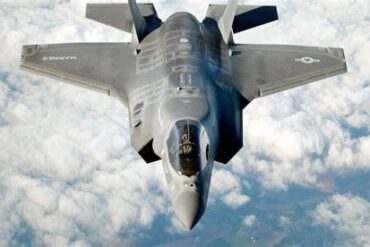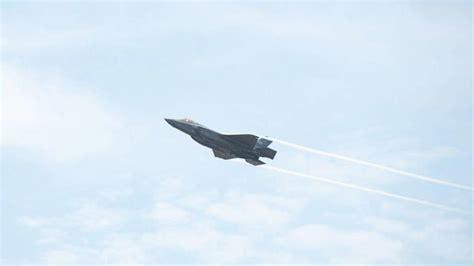
The F-35 Lightning II was once heralded as the future of aerial warfare—a sleek, stealthy, fifth-generation fighter jet that would dominate battlefields across the globe. But what was pitched as a revolutionary marvel of American engineering has now morphed into a cautionary tale of unchecked spending, political fallout, and eroding trust among allied nations. With a projected lifetime cost of $2 trillion, the F-35 is not just the most expensive weapons system in history—it’s becoming a diplomatic liability.
The latest blow comes from several U.S. allies reconsidering or outright canceling their F-35 procurement plans. This wave of hesitancy, triggered in part by former President Donald Trump’s combative stance toward traditional allies, underscores a broader truth: the F-35 program is crumbling under the weight of its own promises and failures.
The $2 Trillion Price Tag: A Jet Built on Broken Promises
The U.S. Department of Defense (DOD) originally envisioned the F-35 as a multi-role fighter that would replace a host of aging platforms, unify NATO forces under a single airframe, and provide an unmatched tactical edge. Instead, what we’ve seen is a ballooning budget, spiraling maintenance costs, and declining mission capability. According to an April 2024 Government Accountability Office (GAO) report, sustaining the F-35 fleet through 2088 is now estimated to cost taxpayers over $2 trillion—with a significant portion of that allocated to fixing existing problems.
The report highlights that not only is the aircraft becoming increasingly expensive to maintain, but its actual usage is decreasing. Reliability issues have forced the DOD to reduce planned flight hours, and the aircraft’s mission readiness has steadily declined over the past five years. In short, it’s a stealth fighter that often can’t fly.
Technical Failures and Software Nightmares
Despite entering its testing phase in September 2018, the F-35 is still riddled with serious issues. The DOD’s 2019 assessment revealed that testing had to be extended by another year due to an overwhelming number of deficiencies. Among these were:
- 873 individual software problems, including 13 critical flaws that jeopardize pilot safety and combat effectiveness
- Sub-par accuracy in the internal gun system
- Persistent logistical complications in maintaining operational readiness
While Lockheed Martin and the DOD have attempted to downplay the significance of these failures, the scope and persistence of the problems indicate systemic flaws that cannot be brushed aside.

Political Fallout: Trump’s Diplomacy and the Domino Effect
President Donald Trump’s second term began with a series of diplomatic fissures that have now rippled into the defense sector. His antagonistic posture toward NATO, imposition of tariffs on close allies like Canada and Mexico, and erratic policy swings have made partner nations increasingly uneasy about deepening military dependence on the U.S.—particularly via a program as opaque and unstable as the F-35.
Take Portugal, for example. In April 2024, its Defense Minister Nuno Melo publicly questioned the decision to acquire F-35s, citing U.S. unpredictability as a serious concern. “The recent position of the United States, in the context of NATO,” Melo said, “must make us think about the best options.”
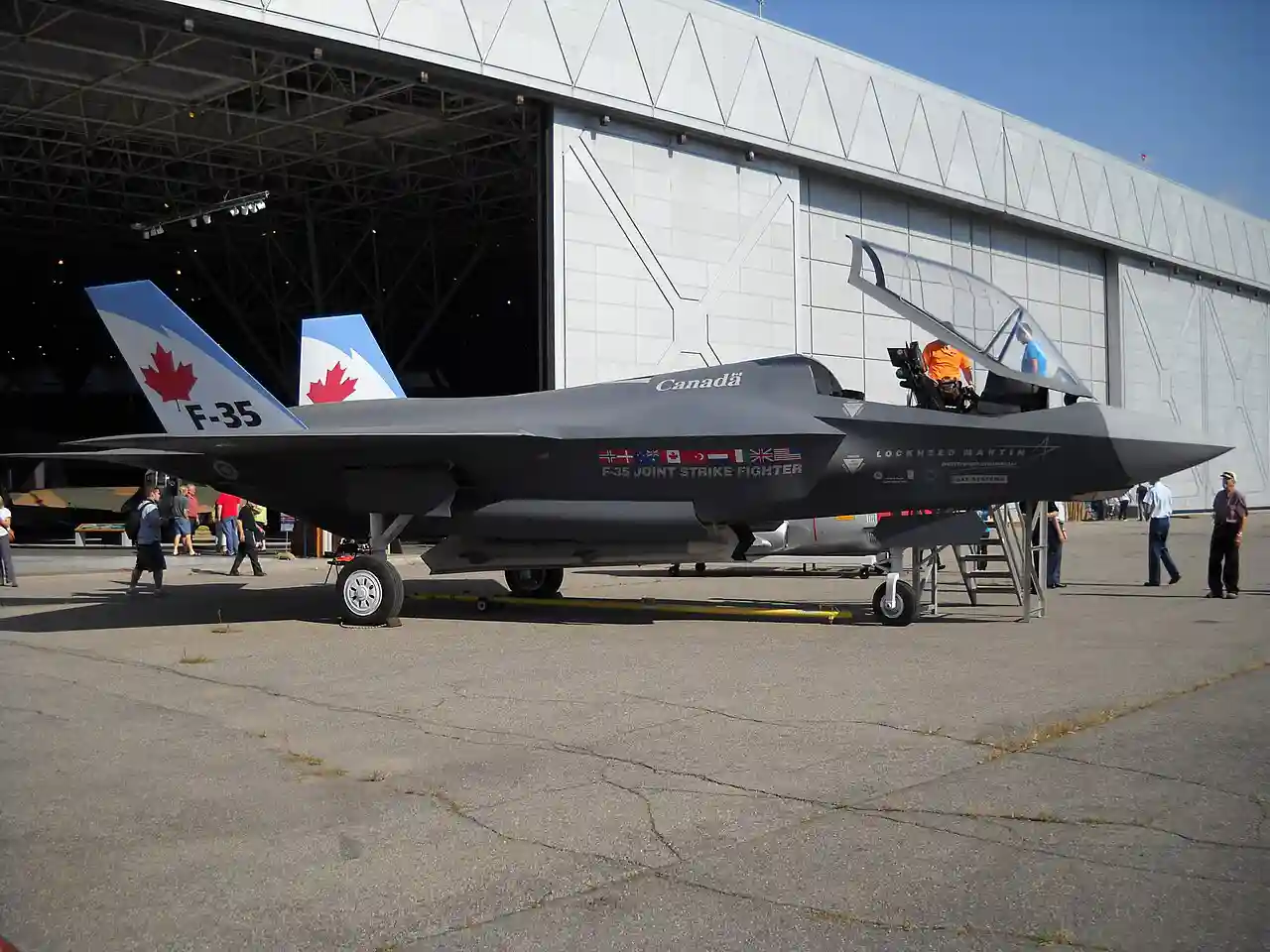
That sentiment is spreading. Canada, which in 2023 committed to purchasing 88 F-35s for $19 billion, has since backtracked. Defense Minister Bill Blair recently stated that Canada is “examining other alternatives,” a stunning reversal for a program once seen as essential to North American defense alignment.
Digital Chokeholds and Supply Chain Leverage
The F-35’s dependency on U.S.-controlled digital infrastructure has given Washington leverage that many allies now view as a liability. As noted by Audrey Decker of DefenseOne, the U.S. can unilaterally degrade allied F-35 capabilities by withholding spare parts, canceling maintenance services, or blocking access to cloud-based software updates.
In a system so interdependent, the potential for disruption is immense. Allies are recognizing that the U.S. could essentially ground their fleets at will—an uncomfortable reality in an era of resurgent nationalism and fluctuating alliances.
Switzerland Joins the Chorus of Skeptics
The Social Democratic Party of Switzerland recently issued a call for the country’s defense department to immediately halt its F-35 procurement. This reflects a growing belief that the aircraft is no longer a symbol of strategic unity but rather a vector of geopolitical risk.
Their concern is not without merit. The inability to operate or service these jets independently poses a significant national security risk, particularly for neutral nations with limited military reliance on the U.S.
The Myth of the Learning Curve: Pentagon Doubles Down
Despite the turmoil, the Pentagon has refused to walk away. In May 2023, U.S. Air Force Secretary Frank Kendall described the F-35 as a “learning experience” to be used in planning future systems. This is an astonishing admission, given the fact that over $428 billion had already been sunk into the program by that point.
This sunk-cost mentality continues to guide U.S. defense spending—even when the evidence overwhelmingly suggests that the program has failed to deliver on its core promises.
Elon Musk’s Critique: A Rare Voice from Inside
Tech billionaire and newly appointed head of the Department of Government Efficiency (DOGE), Elon Musk, has not minced words about the F-35. In a post on X (formerly Twitter), Musk called the jet “the worst military value for money in history.” He followed with a damning prediction: “Manned fighter jets are obsolete in the age of drones anyway.”
While Musk has not taken formal action against the program in his new role, his comments reflect a growing consensus within both the tech and defense communities that the F-35 is not future-proof.

Diplomatic Estrangement as a Path to Fiscal Sanity
Paradoxically, it may be Trump’s erratic diplomacy that provides the political cover necessary to kill the F-35 once and for all. His inflammatory rhetoric—including calls to annex Greenland and turn Canada into “America’s 51st state”—has pushed even the most loyal allies to reassess their defense entanglements.
The strategic consequence? Nations are waking up to the dangers of putting critical national defense infrastructure in the hands of an increasingly capricious superpower. And that may finally break the spell of sunk costs and military inertia that has kept the F-35 alive far past its expiration date.
Conclusion: A Program in Descent
The F-35 began as a vision of battlefield dominance and allied interoperability. It is now a case study in failed procurement, political overreach, and misplaced priorities. With soaring costs, unreliable performance, and a shaky international coalition, the F-35 no longer looks like the future of air combat—it looks like a monumental misstep.
We stand at a critical juncture. The unraveling support from international partners isn’t just a diplomatic embarrassment—it’s an opportunity. An opportunity to reevaluate, redirect, and recover from a two-trillion-dollar mistake before we lose even more in pursuit of a dream that never took flight.