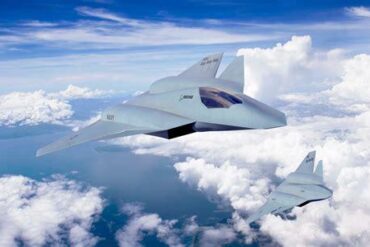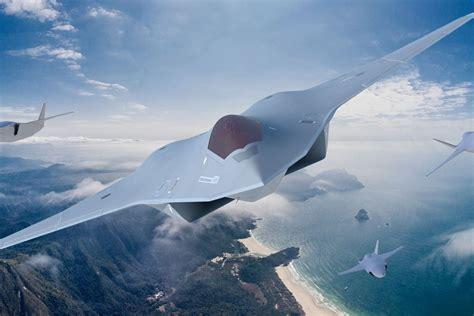
Lockheed Martin, long revered as a symbol of American aerospace supremacy, has taken a dramatic and potentially irreversible turn in its trajectory. The recent announcement that the defense giant will not participate in the collaborative development of the next-generation fighter jet — the highly anticipated 6th-generation air dominance platform — has left international allies reeling and competitors emboldened. This pivotal shift, following the U.S. Navy’s selection of Boeing for the F-47 contract, could reshape not just Lockheed Martin’s future, but the very foundation of global airpower alliances.
Lockheed Martin’s Legacy and the Fall from the Summit
For decades, Lockheed Martin defined what it meant to lead in aerial warfare. From the F-117 Nighthawk’s stealth revolution to the F-22 Raptor’s unmatched air superiority, and most recently the F-35 Lightning II’s global footprint, the company was viewed as the gold standard in military aviation. Its aircraft served as the backbone of U.S. air strategy and were trusted by more than a dozen allied nations.
However, the decision to sideline Lockheed Martin from the U.S. Navy’s NGAD (Next Generation Air Dominance) program marks a brutal shift. The F-47, which is intended to eventually succeed the F-22, is not just another fighter jet — it is the cornerstone of American air dominance for the next half-century. That the Pentagon turned to Boeing for this monumental task is a public vote of no-confidence in Lockheed’s forward-looking innovation.
Industry insiders point to a strategic stagnation at Lockheed Martin, caused by over-dependence on the F-35 Joint Strike Fighter, as the core reason for its faltering position. While the F-35 has become the most exported fighter jet of its class, critics argue it locked Lockheed into a short-term profit model, diverting resources and attention from truly next-gen innovation.
The End of International Co-Development
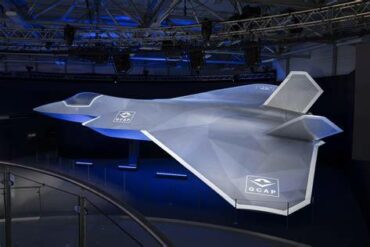
Perhaps even more jarring than Lockheed’s domestic rejection is its growing isolation from international 6th-generation fighter collaboration. At a time when nations are pooling resources to develop future airpower — such as the UK-Japan-Italy Global Combat Air Programme (GCAP) and the Franco-German-Spanish Future Combat Air System (FCAS) — Lockheed’s absence is glaring.
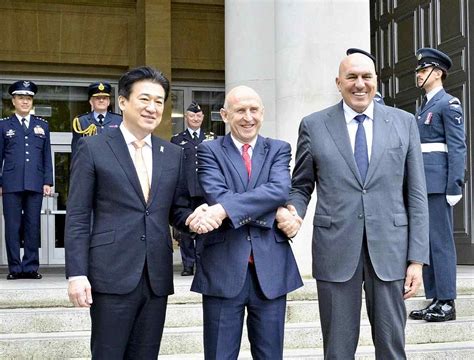
Traditionally, Lockheed Martin was at the heart of global fighter partnerships. The F-35 program involved eight international partners, each investing in production and sharing technology. That model brought political cohesion, interoperability, and shared defense strength. But now, the curtain has fallen on that era. Lockheed’s inability or unwillingness to engage in new multinational ventures is being interpreted by defense experts as a strategic retreat, one that may cost the U.S. its most potent diplomatic weapon — military-industrial alignment.
In Tokyo, Rome, and London, senior defense officials have reportedly expressed concern over what Lockheed’s exit could mean for long-term transatlantic and Indo-Pacific military integration. The potential fracture of military interoperability could lead to the formation of parallel blocs of defense technology, eroding decades of alliance unity.
Boeing and Northrop Grumman Surge Forward
Into the vacuum left by Lockheed’s retreat step its two most formidable rivals: Boeing and Northrop Grumman. Boeing, once dismissed in the stealth fighter arena following the F-22 program, has staged a stunning comeback. Winning the F-47 contract is more than just a victory — it’s a symbol of restored confidence in Boeing’s ability to innovate at the highest levels.
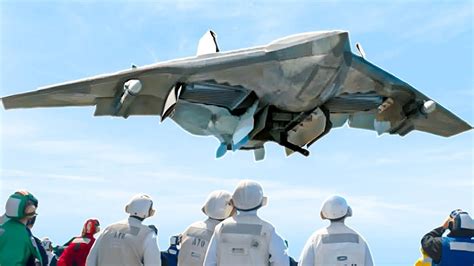
Equally significant is Northrop Grumman’s growing dominance in the unmanned combat and systems integration sectors. With its B-21 Raider stealth bomber already rolling off production lines and a series of autonomous air combat programs in development, Northrop now controls the two most future-facing segments of U.S. airpower: long-range strike and AI-integrated systems.
For Lockheed Martin, this rise of competitors signifies a profound shift in power dynamics. Once the undisputed “prime” in defense contracting, Lockheed now finds itself struggling to remain relevant in a market that values agility, modularity, and systems-of-systems design.
The F-35: A Technological Triumph, A Strategic Trap
At the heart of Lockheed Martin’s dilemma lies its own crown jewel: the F-35 Lightning II. Touted as the most advanced multirole fighter jet in history, the F-35 has been a financial and operational mainstay, bringing in billions through procurement, upgrades, and servicing contracts. However, critics argue that Lockheed’s strategic vision has become shackled by the need to support this global program.
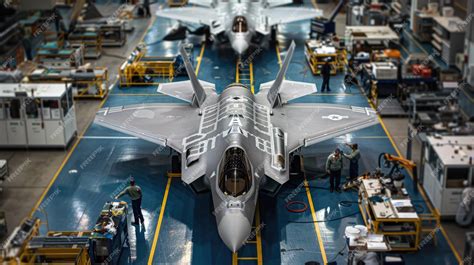
The company has become increasingly reactive — focusing on software patch cycles, retrofits, and sustainment logistics — rather than leaping forward into new concept development. As a result, the F-35’s enormous logistical footprint and complex interoperability demands have come to represent inertia, not innovation.
While some argue that the Block 4 upgrades and ongoing electronic warfare enhancements will keep the F-35 relevant well into the 2040s, the emergence of manned-unmanned teaming (MUM-T), adaptive engines, and AI-assisted dogfighting capabilities suggest that the future battlefield will demand more than legacy evolution — it will require revolution.
What the Exit Means for U.S. Military Strategy
The consequences of Lockheed Martin’s exclusion extend well beyond the private sector. For the Department of Defense, this strategic shift will reshape procurement priorities, industrial base considerations, and international posture. The move hints at a new multi-prime model, where different companies are entrusted with different facets of aerial warfare — from manned jets to autonomous swarms, from ISR platforms to cyber-resilient avionics.
This diversification strategy may yield faster innovation and less vendor lock-in, but it also raises concerns over coherence and cost control. The military’s dependence on Lockheed for single-vendor solutions — often criticized for stifling innovation — is being replaced by a mosaic of specialized contracts.
Moreover, Lockheed’s exit from NGAD may create gaps in the U.S.’s export capability. Allies that have relied on Lockheed systems for decades now face a strategic dilemma: wait for the company to reinvent itself or shift allegiance to Boeing, Northrop, or even non-U.S. firms. The implications for foreign military sales (FMS) and global weapons standardization are staggering.
Geopolitical Ripples and the Fragmentation of Allied Airpower
International reactions have ranged from diplomatic concern to strategic recalibration. The United Kingdom and Japan, now investing heavily in GCAP, have signaled they will prioritize interoperability with U.S. forces, but without Lockheed’s involvement, the path forward is murky. NATO allies reliant on the F-35 platform fear interoperability gaps with the emerging U.S. sixth-gen ecosystem, now dominated by Boeing and Northrop paradigms.
In the Indo-Pacific, Australia and South Korea — both cornerstone F-35 customers — are closely reevaluating their future jet purchases. Should Lockheed fail to offer a viable next-gen alternative by the early 2030s, a new era of regional defense divergence may unfold, leading to fragmented force architecture and diminished joint combat effectiveness.
Meanwhile, competitors like China’s AVIC and Russia’s Sukhoi are already leveraging the news to tout their own 6th-generation ambitions, positioning themselves as viable alternatives in an increasingly multipolar arms marketplace.
A Company at the Crossroads
Lockheed Martin is not finished. But it is undeniably at a crossroads of existential magnitude. To reclaim its former position, it must break free from the gravitational pull of the F-35, rekindle its culture of risk-taking, and invest heavily in breakthrough technologies — from quantum radar evasion to hypersonic propulsion and AI-piloted airframes.
There are signs of potential rebirth. Lockheed’s Skunk Works division continues to experiment in classified realms, and a rumored next-gen drone platform is in early-stage development. But the timeline is tight and the stakes are immense.

The company’s leadership must also rebuild international trust. That means proactively engaging in open architecture frameworks, supporting allied industrial bases, and participating meaningfully in future joint R&D programs. Only then can Lockheed hope to avoid being sidelined in the world it once helped to build.
Conclusion: The End of an Era or the Start of Reinvention?
The closure of Lockheed Martin’s chapter in 6th-generation fighter collaboration is not merely an internal crisis — it is a seismic moment in global military history. What was once a model of American-led defense alignment is now giving way to a multipolar innovation race, where agility, integration, and openness matter more than legacy and scale.
Lockheed Martin’s journey from dominance to disruption serves as a stark reminder: in the fast-evolving theater of defense aviation, past glories offer no guarantee of future relevance. Whether this moment marks the end of Lockheed’s leadership — or the beginning of a radical rebirth — will be determined not by nostalgia, but by bold action, relentless innovation, and strategic humility.
The world is watching.