The legal turbulence surrounding the Boeing 737 MAX has entered a new and consequential phase. In a decisive move, the Supreme Court of the United States (SCOTUS) declined to shield Boeing from a lawsuit brought by the Southwest Airlines Pilots Association (SWAPA), effectively allowing the case to proceed toward trial in Texas. For a manufacturer long accustomed to invoking federal preemption as a protective barrier, this refusal signals something far more significant than a procedural setback. It places Boeing squarely back in the judicial spotlight, with potential implications that stretch across aviation law, labor relations, and corporate accountability.
At the heart of the dispute lies a contentious question: can Boeing rely on federal labor law to avoid being sued by pilots who allege they were misled about the aircraft’s safety and training requirements? Boeing argued that the Railway Labor Act (RLA)—a federal statute governing labor relations in the airline and rail industries—preempts the pilots’ claims. The company insisted that resolving the dispute would require interpreting Southwest Airlines’ collective bargaining agreement, thereby placing the matter squarely within the RLA’s domain.
Texas courts rejected that reasoning. The state’s highest court determined that the RLA governs disputes between airlines and their employees—not between pilots and an aircraft manufacturer. Because Boeing is not an airline employer, the court concluded that federal labor law does not insulate it from claims alleging misrepresentation and fraudulent inducement. By declining Boeing’s appeal, SCOTUS left that interpretation intact, clearing the runway for trial proceedings.
Misrepresentation Allegations and the Training Controversy
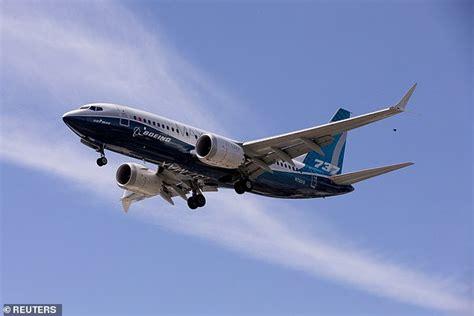
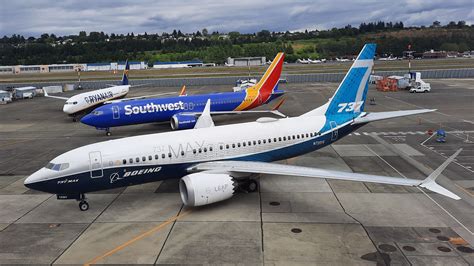
The lawsuit centers on allegations that Boeing misrepresented the nature of the 737 MAX and its training requirements. When Boeing introduced the aircraft in 2011, it marketed the MAX as a fuel-efficient evolution of the venerable 737 platform, emphasizing that pilots would not require costly simulator training to transition from earlier models. That selling point became commercially decisive. Airlines seeking fleet continuity and reduced training expenses embraced the aircraft.
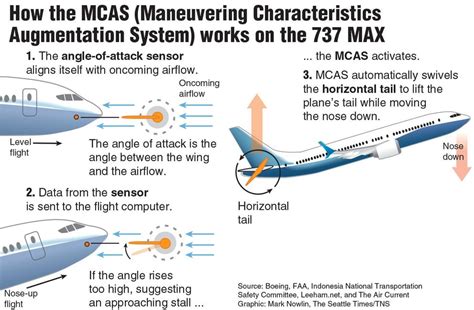
However, after two catastrophic crashes in 2018 and 2019, scrutiny intensified around the aircraft’s Maneuvering Characteristics Augmentation System (MCAS)—a new flight control software designed to adjust the aircraft’s pitch automatically under certain conditions. Investigations revealed that MCAS relied on a single angle-of-attack sensor and could repeatedly force the nose downward without sufficient pilot awareness or override clarity.
SWAPA contends that Boeing interfered with the pilots’ business relationship by fraudulently inducing them to fly the MAX without adequate training on MCAS. The union seeks damages for lost compensation, arguing that grounding and reputational damage disrupted pilots’ earning potential. The claim is not merely about technical disclosure; it is about whether critical safety information was obscured in pursuit of market advantage.
Lion Air Flight 610 and Ethiopian Airlines Flight 302
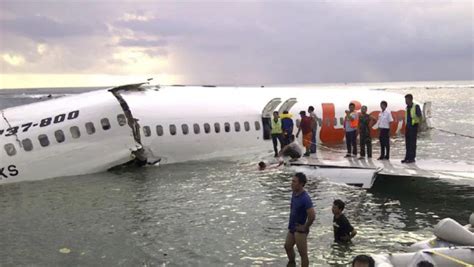
The gravity of the litigation cannot be separated from the tragedies that precipitated it. On October 29, 2018, Lion Air Flight 610, a 737 MAX 8 operating from Jakarta to Pangkal Pinang, plunged into the Java Sea just 13 minutes after takeoff. All 189 people on board perished. It became the deadliest accident in the long history of the 737 family.
Less than five months later, on March 10, 2019, Ethiopian Airlines Flight 302 crashed minutes after departing Addis Ababa en route to Nairobi. All 157 passengers and crew were killed. The similarities between the two accidents triggered a global grounding of the MAX fleet and forced regulators to reexamine the aircraft’s certification process.
Investigations ultimately identified MCAS as a central factor in both crashes. The system activated erroneously due to faulty sensor input, repeatedly pushing the aircraft’s nose downward while pilots struggled to diagnose and counteract the malfunction. These findings ignited debate over regulatory oversight, manufacturer transparency, and the balance between automation and pilot authority.
Railway Labor Act Defense Rejected
Boeing’s legal defense hinges on federal preemption under the Railway Labor Act of 1926, a statute originally designed to prevent disruptive labor disputes in essential transportation sectors. The company maintains that adjudicating SWAPA’s claims would require interpreting the collective bargaining agreement between Southwest Airlines and its pilots, thereby falling under the RLA’s exclusive dispute-resolution mechanisms.
The Texas Supreme Court found otherwise. It concluded that resolving the pilots’ fraud and misrepresentation claims does not necessitate interpreting the labor contract itself. Instead, the case focuses on Boeing’s independent conduct as a manufacturer. This distinction proved decisive. If Boeing cannot cloak itself in the RLA, it must defend its actions under traditional state tort law principles.
The Supreme Court’s refusal to intervene does not determine Boeing’s liability. It simply ensures that the courtroom doors remain open. Yet the symbolic impact is unmistakable. For years, Boeing has navigated litigation through settlements, deferred prosecution agreements, and procedural defenses. This development suggests that those protective layers may no longer be impermeable.
Criminal Exposure and Corporate Accountability
The broader legal context amplifies the stakes. Boeing previously faced intense scrutiny from the Department of Justice over allegations that it misled regulators during the MAX certification process. Although a federal judge dismissed certain felony charges in a separate proceeding, public outrage and legislative pressure have persisted.
If the SWAPA case advances to trial, Boeing may confront detailed public examination of internal communications, engineering decisions, and marketing strategies. Discovery could illuminate how corporate incentives intersected with safety considerations. For a manufacturer seeking to restore trust with airlines, regulators, and passengers, such scrutiny carries reputational consequences beyond financial damages.
The litigation also tests the boundaries of corporate immunity in federally regulated industries. Aircraft manufacturers operate within a complex framework of federal oversight, including certification authority delegated by the Federal Aviation Administration. Boeing’s preemption argument reflects a broader tension: when federal regulation is pervasive, to what extent can state-law claims proceed?
Texas courts have drawn a line, asserting that regulatory compliance does not automatically shield a manufacturer from allegations of deception. That principle could influence future cases involving other aerospace firms and regulated industries.
The Future of 737 MAX Litigation
The 737 MAX has returned to service worldwide after software revisions, enhanced pilot training requirements, and regulatory recertification. Airlines have resumed deliveries, and Boeing continues to market the aircraft as a cornerstone of its narrow-body fleet strategy. Yet the legal aftershocks endure.
The SWAPA lawsuit represents more than a labor dispute. It encapsulates unresolved questions about transparency, accountability, and the limits of federal preemption. By declining to halt the case, SCOTUS has ensured that these issues will be examined in open court rather than resolved behind procedural barriers.
Whether Boeing ultimately prevails remains uncertain. What is clear is that the notion of categorical immunity has been shaken. In aviation, as in law, stability depends on trust. The coming trial may determine not only financial liability but also how that trust is rebuilt—or redefined—in the aftermath of one of the most consequential aircraft crises in modern history.