The year 2026 carries an unusual gravity for the United States. It marks 250 years since the nation’s founding, a milestone that demands more than fireworks and speeches. It calls for memory made tangible. To answer that call, the National Archives has partnered with Boeing on a mission that blends aerospace precision with historical reverence: transporting some of the most valuable documents in American history aboard a specially designated aircraft known as the Freedom Plane.
This is not ceremonial aviation. It is logistical, symbolic, and exacting. From March through August 2026, an engraved copy of the Declaration of Independence, early drafts of the Constitution, and handwritten oaths signed by revolutionary figures will leave their climate-controlled vaults and travel across the country by air. The responsibility of moving them safely rests on a customized Boeing 737-700, turning a commercial airframe into a flying archive of the American experiment.
The stakes are immense. These artifacts are irreplaceable, sensitive to vibration, temperature fluctuation, and light. Every mile flown carries the weight of centuries, and Boeing’s involvement is not incidental. It reflects confidence in engineering reliability and operational discipline, qualities demanded when history itself becomes cargo.
A Flying Tribute to America’s 250-Year Journey
The Freedom Plane project was announced on January 20, 2026, by the National Archives and Records Administration in partnership with the National Archives Foundation. Its purpose is simple in language yet profound in scope: bring the founding documents of the United States directly to the public. Rather than asking millions to travel to Washington, history will travel to them.
This nationwide exhibition echoes the spirit of the 1976 Freedom Train, which toured the country during the bicentennial. That earlier effort relied on rail. The 2026 mission embraces air travel, reflecting how America itself has evolved. Speed, reach, and precision now define national connectivity, and aviation is the only mode capable of linking eight major cities in five months without compromising preservation standards.
The documents will be displayed in leading museums, allowing visitors to stand inches away from the handwritten words that shaped the republic. Seeing ink laid down by George Washington or Alexander Hamilton is not an abstract lesson. It is an encounter.
The Documents That Define a Nation
The manifest aboard the Freedom Plane reads like a condensed syllabus of American democracy. Among the artifacts are an 1823 engraved copy of the Declaration of Independence, the 1774 Articles of Association, and the 1778 Oaths of Allegiance signed by Washington, Hamilton, and Aaron Burr. Also included are the 1783 Treaty of Paris, formally ending the Revolutionary War, and a 1787 printed draft of the U.S. Constitution, annotated by hand during its creation.
What makes this tour exceptional is not only the value of each document, but the fact that they will travel together for the first time. Collectively, they chart the transformation of thirteen colonies into a constitutional republic, revealing debate, uncertainty, and compromise along the way.
The Aircraft Chosen for History’s Safest Ride
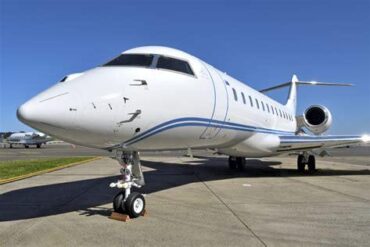
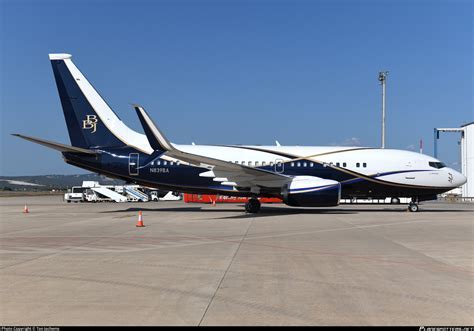
To carry this burden, Boeing selected a 737-700 Boeing Business Jet, tail number N836BA. This aircraft is no stranger to precision missions. First flown in May 2000, it has served in executive transport roles for decades, accumulating a reputation for reliability rather than spectacle.
The jet is operated by Red Barn Operations, a Boeing subsidiary that manages the manufacturer’s executive fleet. Using in-house crews ensures direct oversight of flight procedures, maintenance standards, and security protocols. While the aircraft will retain its existing interior configuration, subtle adjustments are expected to accommodate document containers, environmental monitoring systems, and enhanced vibration control.
Externally, the aircraft will receive special Freedom Plane markings, signaling its role as a national symbol rather than a corporate asset. Once the tour concludes, those markings will be removed, returning the jet to its quieter duties. The history it carried, however, will linger.
Engineering Meets Preservation Science
Transporting centuries-old parchment by air is not a matter of loading crates and filing a flight plan. Each document travels in a custom-designed enclosure that maintains constant humidity and temperature. Sensors monitor conditions in real time, ensuring that even subtle deviations are addressed immediately.
The Boeing 737-700’s stable flight characteristics make it particularly suitable for this task. Smooth climb profiles, predictable handling, and a proven airframe reduce stress on sensitive cargo. Routes are carefully planned to avoid excessive turbulence, and flight crews are briefed not just on aviation, but on the cultural importance of what sits behind the cockpit door.
This is where aerospace engineering and archival science intersect. Both disciplines share a respect for margins, redundancy, and meticulous preparation.
Mapping the Freedom Plane’s National Journey
The Freedom Plane will depart Washington, D.C. on March 6, 2026, beginning a carefully sequenced itinerary. Kansas City hosts the opening exhibit at the National WWI Museum and Memorial, followed by stops in Atlanta, Los Angeles, Houston, Denver, Miami, Dearborn, and Seattle. Each location was chosen for its regional significance and institutional capacity to display priceless artifacts.
The tour concludes on August 16 in Seattle, after which the documents will return to their permanent home in Washington. Over five months, millions of visitors are expected to engage directly with foundational texts, many seeing them for the first time outside textbooks or screens.
Why This Mission Matters Now
In an era defined by digital abstraction, the Freedom Plane is a reminder that nations are built on physical acts and handwritten decisions. Boeing’s role underscores how modern industry can serve historical stewardship, using advanced technology to protect fragile truths from the past.
This mission is not about nostalgia. It is about continuity. The same country that once debated liberty by candlelight now relies on jet engines and flight management systems to preserve that debate’s evidence. The Freedom Plane carries more than documents. It carries the idea that history, like democracy, survives best when it is shared.