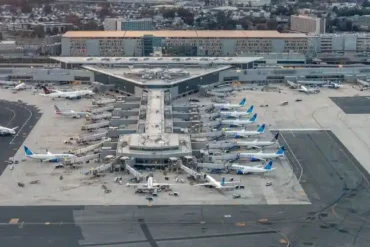
For years, Newark Liberty International Airport (EWR) stood as a symbol of travel frustration—a congested, delay-plagued hub synonymous with missed connections, ground traffic snarls, and technical failures. But today, in a remarkable transformation, Newark holds the title of America’s most on-time large airport, with nearly 84% of flights arriving within 14 minutes of schedule, according to aviation analytics firm masFlight.
The turnaround is not a mere stroke of luck but the result of deliberate, multi-faceted reforms addressing infrastructure, technology, staffing, and operational processes.
From Communication Chaos to Commanding Control
One of the most severe challenges Newark faced was recurring air traffic control (ATC) communication blackouts. For years, outdated ATC systems and obsolete infrastructure plagued the airport’s ability to manage its complex flight schedules. These blackouts disrupted the flow of arrivals and departures, creating cascading delays across the nation’s airspace.
Equally problematic were staffing shortages, particularly within the ATC ranks. During peak hours, the lack of qualified controllers strained an already overstretched system, compounding inefficiencies and bottlenecks. Flight schedules clashed with the reality on the ground, leaving passengers stranded and airlines scrambling.
Recognizing the urgency, Newark initiated substantial investments in modernizing ATC systems and launching aggressive recruitment and training campaigns. United Airlines, which operates the lion’s share of Newark’s flights, played an instrumental role. In close collaboration with the Port Authority of New York and New Jersey, United pushed for expedited infrastructure upgrades to stabilize and future-proof the airport’s operations.
The $121 Million Runway That Changed Everything
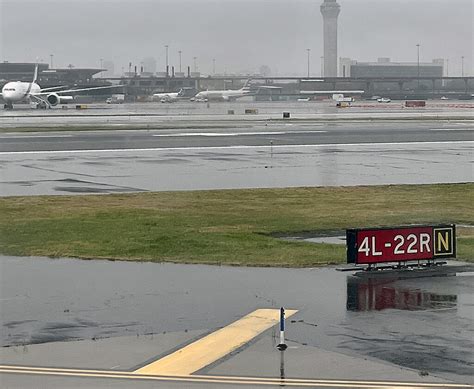
Perhaps the most defining milestone in Newark’s resurgence was the rehabilitation of runway 4L-22R, one of its three critical airstrips. In 2024, the airport undertook a massive $121 million project to overhaul the deteriorating runway, which had long hampered flight flow and efficiency.
For months, the closure of 4L-22R constricted the airport’s capacity, exacerbating delays during already challenging periods. Yet the long-term vision proved worthwhile. On June 2, 2025, the runway reopened, boasting a reinforced surface and state-of-the-art infrastructure capable of supporting increased traffic volumes.
The immediate impact was undeniable. With full runway functionality restored, Newark’s operational bottlenecks eased considerably. United Airlines credited much of its improved schedule reliability to this upgrade, as the expanded capacity allowed for better traffic management, reduced taxi times, and more seamless departures and arrivals.
Terminal Modernization and Airside Efficiency
Beyond runway infrastructure, Newark has aggressively pursued terminal enhancements and airside efficiency projects. Outdated facilities gave way to modernized terminals, upgraded security checkpoints, and state-of-the-art baggage handling systems, significantly improving both passenger experience and operational flow.
Security screening areas expanded, reducing lengthy queues that once plagued travelers during busy periods. Meanwhile, optimized taxiways and gate configurations minimized aircraft ground delays, a crucial factor in sustaining high on-time performance.
United Airlines has complemented these efforts by refining its internal operations. The airline now aligns flight schedules more precisely with gate availability and ATC capacity. Moreover, improved turnaround times—the period between an aircraft’s arrival and readiness for its next departure—have contributed to Newark’s newfound efficiency.
Technological Edge: United’s Mobile App Revolution
Anticipating a record-breaking summer travel season, United Airlines has leveraged technology to empower passengers. The airline rolled out significant enhancements to its mobile app, offering travelers tools to navigate Newark’s complex terminals with greater ease.
Key among these features is the real-time countdown timer, providing up-to-the-minute updates on flight statuses, boarding times, and gate changes. Travelers can access detailed turn-by-turn directions within the app, ensuring seamless movement between gates, even during tight connections.
Notably, the app also displays estimated walking times, helping passengers plan their transit across Newark’s terminals. During beta testing, involving over 350,000 passengers, the upgraded app demonstrated a 98% success rate in aiding travelers to make their connections—a remarkable achievement that underscores the app’s effectiveness.

FAA Intervention: Flight Limits to Combat Congestion
Despite Newark’s improvements, congestion remains an ever-present challenge, driven by high demand and lingering ATC staffing gaps. To alleviate mounting pressure, the Federal Aviation Administration (FAA) implemented temporary flight limits starting May 20, 2025.
The restrictions cap arrivals and departures to 28 per hour on weekends and 34 per hour on weekdays, with the measures set to remain in place until at least December 31, 2025. These limits are designed to smooth traffic flow during peak periods, preventing the systemic gridlock that once crippled Newark’s operations.
While some airlines expressed concerns about lost revenue opportunities, the flight caps are widely viewed as a strategic trade-off to safeguard overall airport efficiency and maintain the impressive on-time performance Newark has recently achieved.
Investing in the Future: Staffing and System Overhauls
Addressing the root causes of Newark’s past struggles requires long-term commitment. The FAA, in partnership with airlines and the Port Authority, is spearheading efforts to recruit and train the next generation of air traffic controllers, with a focus on building resilient, fully staffed ATC teams.
Simultaneously, Newark is undergoing extensive modernization of its ATC equipment, replacing outdated technology with cutting-edge systems capable of handling growing traffic demands safely and efficiently.
These strategic initiatives, coupled with Newark’s physical infrastructure investments, are critical to ensuring that the airport not only sustains its current success but evolves into a model of reliability for global aviation.
A Model for Transformation in U.S. Aviation
The meteoric rise of Newark Liberty International Airport from chaos to punctuality champion is more than a local victory—it serves as a blueprint for how strategic investment, technological innovation, and public-private collaboration can reshape struggling transport hubs.
From overcoming crippling ATC failures and chronic staffing shortages to revitalizing critical infrastructure and empowering passengers through mobile technology, Newark’s story underscores the potential for comprehensive reform to elevate the travel experience.
As the summer season tests the limits of airport capacity nationwide, all eyes remain on Newark. But with its $121 million runway overhaul, cutting-edge operational improvements, and unwavering focus on efficiency, America’s most on-time large airport stands poised to meet—and exceed—those expectations.