On-time performance has quietly become one of the most powerful indicators of airline quality in the modern aviation industry. In an era where passengers expect seamless connections, minimal disruption, and precise scheduling, punctuality now functions as both a competitive weapon and an operational discipline. Airlines that consistently deliver aircraft to the gate within minutes of schedule are not just pleasing travelers—they are unlocking efficiencies that ripple through fleets, crews, airports, and balance sheets. In 2025, on-time performance has moved decisively from a back-office metric to a front-facing promise.
The aviation world’s most closely watched benchmark for punctuality remains the annual Cirium On-Time Performance Review. Now in its seventeenth year, the report has become the gold standard for measuring how well airlines actually execute their published schedules. Drawing on data from more than 600 real-time sources—including airlines, airports, air navigation authorities, and global distribution systems—Cirium applies consistent methodology year after year, allowing genuine comparisons across time, geography, and business models.
What makes on-time performance so commercially powerful is its compounding effect. A single delayed inbound aircraft can cascade into crew duty-time issues, missed connections, aircraft swaps, and reputational damage. Conversely, shaving minutes off turnaround times frees capacity, reduces fuel burn from holding and taxi delays, and builds resilience during irregular operations. Airlines that master punctuality tend to outperform peers not only operationally, but financially and reputationally as well.
How Cirium Defines and Measures On-Time Performance
Cirium defines an on-time arrival as an aircraft reaching the gate within 15 minutes of its scheduled arrival time. Departures follow the same 15-minute threshold, measured at gate pushback rather than wheels-up, reflecting the passenger experience more accurately. While both metrics are tracked, airline rankings are based on arrival punctuality, reinforcing the idea that what ultimately matters is when travelers reach their destination.
Crucially, these definitions have remained unchanged for years. This consistency prevents statistical distortion and ensures that a 2025 result is directly comparable to 2020 or 2015. For airlines, this stability removes excuses and sharpens accountability. Performance gains must come from better execution, not creative math.

Global Airlines Setting the Pace in 2025
To qualify for Cirium’s Global Airlines category, carriers must fall within the top 10 percent worldwide by capacity and volume, measured through available seat kilometers, flights, and total seats. They must also operate across at least three global regions, ensuring that results reflect genuine network complexity rather than regional specialization.
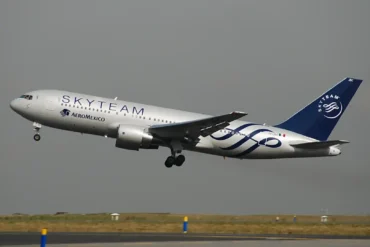
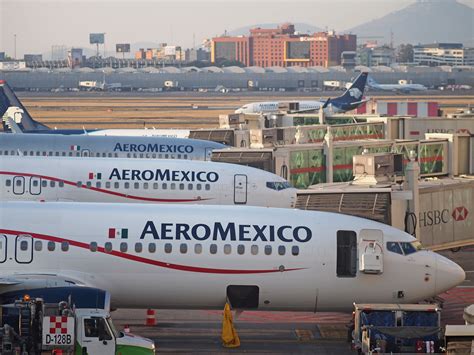
For the second consecutive year, Aeromexico claimed the top position globally, and in 2025 it did so with historic authority. The airline achieved an on-time arrival rate of 90.02 percent across 188,859 flights, making it the only global carrier to exceed the 90 percent threshold. This was not a statistical spike or a single strong quarter, but a sustained pattern of excellence. Month after month, Aeromexico hovered at or above the 90 percent mark, peaking near 93 percent in February and maintaining momentum through the operationally challenging autumn season.
Aeromexico’s achievement underscores the airline’s disciplined approach to fleet utilization, hub coordination, and disruption recovery. In a region often challenged by weather variability, congestion, and infrastructure constraints, delivering that level of consistency signals a deeply embedded operational culture.
Close behind, Saudia secured second place with an 86.53 percent on-time arrival rate, reinforcing its transformation into one of the most operationally reliable network carriers in the Middle East. Saudia’s performance reflects heavy investment in digital dispatch tools, predictive maintenance, and hub coordination at Jeddah and Riyadh.
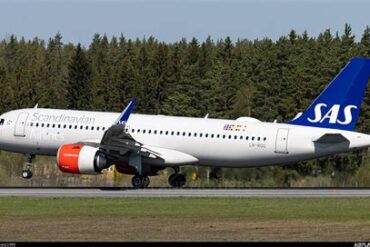
Third place went to SAS Scandinavian Airlines, which delivered one of the most impressive year-over-year improvements in the global rankings. Rising from ninth in 2024 to third in 2025, SAS improved its punctuality by roughly five percentage points. That leap highlights how structural changes—fleet simplification, schedule realism, and tighter ground handling contracts—can yield rapid gains when aligned with disciplined execution.
Why Delta’s Ranking Shift Tells a Bigger Story
Delta Air Lines rounded out the global top ten with an on-time arrival rate of 80.90 percent across an enormous 1.8 million flights. While this marked a decline from its third-place global ranking the previous year, the context matters. Delta faced significant disruption in 2025 due to a prolonged U.S. government shutdown, which created air traffic control staffing shortages and widespread network instability.
Despite these challenges, Delta retained its title as North America’s most punctual airline, outperforming key rivals and demonstrating remarkable resilience at scale. Managing punctuality across such a vast network requires sophisticated recovery capability, and Delta’s ability to remain the regional leader reinforces its reputation for operational strength even under external stress.
Regional Champions in On-Time Performance
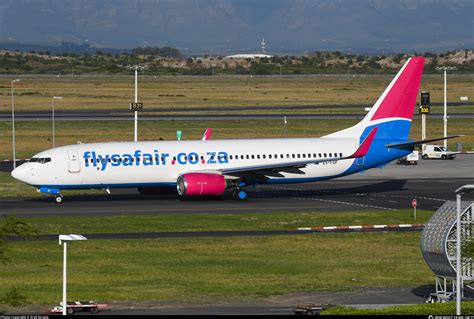
While global carriers attract the most attention, regional champions often post even higher punctuality scores by tailoring operations to specific environments. In 2025, FlySafair of South Africa emerged as the most punctual airline worldwide outside the global category, achieving a remarkable 91.06 percent on-time arrival rate.
FlySafair’s success stems from a laser-focused low-cost model built around rapid 30-minute turnarounds, real-time operational data, and robust contingency planning. Rather than chasing network breadth, the airline has optimized every minute on the ground, turning punctuality into a core brand attribute.
In Europe, Iberia Express claimed the top regional spot for the third consecutive year with an 88.94 percent on-time arrival rate. Its consistency highlights the benefits of operating a tightly integrated short-haul network under a strong parent group, with standardized procedures and disciplined scheduling.
Latin America saw Copa Airlines once again dominate, posting a 90.75 percent punctuality score. Operating a highly banked hub in Panama City, Copa’s performance is particularly noteworthy given the complexity of synchronized connections. In Asia-Pacific, Philippine Airlines led the region, while Delta continued its reign in North America.
The Platinum Award and the Complexity Factor
Beyond raw punctuality percentages, Cirium’s Platinum Award recognizes airlines that deliver excellence under operational complexity. In 2025, that honor went to Qatar Airways, marking a shift after Delta’s four-year winning streak.
Qatar Airways achieved an 84.42 percent on-time arrival rate, improving from 82.83 percent the year prior. While the numerical gain may appear modest, its significance lies in context. Improving punctuality in the mid-80s range is exponentially harder than climbing out of the 70s. Margins tighten, tolerance disappears, and every delay requires surgical precision to recover.
Operating more than 550 daily flights to over 170 destinations from Hamad International Airport, Qatar Airways manages one of the world’s most complex long-haul networks. Each tightly banked wave of arrivals and departures multiplies operational risk. That the airline maintained near-perfect completion rates while improving punctuality speaks to exceptional coordination across flight operations, ground handling, crew management, and passenger services.

Virgin Atlantic’s Breakthrough Year
New for 2025, Cirium introduced the Most Improved Airline award, recognizing carriers that achieved meaningful year-over-year gains without starting from a low baseline. The inaugural winner was Virgin Atlantic, which delivered one of the most striking operational turnarounds in recent memory.
Virgin Atlantic improved its on-time performance from 74.02 percent in 2024 to 83.45 percent in 2025, a near ten-point jump. Just a year earlier, the airline failed to crack Europe’s top 20. In 2025, it surged to fourth place regionally, posting punctuality levels comparable to top global carriers.
This transformation reflects structural changes rather than short-term fixes. Virgin Atlantic streamlined schedules, tightened buffer times, and enhanced coordination at London Heathrow—one of the world’s most congestion-prone hubs. The result was not only improved punctuality, but restored confidence among passengers and partners alike.
Airports as Silent Partners in Punctuality
Airline punctuality does not exist in isolation. Airports play a decisive role, particularly in departure performance. In 2025, Latin American airports dominated Cirium’s airport rankings across all size categories.
Santiago’s Comodoro Arturo Merino Benítez International Airport led the large airport category, while Panama’s Tocumen International Airport topped the medium segment with an extraordinary 93.34 percent on-time departure rate. In the small airport category, Guayaquil’s José Joaquín de Olmedo International Airport claimed its second consecutive win.
The Platinum Airport Award went to Istanbul Airport, recognized not just for punctuality, but for managing unprecedented scale and complexity. In 2025, Istanbul became Europe’s busiest airport, handling over 84 million passengers while introducing triple independent runway operations. Expanding capacity to 148 movements per hour without sacrificing reliability marked a defining achievement in modern airport management.

Why On-Time Performance Will Matter Even More Going Forward
As global air travel continues to rebound and expand, punctuality is becoming harder to achieve and more valuable to protect. Congested airspace, climate-driven weather volatility, and tightening crew regulations all increase operational risk. In this environment, airlines that treat on-time performance as a strategic priority—not a statistical outcome—are pulling ahead.
The 2025 Cirium rankings reveal a clear pattern. The world’s most punctual airlines are those that align scheduling realism, data-driven decision-making, and cultural accountability across their organizations. They understand that punctuality is not about flying faster, but about planning smarter and executing relentlessly.
For passengers, these rankings translate into fewer missed connections, shorter travel days, and greater trust. For airlines, they represent a durable competitive edge. In 2025, punctuality is no longer a courtesy—it is a defining hallmark of aviation excellence.