The discipline of on-time performance (OTP) remains one of aviation’s most unforgiving scorecards. It compresses thousands of daily operational decisions—fleet readiness, crew legality, gate availability, airspace coordination, and disruption recovery—into a single, comparable outcome measured at the gate. Last month’s results illuminate which airlines executed with consistency under real-world conditions, and which operational cultures translated planning into predictable arrivals. Drawing on November 2025 data from OAG, we examined gate-arrival punctuality using the industry’s strict standard: a flight counts as on time only when it reaches the gate within 15 minutes of its scheduled arrival, with cancellations treated as late. What follows is a detailed assessment of the airlines that led the world in OTP, why their results matter, and what the broader industry can learn from their execution.
Reliability is not an abstract virtue in air travel. For passengers, it is the difference between seamless connections and cascading stress. For airlines, minutes translate directly into money through aircraft utilization, crew costs, and recovery efficiency. Strong monthly OTP rankings therefore act as a practical proxy for operational health. They reveal whether a network is built with realistic slack, whether recovery tools are effective, and whether decision-making prioritizes system integrity over cosmetic metrics. November, often a shoulder month across many markets, further tests discipline: schedules are leaner, demand patterns shift, and weather variability still intrudes. Airlines that perform well in such conditions demonstrate that punctuality is embedded, not accidental.
Why On-Time Performance Is the Industry’s Most Revealing Metric
OTP sits at the intersection of customer experience, regulatory scrutiny, and financial performance. From a traveler’s perspective, punctuality governs missed connections, arrival predictability, and the credibility of published schedules. Even in markets without mandated compensation, delays impose real costs—lost time, disrupted plans, and diminished trust—that shape brand preference and willingness to pay. For high-yield business travelers in particular, reliability is a decisive factor in airline choice and corporate contracting.
Operationally, each late arrival compounds risk. A delayed inbound aircraft can trigger crew duty-time violations, force reserve utilization, and inflate overtime. Gate conflicts introduce towing, remote stands, and bussing, each adding labor and disruption risk. Conversely, strong OTP reduces misconnections and reaccommodation costs while preserving network flow. It strengthens an airline’s negotiating position with alliance partners and airports, supports slot utilization, and reassures investors that utilization and unit costs are under control. Persistent tardiness, by contrast, exposes under-staffing, maintenance deferrals, or overly aggressive growth. Monthly rankings matter because they are a visible scoreboard for complex mission execution—and often a leading indicator of how airlines will perform under stress.
What Actually Moves the Needle on Airline Punctuality
OTP begins with schedule design. Block times, connection banks, and turn standards determine how much resilience exists before delays cascade. Too little padding may look efficient on paper but collapses in operations; too much protects OTP while eroding utilization and cost metrics. Airport and airspace constraints amplify variability, particularly at congested hubs where gate shortages, runway configurations, de-icing queues, and air traffic flow programs magnify small disruptions.
Weather is a headline variable, but preparedness is decisive. Fleet and maintenance reliability matter because a single out-of-service aircraft can force swaps that break crew legality, catering, and baggage plans. Staffing levels across pilots, cabin crew, ramp agents, and dispatchers shape turn times and recovery speed. Modern operational tools—real-time crew tracking, predictive maintenance, and decision support systems—prioritize flights that protect network integrity rather than treating all delays equally. Finally, network design influences exposure: short-haul, high-frequency carriers face many minor risks, while long-haul networks face fewer events with higher recovery stakes. When a legacy carrier posts excellent OTP, it signals alignment across all these verticals.
Hainan Airlines Sets the Global Benchmark for November 2025
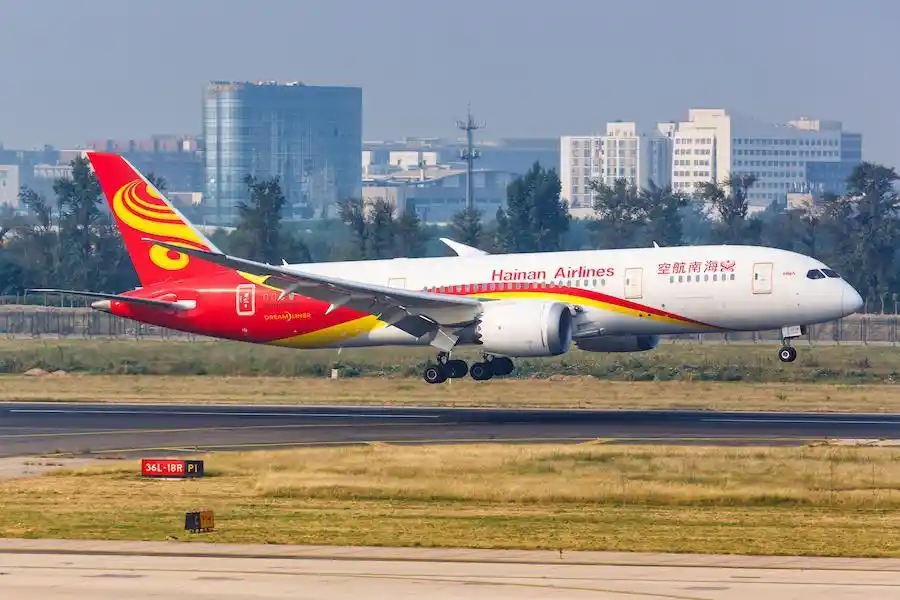
Hainan Airlines emerged as the world’s top major airline for on-time performance in November 2025, achieving an impressive 88.65% of flights arriving on schedule across 21,863 operations, with a remarkably low 0.62% cancellation rate. This combination is telling. High OTP paired with minimal cancellations indicates an operation executing reliably at scale rather than trimming schedules to polish metrics. Gate-arrival performance matters because it captures the full chain—from pushback timing and taxi management to disciplined turns—rather than superficial departure punctuality.
Hainan’s advantage lies in controllability. Concentrated hubs, repeatable short-haul patterns, and tight coordination among dispatch, ramp, and air traffic control reduce variability. The result for travelers is tangible: fewer tight-connection anxieties and more predictable arrivals. For the airline, each on-time arrival becomes a clean starting point for the next departure, preserving utilization and limiting knock-on disruption. The broader lesson is cultural. Leading OTP is often built on excellence in minutiae—realistic schedules, rapid problem-solving, and a shared belief that minutes are a strategic resource. Hainan’s November performance reflects repeatability, not luck, and that repeatability is what sustains leadership.
China Southern Airlines Proves Scale and Reliability Can Coexist
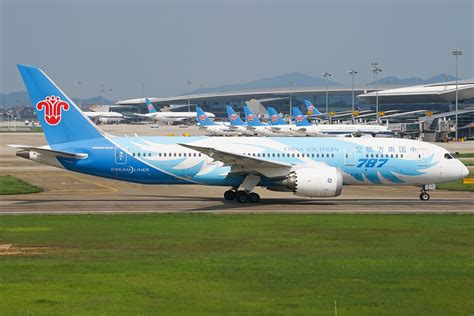
China Southern Airlines ranked second globally with an 87.78% on-time rate across more than 64,000 flights and a 0.49% cancellation rate. At this magnitude, the achievement is exceptional. Scale is often punctuality’s greatest adversary; complexity multiplies with each additional rotation, crew pairing, hub wave, and exposure to weather or airspace constraints. Remaining near the top at such volume suggests rigorous standardization and centralized control.
High-frequency reliability points to consistent fleet procedures, disciplined turnaround playbooks, and an operations center capable of rapid re-planning when conditions drift. It also implies thoughtful network smoothing—avoiding impossible peaks, sequencing departures to reduce gate crunch, and preserving recovery pathways. For passengers, this matters because large networks are only convenient when they connect reliably. China Southern’s results indicate that the airline managed the “big airline tax,” converting size into dependable throughput rather than chronic delay. It underscores a critical insight: punctuality is less about avoiding storms than about executing consistently, station by station, flight by flight.
Scandinavian Airlines Demonstrates Network Discipline Under Pressure
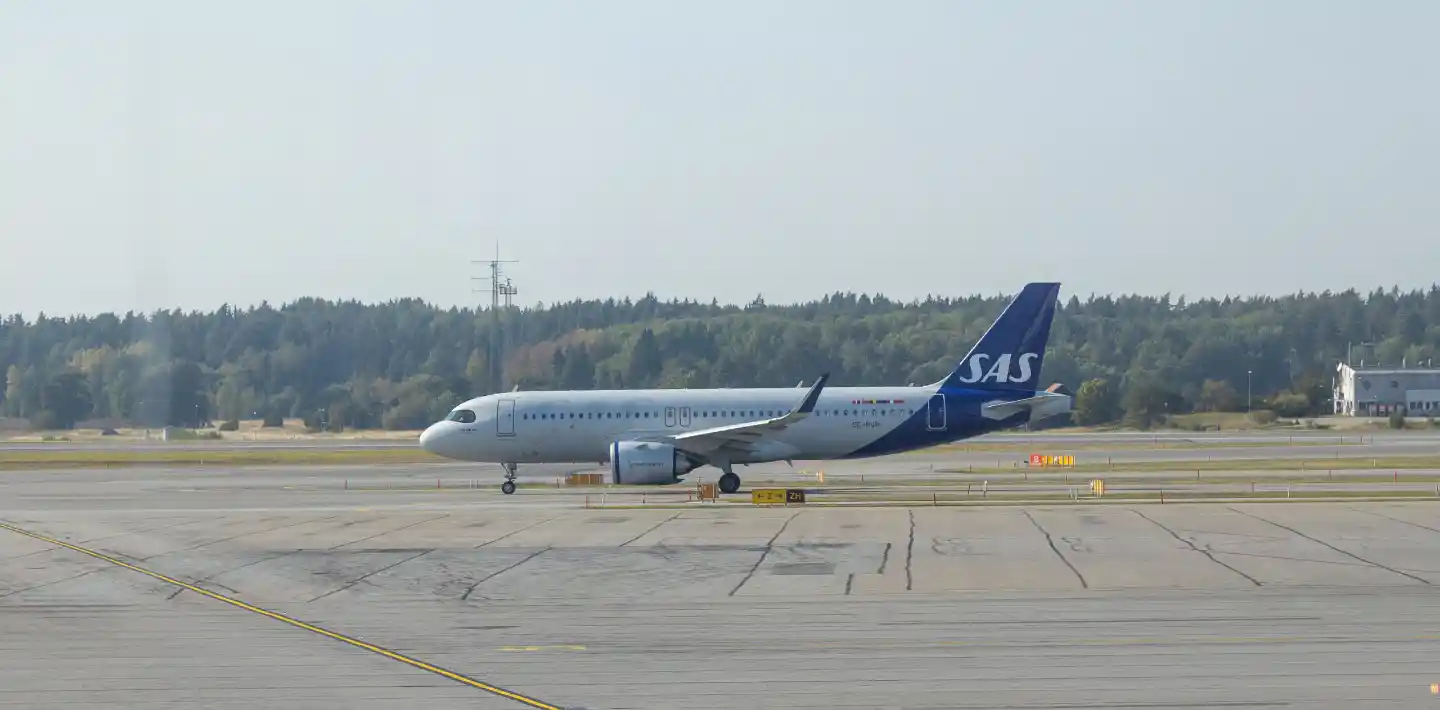
Scandinavian Airlines (SAS) completed the top three with an 87.06% on-time rate over 21,588 flights and a 0.89% cancellation rate. Strong OTP from a network carrier is typically about peak management. Hub banks must deliver efficient connections without overwhelming gates, crews, or de-icing resources. SAS’s ranking suggests it kept those banks flowing, limiting secondary delays that arise when late inbounds meet full gate lines and departing flights lose slots.
Execution also shows in recovery philosophy. The best operators protect flights that safeguard the network—key feeders, last departures, and rotations that set up the next morning—rather than distributing delays evenly. This selective protection preserves completion and punctuality even when some departures are intentionally pushed to prevent larger downstream damage. For passengers, SAS’s month illustrates why reliability beats theoretical speed. The most appealing schedule is not always the fastest, but the one that works repeatedly across seasons and conditions.
Why November Results Offer Deeper Insight Than Seasonal Peaks
November’s shoulder-month dynamics make strong OTP particularly meaningful. Demand patterns are less predictable than summer peaks, schedules are leaner, and weather variability remains a factor without the full winter operational posture in place. Airlines that excel in such months demonstrate disciplined turns, realistic block times, and effective day-of-operations decision-making. The leaderboard can reshuffle quickly when weather systems, air traffic initiatives, or demand surges ripple across networks, so sustained performance points to embedded resilience rather than opportunistic wins.
From an analytical standpoint, gate-arrival metrics sharpen accountability. They capture taxi management, arrival sequencing, and gate availability—areas where coordination and planning are decisive. Airlines that consistently deliver at the gate reveal an operational culture aligned from planning to execution. That alignment is what investors watch closely, because it supports higher utilization and steadier unit costs while exposing fewer surprises.
What These Leaders Teach the Rest of the Industry
Across Hainan Airlines, China Southern, and SAS, common threads emerge. First is realistic scheduling that balances utilization with resilience. Second is standardization, enabling crews and stations to execute predictably even when conditions change. Third is centralized, data-driven decision-making that prioritizes network integrity over cosmetic punctuality. Fourth is staffing discipline, ensuring that pilots, cabin crews, ramp teams, and dispatchers are available to protect turns and recover quickly. Finally, there is a cultural commitment to treating time as a strategic asset rather than an afterthought.
These lessons are transferable. Airlines need not copy network structures to adopt network discipline. Investments in predictive maintenance, crew tracking, and decision support pay dividends when paired with realistic schedules. Equally important is transparency: acknowledging when padding masks inefficiency and when trimming erodes resilience. The best operators strike a balance that passengers feel and partners trust.
The Bottom Line: Punctuality as Competitive Advantage

At its core, punctuality safeguards the economics of aviation. Aircraft are expensive, depreciating assets that earn only when flying on schedule. High utilization depends on clean turns and reliable arrivals. Airlines pursuing high-yield traffic, particularly business travelers bound by corporate contracts, recognize that reliability is non-negotiable. While weather and airspace constraints remain beyond any airline’s control, many determinants of OTP—operational management, staffing, maintenance planning, and recovery strategy—are firmly within it.
November 2025’s leaders demonstrate that excellence in OTP is not a marketing slogan but a systems outcome. When schedules are credible, teams are prepared, and decisions protect the network, punctuality follows. For passengers, the reward is predictability and peace of mind. For airlines, it is lower cost, stronger reputation, and durable competitive advantage.