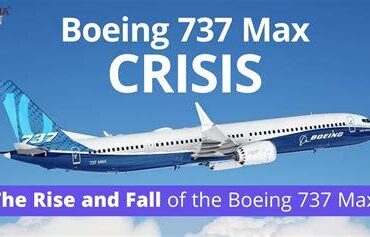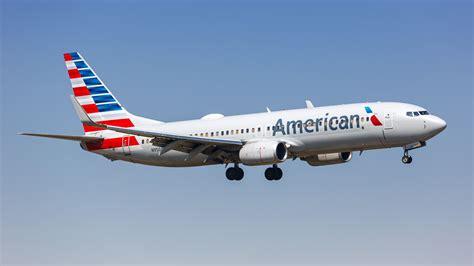
The tone surrounding Boeing’s industrial recovery has notably shifted. At the International Air Transport Association (IATA) annual summit in New Delhi, top airline executives from across the globe shared a more hopeful sentiment about the aerospace giant’s trajectory. Once mired in crises involving safety oversights, regulatory setbacks, and production bottlenecks, Boeing is now beginning to receive tentative endorsements from major customers — a signal that the company may be slowly rebuilding the trust it lost over the last half-decade.
The shift is not without its caveats. Airline leaders were unanimous in one core message: Boeing has improved, but it’s far from out of the woods.
Airline Executives Sense a Shift in Quality and Transparency
For many at the summit, the conversation revolved around one key shift — perceived improvements in Boeing’s manufacturing standards and leadership engagement. Ben Minicucci, CEO of Alaska Airlines, which was at the epicenter of the most recent Boeing controversy, confirmed this view in an interview with Reuters. He emphasized that Boeing has taken deliberate steps to enhance safety and reduce the volume of out-of-sequence work — a key disruptor in their production line that previously led to oversights like the door plug blowout incident on a new 737 MAX.
“What we’ve seen quarter to quarter is an improvement in safety, an improvement in quality… Are they yet there? No, there’s still a lot of work,” Minicucci said candidly.
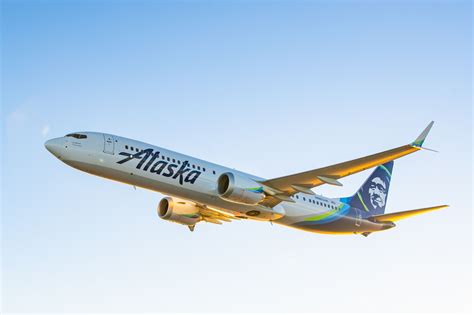
Alaska Airlines has since stationed its own quality inspectors at Boeing’s production facilities, complementing that with a quarterly audit to validate claims of progress. This hands-on oversight shows that while airline confidence is growing, it’s rooted in verification, not blind faith.
Emirates’ Tim Clark: From Critic to Cautious Optimist
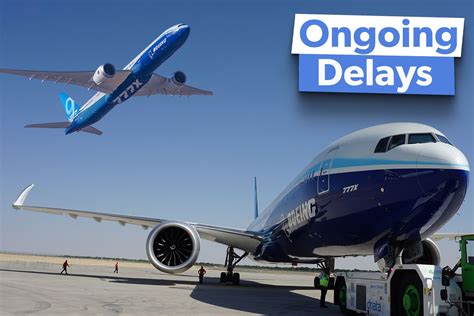
Perhaps the most telling evolution in tone came from Emirates President Tim Clark, one of Boeing’s most vocal critics in recent years. His airline, a primary customer for the long-delayed Boeing 777X, has 205 units on order — making Clark’s voice particularly influential. Until recently, his commentary on Boeing’s missteps was unwaveringly stern. However, during this year’s summit, he acknowledged what he described as a “clearer message” from the company’s new leadership.
The change in tone appears partly due to the appointment of Kelly Ortberg as Boeing’s CEO. Ortberg, unlike his predecessor Dave Calhoun — whom Clark had never met — has taken a direct and accessible approach, engaging more actively with Boeing’s global customers.
“It was nice to meet the head of Boeing,” Clark noted pointedly.
He added that for the first time in years, he feels a hint of “cautious optimism” thanks to Ortberg’s commitment to transparency and internal reform. Yet, Clark remains grounded: he has no illusions about receiving the 777X before 2026, well beyond the original 2020 delivery timeline.

Boeing’s Executive Overhaul and Factory Floor Presence
The leadership shake-up, which brought Ortberg into the role last August and introduced Stephanie Pope as the new head of Boeing Commercial Airplanes in March, has had a noticeable impact. Both executives have made it a priority to walk the production lines and speak directly with front-line workers.
This approach has been well-received by airline customers. According to Minicucci, this visible involvement from Boeing’s top brass signals a shift in company culture — from corporate detachment to engaged, process-driven accountability. “They’re getting out there, they’re walking the floor, they’re feeling what’s going on,” he said.
Even United Airlines CEO Scott Kirby, a central figure in the U.S. airline backlash that led to Calhoun’s exit, acknowledged the progress. Speaking last week, he stated Boeing had “turned the corner” — a bold declaration from a leader once deeply critical of the planemaker.
SMBC Aviation and Industry-Wide Feedback
Peter Barrett, CEO of SMBC Aviation Capital, one of Boeing’s largest lessors, echoed similar views. While he emphasized there’s still ground to cover, Barrett described Boeing’s recent trajectory as “definitely an improving story.” He praised the company’s ongoing efforts to stabilize both quality control and the visibility of delivery schedules — both crucial for downstream airline operations.
Still, few in the industry are prepared to take Boeing’s word without scrutiny. The collective sentiment appears to favor a trust-but-verify model. That sentiment was also reflected in Boeing’s own comments at the summit, where Brad McMullen, Senior Vice President of Commercial Sales, acknowledged ongoing customer scrutiny while highlighting positive performance in the first five months of the year.
“There is a lot of positivity from customers,” McMullen said. “But we have got a lot of work still to do.”
Regulatory Pressure and Certification Hurdles
Despite positive commentary, Boeing’s challenges are far from resolved. One major hurdle remains: the need to convince regulators — particularly the Federal Aviation Administration (FAA) — that it’s capable of safely increasing production rates. After maxing out at 38 MAX jets per month, Boeing must now prove it can raise that ceiling without compromising safety protocols.
The FAA has indicated that any increases will be gradual. This underscores the regulator’s heightened vigilance following the disasters tied to earlier 737 MAX crashes in 2018 and 2019, which killed 346 people and led to a near two-year grounding of the aircraft.
In parallel, Boeing continues its long pursuit of certification for the 777X, now expected no earlier than 2026. While delays have become standard in the aerospace sector, the 777X’s timeline has been especially turbulent, drawing sharp criticism from customers banking on next-generation fleet capabilities.
The Long Path Ahead: Internal Reform and Customer Reassurance
Despite the recent positivity, a full Boeing rehabilitation remains a work in progress. Industry leaders are cautiously optimistic because they’ve observed tangible changes — not because the slate has been wiped clean.
Executives like Tim Clark and Ben Minicucci are signaling that Boeing is finally listening — and more importantly — acting on that feedback. The planemaker has shown operational humility, welcomed oversight, and embraced a more open line of communication with its biggest stakeholders.
But the test of trust will ultimately be determined by reliability in output, strict adherence to quality standards, and an unrelenting commitment to safety — values that must now become embedded in Boeing’s DNA. If Ortberg and Pope can instill that mindset throughout the organization, Boeing may not only recover from its past but also reemerge as a standard-bearer in global aviation.
For now, the signals are promising. The scars remain, but so does the opportunity — and perhaps, finally, the leadership — to heal them.