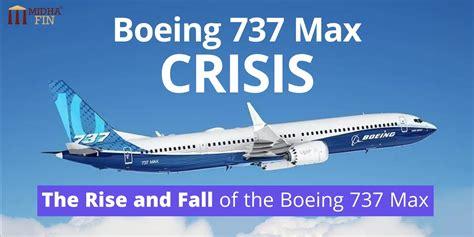
Almost two years after the Alaska Airlines emergency landing shook public confidence in Boeing’s 737 MAX program, the aerospace giant has embarked on a bold and deeply scrutinized transformation. Faced with mounting pressure from regulators, airlines, and passengers alike, Boeing is undergoing a structural and cultural overhaul in its approach to quality control and production standards. The changes are not merely surface-level — they represent a profound reassessment of how Boeing builds aircraft, trains its workforce, and governs its factories.
A Mid-Flight Blowout That Changed Everything
On January 6, 2024, a Boeing 737 MAX 9 operated by Alaska Airlines was forced to make an emergency landing after a mid-aft door plug catastrophically blew out mid-flight. The cabin suffered rapid decompression, and while no lives were lost, the incident exposed critical failures that echoed the tragedies of earlier MAX crashes. Four bolts, crucial to securing the door plug, were found to have been removed during production and never reinstalled. That oversight turned a pressurized jetliner into a near-disaster.
According to the National Transportation Safety Board (NTSB), this failure reflected not just a breakdown in Boeing’s manufacturing line but also insufficient oversight by the Federal Aviation Administration (FAA). The public and political backlash was swift. Confidence in Boeing’s ability to ensure basic safety on its most widely flown aircraft had plummeted, and the company could no longer afford to rely on past reputations.
Enforcing Quality at the Production Line
In response, Boeing launched what insiders call a “war on defects”, transforming how its Renton facility handles the final assembly of the 737 MAX. One of the first steps was slashing “traveled work” — tasks performed out of sequence — which had increased the risk of skipped procedures or mismatched parts. Since February 2024, such practices have dropped by 75%, a sign that workflow discipline is taking root on the factory floor.
Mechanics now undergo two-hour interior inspections and spend almost an entire workday on detailed external evaluations of each aircraft. Boeing has mapped out 40 critical tasks that must be signed off before a plane can proceed to the next stage of its 10-station manufacturing line. Each process is tracked, verified, and digitally documented.
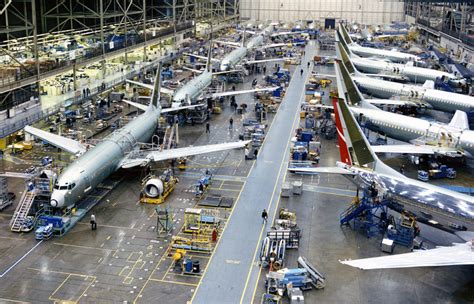
Moreover, mechanics are no longer left to rely on vague illustrations. They now have access to high-definition imagery, clearer documentation, and structured review sessions. According to Jennifer Boland-Masterson, Boeing’s Director of 737 Manufacturing Operations, the goal is permanent fixes, not temporary patches. “We have really homed in on our feedback loops,” she noted. “The goal is to permanently fix it.”
From Lakefront to Factory Floor: A New Era of Final Assembly
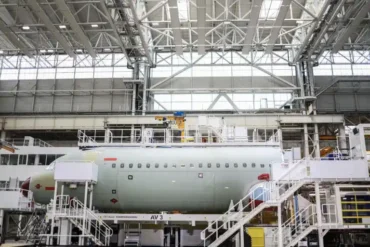
Another game-changing move was relocating the final assembly processes — previously performed outdoors — to controlled indoor environments. Aircraft once stationed near the Renton lake now receive their final touches within Boeing’s facilities. This shift has allowed for better environmental controls, precision work, and strict oversight, ensuring that nothing is left to chance in the crucial closing stages of production.
Bridging the Cultural Divide: Boeing’s Internal Reckoning
Of all the transformations Boeing is undertaking, none may be more important than its cultural shift. CEO Kelly Ortberg admitted that for too long, there was a dangerous disconnect between corporate leadership and the production workforce. The result? Plummeting morale. While 91% of Boeing workers were proud of their work in 2013, that number sank to 67% by 2023.
Interviews with employees reveal cautious optimism mixed with frustration over the slow pace of change. The 2024 machinists’ strike, involving over 30,000 workers, highlighted the strained relationship between labor and leadership. But Boeing has responded with initiatives meant to repair this rift.
One of the most meaningful changes is a dedicated weekly hour where workers can report defects or bottlenecks directly to their managers. Glenda Heggie, a production manager at Renton, recalls addressing misaligned electrical racks after a tip-off from the assembly team — a clear sign that feedback is finally being acted upon. Jon Holden, president of the International Association of Machinists District 751, noted: “They’re definitely moving in the right direction. Now we just need to see that month after month, quarter after quarter.”
Untangling the Web: Simplifying Aircraft Manufacturing
Aircraft production is, by its nature, immensely complex. Thousands of parts move through dozens of hands and stations, with consequences that can be fatal if a single bolt is left out. The door plug blowout of the Alaska Airlines flight is a stark reminder of what can go wrong. In response, Boeing is now simplifying its documentation, parts tracking, and storage systems.
Taking cues from pharmaceutical and other high-stakes industries, Boeing has implemented barcode scanners, part tracking devices, and locked racks to eliminate the possibility of lost or misused components. Every item used on the factory floor must now be accounted for — a new standard in traceability and accountability.
Workforce experience has also emerged as a critical factor. In the last decade, the percentage of Boeing employees with over 10 years of experience has plummeted from 50% to 25%, as noted in an NTSB report. Boeing is addressing this skills gap with expanded training programs, adding two additional weeks of training for new hires to better prepare them for the intricacies of aircraft production.
FAA Oversight and Production Caps: No Room for Complacency
While Boeing has made clear progress, it still faces strict FAA oversight. Regulators have been unequivocal: production expansion will not be allowed until safety improvements are sustained and measurable. As of late 2025, Boeing has received permission to ramp up 737 MAX production to 42 aircraft per month, but this remains far below Airbus’ A320 production rate, which is already at 60 per month and projected to hit 75 by 2027.
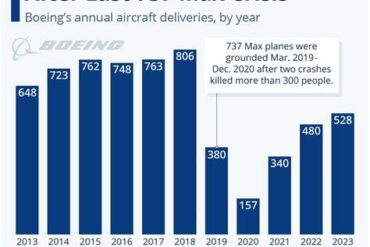
The bottleneck is not just a regulatory issue — it’s also a financial one. Boeing holds a backlog of over 4,000 orders for the 737 MAX. Every delay translates to millions in deferred revenue, giving the company every incentive to maintain quality while scaling production responsibly.
The Looming 777X Challenge: A Test of Patience and Precision
Boeing’s challenges extend beyond the 737 MAX. The long-delayed 777X program remains under intense scrutiny. Despite production of 22 customer aircraft and 5 prototypes, certification delays mean none have yet been delivered. A further six aircraft are in various states of completion at Boeing’s Everett facility, all awaiting a green light from regulators.
Once certification is granted, Boeing plans to produce four 777/777X aircraft per month — a slow but cautious ramp-up intended to avoid the kind of rushed output that plagued the MAX program. But the pressure is on. Airlines such as Emirates, with 205 aircraft on order, are becoming increasingly vocal in their dissatisfaction.
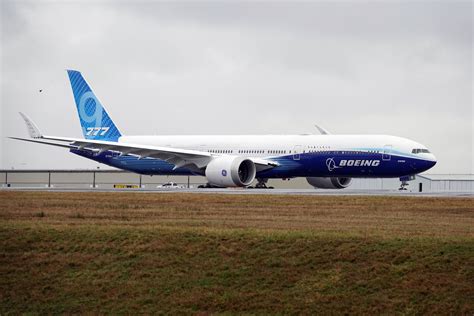
The 777X is Boeing’s most advanced widebody aircraft, and its success is critical to the company’s future dominance in long-haul aviation. If Boeing can apply the hard-won lessons from the MAX to this program — rigorous inspections, standardized procedures, and open-floor communication — it might just regain the industry’s confidence.
Beyond Safety: Reclaiming Boeing’s Commercial Edge
It is important to emphasize that these sweeping reforms are not only about safety — they are about survival. Boeing has endured a catastrophic loss of trust, a battered balance sheet, and an increasingly impatient customer base. But it also holds one of the largest order books in aviation history.
If Boeing can sustain and institutionalize its quality improvements, it may still emerge stronger. But any slip — any defect, any oversight — will be judged not in isolation, but as a referendum on the entire company.
The war on defects is far from over, but Boeing has finally joined the battle with the seriousness it demands. The next few years will reveal whether that commitment was permanent — or merely a response to crisis.