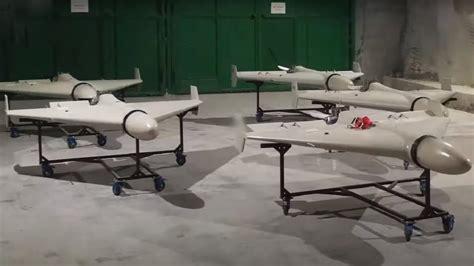
The modern battlefield is no longer dominated by billion-dollar platforms alone. Instead, it is being quietly rewritten by low-cost, high-impact unmanned systems that invert traditional military economics. At the center of this shift stands the Shahed-136 loitering munition, a drone whose simplicity masks its disruptive power. Iran’s recent claim—that a $20,000 Shahed-136 destroyed a U.S. Air Force E-3 AWACS aircraft worth hundreds of millions—has ignited fierce debate, not only about the incident itself, but about the future of air warfare.
This is not merely a story about a single strike. It is a strategic inflection point, exposing vulnerabilities in high-value assets and triggering a global race to replicate, counter, and evolve the Shahed design.
The Alleged Strike: A Precision Blow Against a Strategic Asset
The reported attack on the E-3 Sentry AWACS at Prince Sultan Air Base in Saudi Arabia represents a scenario once considered improbable. The E-3, a cornerstone of airborne early warning and battle management, is designed to detect threats from hundreds of kilometers away, coordinating fighter jets and missile defenses in real time. Its iconic rotating radar dome is not just a sensor—it is the nervous system of aerial warfare.
Yet, images circulating online revealed a burned-out fuselage, with damage concentrated near the radar section. If verified, the strike suggests a precision hit on one of the most protected and strategically critical aircraft in the U.S. arsenal.
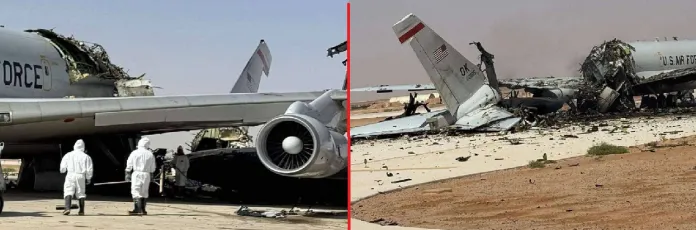
The implications are staggering. The U.S. Air Force operates a limited fleet of these aircraft, making each loss disproportionately impactful. Unlike fighter jets, AWACS platforms cannot be easily replaced or rapidly produced. Their destruction would represent not just a tactical loss, but a strategic degradation of situational awareness across an entire theater of operations.
Shahed-136: The $20K Weapon That Changed Warfare Economics
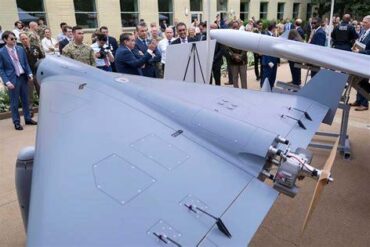
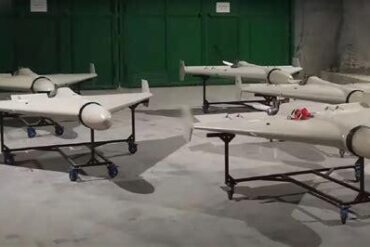
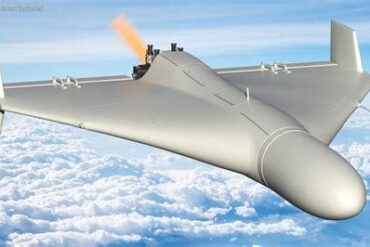
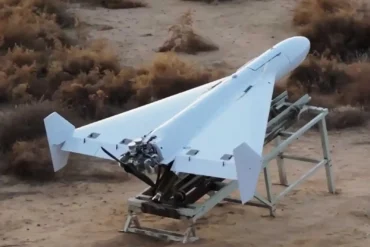
The Shahed-136 is not technologically revolutionary in the traditional sense. It is slow, relatively unsophisticated, and powered by a simple engine. Yet, its brilliance lies in its design philosophy: maximize cost-efficiency while overwhelming high-end defenses.
With a range of up to 2,500 kilometers, a low radar signature, and GPS guidance, the drone excels in saturation attacks. It flies low, often evading detection until the final moments. But the most critical factor is cost asymmetry.
- Shahed-136 cost: ~$20,000–$50,000
- Interceptor missile cost: ~$2 million–$4 million
This imbalance forces defenders into an unsustainable equation. Shooting down a swarm of inexpensive drones with costly missiles quickly becomes a financial war of attrition—one that favors the attacker.
Russia’s widespread deployment of these drones in Ukraine demonstrated their effectiveness. Power grids, ammunition depots, and infrastructure were repeatedly targeted, forcing Ukraine to expend valuable air defense resources. The result: a strategic shift where affordability becomes a weapon in itself.
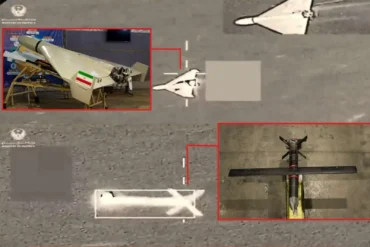
🇮🇷 The #IRGC is now painting kill marks on their Shahed-136 drones.
Confirmed kills marked with checkboxes:
☑️ AN/MPQ-65 — Patriot radar array
☑️ AN/TPY-2 — THAAD radar
☑️ FPS-132 — Early warning radar
☑️ E-3 Sentry — AWACS aircraftOn the nose: “Who is next?” pic.twitter.com/bqr1sWQ4yo
— Mihou (@mihou) March 30, 2026
From Ukraine to the Middle East: Tactical Evolution in Real Time
The alleged AWACS strike hints at a more advanced operational capability. Observers have speculated about tactics resembling Ukraine’s “Operation Spiderweb,” involving coordinated drone attacks guided by real-time intelligence. If true, it suggests that the Shahed is no longer just a blunt instrument, but part of a networked warfare ecosystem.
This raises critical questions: How did the drone bypass layered defenses? Was external intelligence support involved? Could commercial networks or satellite data have played a role?
Even without definitive answers, the trend is clear. The Shahed-136 is evolving from a mass-produced loitering munition into a precision-enabled threat, capable of targeting high-value assets once considered untouchable.
The Countermeasure Revolution: Cheap vs Cheaper
Faced with relentless drone swarms, Ukraine has pioneered an equally disruptive response: ultra-low-cost interceptor drones. Systems like the JEDI Shahed Hunter are designed specifically to neutralize incoming threats at a fraction of traditional costs.
Weighing just over 4 kilograms, the JEDI drone can reach speeds exceeding 350 km/h, guided by radar data and equipped with thermal imaging for night operations. Its cost—estimated between $1,000 and $2,000—creates a new layer in air defense: one that is both scalable and economically sustainable.
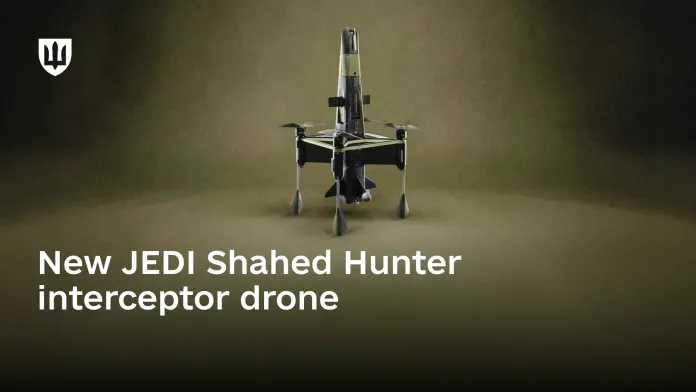
This innovation signals a broader transformation. Instead of relying solely on expensive missile systems like Patriot, nations are increasingly adopting layered defense architectures, where low-cost interceptors handle low-cost threats. The battlefield is becoming a contest of algorithms, autonomy, and production capacity, rather than just firepower.
Global Proliferation: The Shahed Blueprint Goes Viral
Perhaps the most telling consequence of the Shahed-136’s success is its rapid proliferation. Countries across the world are now developing their own variants, each tailored to specific strategic needs.
United States: LUCAS and Modular Warfare
The U.S. response is both pragmatic and revealing. The LUCAS (Low-cost Unmanned Combat Attack System) drone, reportedly derived from a captured Shahed, embodies a shift toward modular, reusable unmanned systems.
Unlike the Shahed, LUCAS can carry interchangeable payloads, from explosive warheads to electronic warfare modules. Its cost—around $30,000 to $35,000—keeps it within the same economic paradigm, while its reusability offers additional flexibility.
This reflects a broader realization: if you cannot defeat the model, adapt it.
China: Silent Replication and Strategic Refinement
China’s approach is characteristically opaque but highly strategic. Drones like the Sunflower-200 and Loong M9 closely mirror the Shahed’s delta-wing design, while introducing enhancements such as GPS-independent navigation and improved electronic warfare resistance.
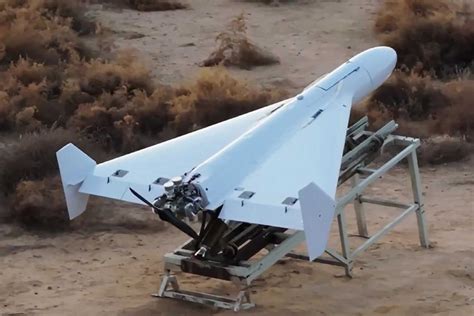
The Loong M9, with its extended loiter time and secure communications, appears optimized for contested environments like the Western Pacific. Meanwhile, systems like the ASN-301 adapt the design for anti-radiation roles, targeting enemy radar systems—a direct threat to platforms like AWACS.
China’s developments underscore a key point: the Shahed is not just being copied—it is being iteratively improved for future conflicts.
India: Indigenous Innovation Meets Strategic Necessity
India’s entry into the Shahed-inspired ecosystem highlights the drone’s global appeal. Projects such as Project KAL and Sheshnaag-150 aim to deliver long-range strike capabilities with swarm coordination.
These systems are designed not only for attack missions but also for intelligence gathering and dynamic targeting, reflecting lessons learned from modern conflicts. With ranges exceeding 1,000 kilometers and payload capacities comparable to the Shahed, they represent a significant leap in India’s unmanned capabilities.
Europe: Poland’s Pragmatic Adaptation
Even European nations are embracing the model. Poland’s ongoing development of a delta-wing loitering munition reflects a recognition that cost-effective drones are essential for modern defense. With a range of 900 kilometers and a 20-kilogram payload, it is tailored for regional security challenges.
Strategic Implications: The End of Untouchable Assets
The alleged destruction of an AWACS aircraft by a low-cost drone, whether fully verified or not, carries profound implications. It challenges the long-standing assumption that high-value assets can be adequately protected by layered defenses.
Instead, it suggests a future where:
- No platform is immune, regardless of cost or sophistication
- Swarm tactics can overwhelm even advanced defenses
- Economic asymmetry becomes a decisive factor in warfare
This shift forces militaries to rethink procurement strategies. Investing billions in a handful of platforms may no longer be viable if those assets can be neutralized by swarms of expendable drones.
The New Doctrine: Mass, Autonomy, and Attrition
What emerges is a new doctrine of warfare, defined by three core principles:
Mass: The ability to deploy large numbers of low-cost systems simultaneously
Autonomy: AI-driven targeting and coordination reducing reliance on human operators
Attrition: Leveraging economic imbalance to exhaust the enemy
The Shahed-136 embodies all three. It is not the most advanced drone, but it is arguably the most strategically disruptive.
Conclusion: A $20K Warning Shot to the World
The story of the Shahed-136 is not just about Iran, Russia, or a single alleged strike. It is about a fundamental transformation in how wars are fought and won. The era of dominance by a few exquisite platforms is giving way to one defined by scale, affordability, and adaptability.
If a $20,000 drone can threaten a $300 million aircraft, the implications extend far beyond any single conflict. They signal a future where innovation is measured not by complexity, but by impact per dollar.
And in that future, the Shahed-136 is not an anomaly—it is the blueprint.