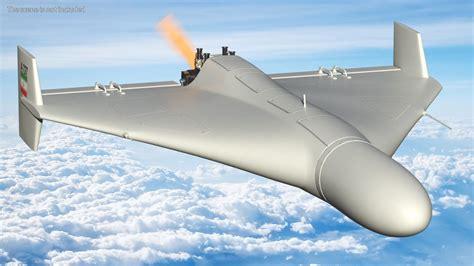
Ukraine’s top intelligence official has issued a dire warning that could signal a dangerous new chapter in the global security landscape: Russia is transferring production capabilities of the Shahed-136 kamikaze drone to North Korea. This revelation, made by Lt. Gen. Kyrylo Budanov, head of Ukraine’s Defense Intelligence Directorate (GUR), underscores not only a deepening alliance between Moscow and Pyongyang, but also a dramatic shift in the balance of power on the Korean Peninsula.
Russia’s Drone Blueprint Lands in Pyongyang
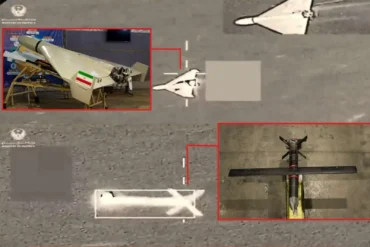
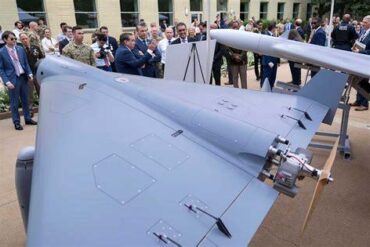
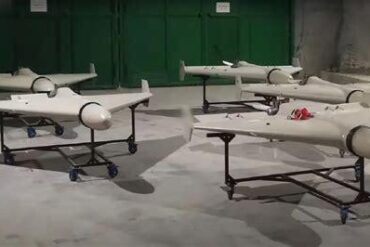
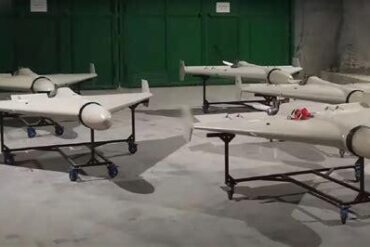
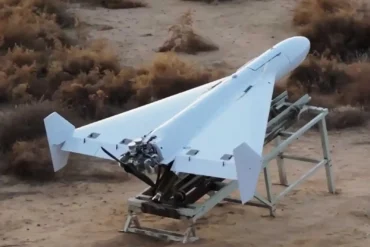
In a recent interview, Budanov revealed that North Korea has received technical assistance and production knowledge for building the Iranian-origin Shahed-136 drones, now widely referred to in Russian service as Geran-2 UAVs. Russia, which currently produces thousands of these drones monthly, has reportedly agreed to help North Korea set up indigenous production lines for the same technology.
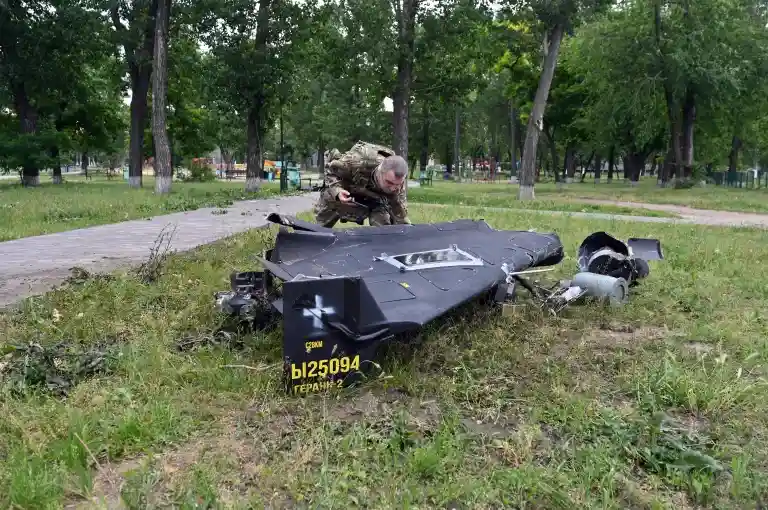
This development is a strategic game-changer. The Shahed-136 is a long-range, low-cost kamikaze drone designed to overwhelm air defenses through saturation attacks. If North Korea masters local production, it could strike any part of South Korea with minimal warning. This would severely test South Korea’s layered air defense networks and possibly saturate them during a first-strike scenario. The potential for mass production could also position Pyongyang as an exporter of these drones—perhaps even back to Russia, bolstering Moscow’s war efforts in Ukraine.
A Dangerous Reciprocity: Weapons for Technology
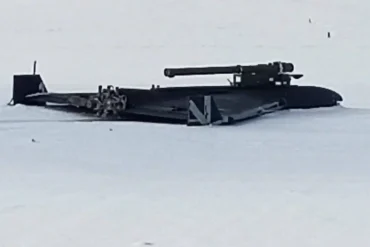
Russia’s technology transfer is not occurring in a vacuum. It is part of a larger barter system in which North Korea provides critical military support to Russia in its ongoing invasion of Ukraine. According to Budanov, Pyongyang has sent Moscow millions of artillery shells, aging but effective long-range artillery systems, and an estimated 11,000 North Korean troops currently deployed in Russia’s Kursk Oblast.
In return, Russia is not only facilitating Shahed drone production but is also playing a pivotal role in improving North Korea’s ballistic missile systems, most notably the KN-23 short-range ballistic missile, also known as the Hwasong-11.
KN-23: From Failure to Lethal Precision
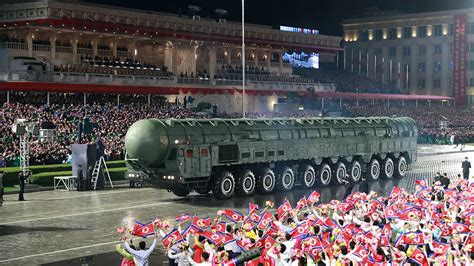
Initially, the KN-23 was riddled with flaws, often veering off-course by several kilometers or detonating mid-flight. Now, with direct Russian input, the missile has undergone a startling transformation. According to Budanov, the KN-23’s accuracy has improved drastically, striking with precision that makes it a credible threat to both military and civilian targets across South Korea.
Russia’s assistance likely includes advanced guidance systems, improved propulsion units, and telemetry corrections—technologies that North Korea would have struggled to develop independently. These upgrades have effectively elevated Pyongyang’s arsenal from a regional nuisance to a far more potent threat.
Nuclear Submarines and Aerial Dominance
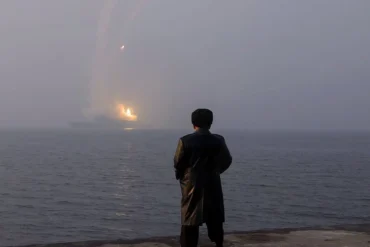
The technological transfers don’t stop at drones and short-range missiles. Budanov also highlighted that Russia is aiding North Korea in advancing its submarine-launched ballistic missile (SLBM) capabilities, an area where Pyongyang has struggled for years.
The Russian assistance reportedly focuses on improving missile launch platforms on submarines, as well as enabling more stable and reliable undersea launch protocols. This could potentially give North Korea a viable second-strike nuclear capability, a hallmark of more advanced nuclear powers and a chilling new element in the already volatile Northeast Asian security environment.
Moreover, Russian specialists are contributing to the modernization of North Korean long-range air-to-air missiles, further bolstering its air force capabilities. This means that North Korea is not just looking to enhance its ground-attack capabilities, but also to contest air superiority in the event of regional hostilities.
Labor Migrants or Soldiers?
One of the more opaque but deeply concerning revelations from Budanov involves the recent agreements between Russian Defense Secretary Sergei Shoigu and North Korean officials to bring North Korean labor migrants into Russia. Ostensibly, these workers are intended to replace Central Asian laborers considered a security risk. However, Budanov suspects that many of these migrants could be funneled into Russia’s armed forces, effectively transforming into North Korean nationals fighting under the Russian flag.
This arrangement not only reinforces the manpower challenges Russia faces in its drawn-out conflict with Ukraine, but also blurs the lines between civilian labor and military deployment, complicating international response strategies and possibly violating multiple labor and wartime conventions.

Strategic Implications for the Korean Peninsula
The implications of this alliance go far beyond battlefield tactics. For decades, the Korean Peninsula has existed in a delicate military equilibrium. South Korea, backed by U.S. forces, has maintained a technologically superior military. North Korea, though provocative, has been relatively constrained by its outdated systems and limited technological reach.
The injection of Russian military technology changes that equation. North Korea could soon have the ability to produce high-precision SRBMs, swarm-capable loitering munitions, and potentially SLBMs with real-world deployment capability. This erodes the technological gap that has traditionally deterred North Korean aggression.
Additionally, South Korea’s missile defense infrastructure—while formidable—is not impervious. Systems like THAAD and Patriot PAC-3 are designed to intercept a limited number of threats. A mass drone or missile swarm, bolstered by improved accuracy and stealthier delivery methods, could strain these defenses beyond their breaking point.
Russia’s Endgame: A Multi-Front Disruption Strategy
Russia’s motivations appear twofold. First, by arming and upgrading North Korea, Moscow is ensuring a strategic distraction for the United States and its allies in Asia, potentially drawing attention and resources away from the Ukrainian front. Second, it secures a backchannel for military resupply, as North Korea has proven willing to provide weapons, artillery, and now manpower.
This geopolitical gambit turns North Korea into a forward-operating outpost of Russian military influence, allowing Moscow to test and refine technologies while destabilizing another key U.S. ally in the Indo-Pacific.
International Response: Caught Between Legalities and Realpolitik
Thus far, the global response has been muted. Both Russia and North Korea are already under sweeping international sanctions, which diminishes the leverage traditional diplomacy holds over their actions. Furthermore, existing multilateral institutions have limited tools to prevent technology transfers that occur covertly or under the guise of civilian cooperation.
The risk now is that this axis of mutual convenience will harden into a permanent military-industrial alliance. If North Korea begins exporting drones and missile technologies to third-party nations—particularly those under similar sanctions regimes—a new illicit arms network may emerge, echoing the black-market nuclear proliferation once driven by Pakistan’s A.Q. Khan.
Conclusion: A Perilous New Normal
Budanov’s disclosures paint a chilling picture of a rapidly transforming North Korean military, shaped by Russian experience and technological prowess. The Shahed-136 drone transfer is merely the most visible aspect of this emerging alliance. Behind it lies a far-reaching strategic shift that threatens to upend the fragile military standoff on the Korean Peninsula, deepen the Ukraine conflict, and stretch U.S. military commitments across multiple fronts.
In this newly evolving geopolitical chessboard, Russia’s hand is not only felt in Eastern Europe but increasingly in the Pacific Rim, binding rogue states together through shared interests, wartime necessity, and authoritarian camaraderie. The question for the rest of the world is no longer whether this alliance will grow—it already has—but whether it can be stopped before the next crisis erupts.