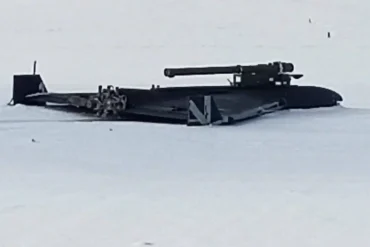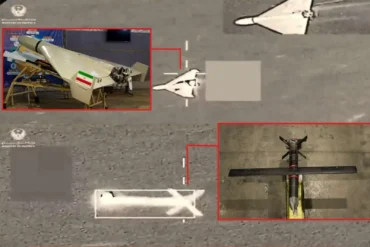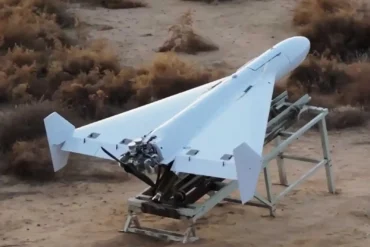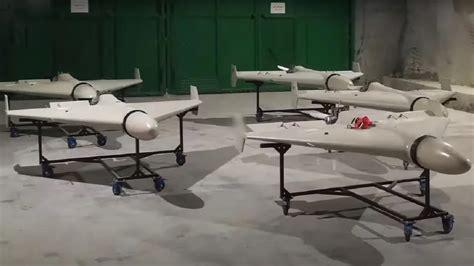
Russia’s rapid evolution of Shahed-136 loitering munitions has taken a dramatic turn with the confirmed appearance of a Frankenstein-like hybrid: a kamikaze drone armed with a Soviet-era R-60 air-to-air missile. The upgrade signals a new phase in Ukraine’s drone war, where unmanned aircraft are no longer just targets — they are becoming hunters.
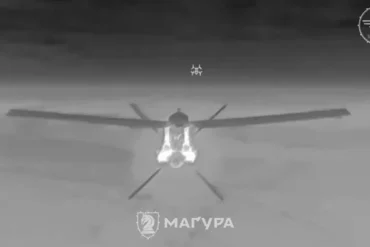
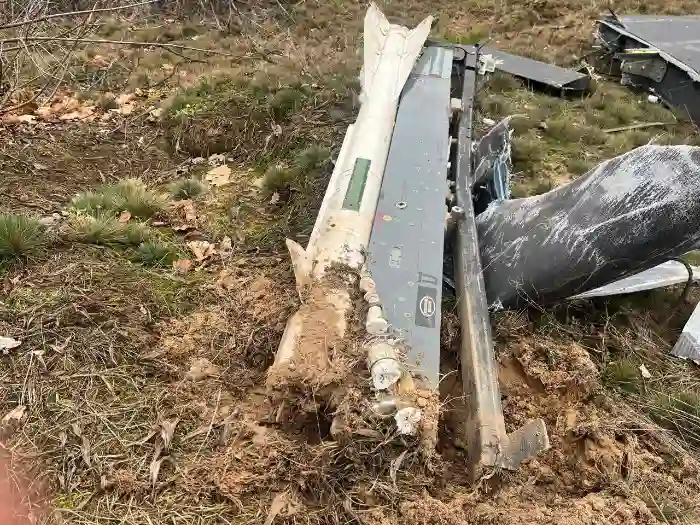
On December 1, 2025, Ukraine’s Sting interceptor drone scored the first verified kill of this modified Shahed, downing it before the R-60 could be fired. Images released by Ukrainian sources revealed the missile strapped to an improvised nose mount, a crude yet effective marriage of 1970s Soviet engineering and modern low-cost drone warfare.
The encounter confirmed months of speculation that Russia was experimenting with adding air-to-air capability to its mass-produced unmanned fleet. It also showcased Moscow’s attempt to counter Ukraine’s increasingly lethal arsenal of interceptor drones, helicopters, and fixed-wing aircraft pushed to lower altitudes by Russian Su-35 pressure.
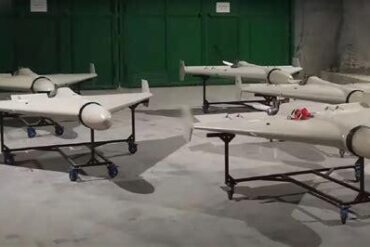
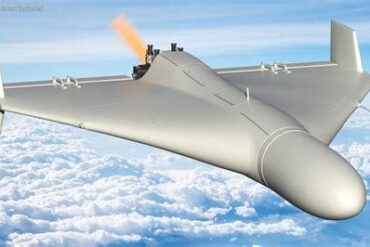
The Shahed-136, introduced over Ukraine in 2022, has long been Russia’s go-to weapon for overwhelming air defenses. Flying autonomously with low-cost navigation systems, it has served as an expendable strike platform targeting power plants, transformer yards, and other infrastructure. Its appeal lies in economics: a $20,000–$50,000 drone designed to drain multimillion-dollar Ukrainian SAMs.
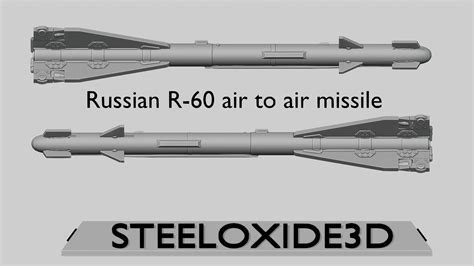
The integration of the R-60, a heat-seeking missile weighing roughly 44 kilograms, fundamentally changes that profile. With a 7–8 km engagement range, the modified Shahed gains the ability to threaten the very interceptors sent to destroy it, turning defensive counter-drone missions into high-risk encounters.
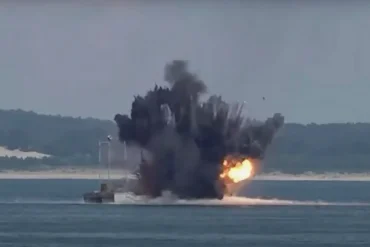
The R-60’s compact form and massive Soviet stockpiles make it a surprisingly natural fit for drone adaptation. The missile’s relatively light frame has already allowed Ukraine to deploy it on unmanned surface vessels, and now Russia is repurposing it to create a new breed of airborne ambushers.
The Sting: Ukraine’s Answer to the Shahed Swarm
Ukraine’s Sting interceptor drone, created by volunteer engineers from the Wild Hornets group, has become one of Kyiv’s most successful innovations of the war. Flying at nearly 200 km/h and costing a fraction of any surface-to-air missile system, it has shredded thousands of Russian drones in night raids across the country.
The Sting’s success forced Russia to seek new ways to defend its Shahed fleets. The R-60-equipped variant appears to be Moscow’s attempt to counter the Sting’s growing dominance. By enabling Shaheds to shoot back, Russia is testing whether cheap drones can provide mutual protection in a swarm formation.
This potential “escort drone” concept would allow the first wave of armed Shaheds to defend vulnerable unarmed units behind them. Even if only a small portion carry air-to-air missiles, the uncertainty may compel Ukrainian interceptors — manned or unmanned — to operate farther out.
A Drone That Can Kill Helicopters — At a Discount
Equipping Shaheds with R-60s offers Russia a low-cost way to threaten Ukraine’s Mi-8 and Mi-24 helicopter gunships, which have become essential to hunting loitering munitions along the frontlines. At less than $150,000 combined, a weaponized Shahed is drastically cheaper than the aircraft it might destroy.
The implication is clear: Russia is leveraging cheap drones to impose expensive dilemmas. Each missile-carrying Shahed may force Ukraine to rethink how low and how close its manned aircraft can fly.
Man-in-the-Loop Targeting Turns Shahed Into a Primitive Fighter Drone
The Shahed’s integration of video-based man-in-the-loop (MITL) control gives operators the ability to point the missile’s seeker toward airborne threats moments before firing. The method uses optical or thermal views relayed over datalink — a rudimentary but effective substitute for radar cueing.
This setup allows the Shahed to function like a semi-autonomous escort fighter, capable of reacting to approaching interceptors and launching an air-to-air missile before defenders close the distance. While crude compared to modern UAVs like Turkey’s Kizilelma or the US MQ-29 Ghost Bat, the adaptation shows how far Russia is willing to stretch the airframe’s combat role.
A History of Air-to-Air Drones Comes Full Circle
Arming drones with air-to-air weapons is not new — it was merely dormant. In 2002, a US MQ-1 Predator fired a Stinger at an Iraqi MiG-25 attempting to shoot it down, marking a rare moment of drone-versus-fighter combat. Since then, the US MQ-9 Reaper has tested AIM-9X Sidewinders, and Turkey has conducted air-to-air firings from its Kizilelma jet drone.
Russia’s adoption of legacy missiles on expendable platforms is a logical — if alarming — evolution. Unlike the high-end systems tested by NATO countries, Moscow is using volume and cost efficiency as its primary weapon.
Shahed Production Continues at Industrial Scale
The shift toward air-to-air capability comes amid enormous Russian production output. Factories such as Yelabuga are believed to be manufacturing 4,000–5,000 Shahed drones per month, with over 18,000 units produced in just six months of 2025. At this scale, even a fraction upgraded with R-60s could meaningfully shift the aerial threat environment.
The newest Shahed variants have also received extensive upgrades, including:
- electro-optical sensors for real-time visual targeting
- improved navigation systems resistant to GPS spoofing
- AI-assisted control and routing via Ukrainian mobile networks
- experimental jet-powered versions such as the Shahed-236 (Geran-3)
One of these Geran-3 drones was recently downed by a Sting interceptor, marking the first confirmed kill of the high-speed variant.
A Future Where Drone-vs-Drone Dogfights Become Routine
The R-60-armed Shahed represents more than improvisation. It is a signal that drone-on-drone combat is entering a new phase, one where cheap unmanned platforms can carry weapons once reserved for fighters.
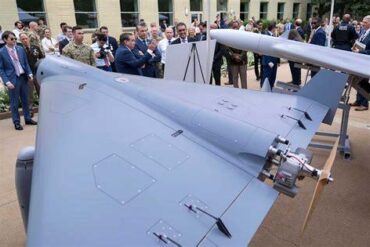
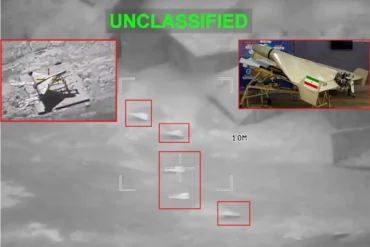
The United States, noticing the Shahed’s battlefield impact, has already called for industry to produce exact replicas for defense testing. As drone warfare accelerates, the boundary between missile, aircraft, and drone continues to blur.
What Russia has created is not elegant, but it is undeniably effective: a mass-produced kamikaze drone now capable of fighting back. The next phase of Ukraine’s air war will unfold under the shadow of this new hybrid — part missile carrier, part decoy, part autonomous hunter.