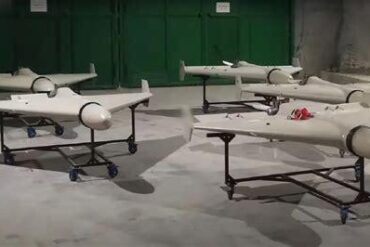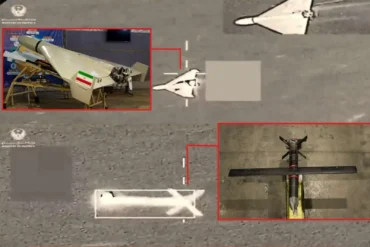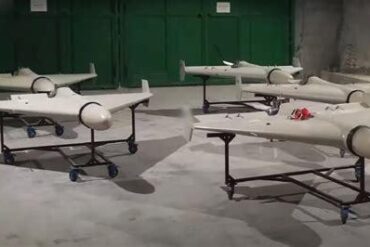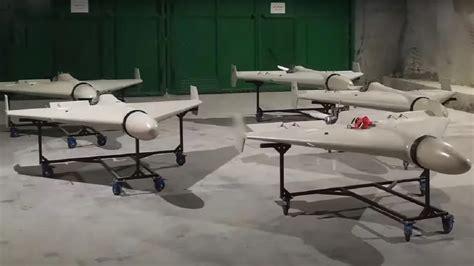
The HESA Shahed 136, also known in Russian service as Geran-2, represents a dramatic shift in modern aerial warfare. As a low-cost loitering munition or ‘kamikaze drone,’ it exemplifies how asymmetric military tactics can undermine expensive air defense networks. Developed by Shahed Aviation Industries in partnership with HESA (Iran Aircraft Manufacturing Industrial Company), this drone emerged publicly in December 2021 and has since played a controversial and deadly role in conflicts spanning Ukraine, Yemen, Iraqi Kurdistan, and Israel.
Design and Structural Features of the Shahed 136
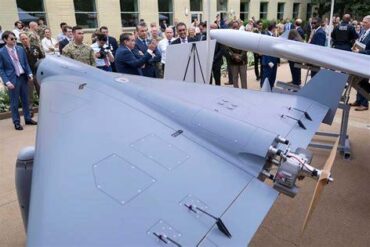
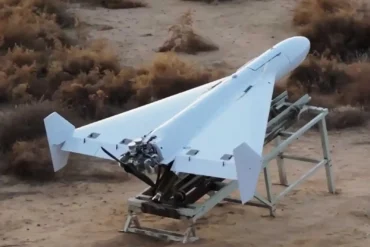
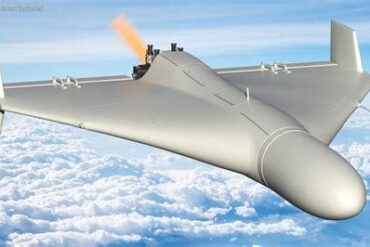
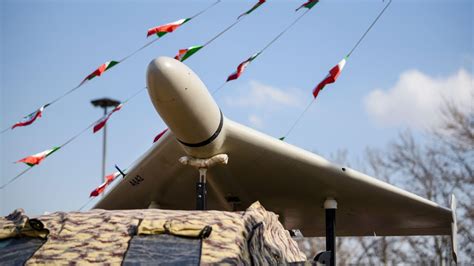
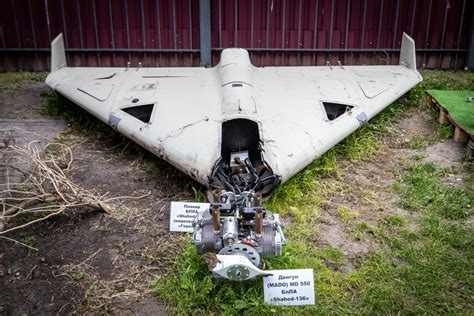
The Shahed 136 follows a relatively simplistic, yet effective, structural layout. Its cropped delta-wing configuration and twin wingtip rudders afford it considerable aerodynamic stability. Powered by an MD-550 four-cylinder piston engine with a pusher-propeller setup, the drone achieves both respectable endurance and minimal radar cross-section.
This unmanned platform measures approximately 3.5 meters in length, with a wingspan of 2.5 meters and a total launch weight near 200 kilograms. Its payload includes a 50 kg high-explosive warhead, enabling significant damage to fixed infrastructure or soft targets.
Flight Capabilities and Range Estimations
Estimates for the drone’s range vary between 970 km and 2,500 km, depending on mission profile and fuel load. With a cruise speed near 185 km/h, the drone is optimized for long-distance strikes rather than rapid penetration. Launch is conducted from truck-mounted racks using RATO (Rocket-Assisted Take-Off) boosters, which detach after propelling the drone skyward. The MD-550 piston engine takes over post-launch for sustained flight.
What sets the Shahed 136 apart is its loitering capability, enabling the munition to circle over targets for extended periods until a strike order is executed. This allows for flexible mission planning and effective engagement of time-sensitive targets.
Guidance, Control, and Potential for Reconnaissance
Navigation systems integrate GNSS/INS guidance, bolstered in some variants by AI-based autopilot functions. Despite suggestions of a reconnaissance variant, operational deployments—especially by Russian forces in Ukraine—have focused on strike-only use. The discovery of cellular SIM cards and modems in downed units points to a possible beyond-line-of-sight control mechanism, potentially via satellite phone uplink or distributed command relays.
These embedded communication modules have increased the drone’s flexibility in target acquisition, although most operational instances indicate that Shahed 136 units follow pre-programmed flight paths.
Electronic Components and Alleged Western Origins
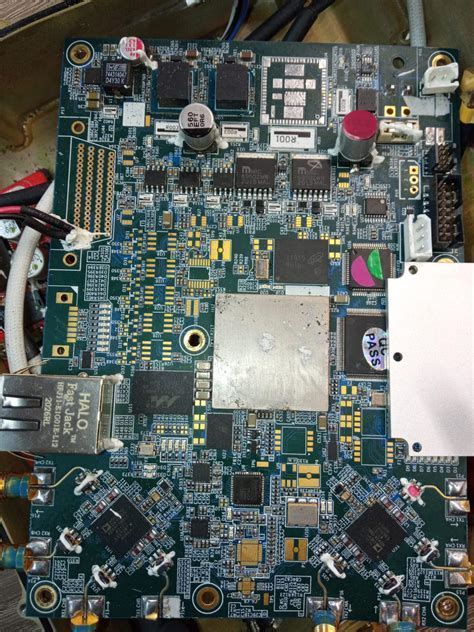
Investigations into wreckage from Ukraine and the Middle East reveal a startling array of foreign-made electronic parts inside these Iranian drones. These include:
- Altera Field Programmable Gate Arrays (FPGAs)
- Analog Devices RF modules
- Microchip low-dropout regulators (LDOs)
Captured Geran-2 variants in late 2023 reportedly contained 55 U.S.-origin components, alongside 15 Chinese, 13 Swiss, and 6 Japanese parts. This reality underscores the challenges in enforcing arms embargoes and export controls, especially when dual-use electronics are involved.
Russian Geran-2 Variant: Local Production and Upgrades
The Geran-2, Russia’s designation for the Shahed 136, reflects significant modifications. Produced by JSC Alabuga in Tatarstan, this version features:
- Fiberglass/carbon-fiber composite fuselage for reduced radar signature.
- GLONASS-based navigation, replacing GPS.
- Improved jamming resistance.
- Tungsten-shrapnel enhanced warheads, increasing lethality against soft targets.
- Optional heavier warheads (up to 90 kg).
- A specialized ‘scout’ variant capable of electromagnetic spectrum surveys.
Production rates are reportedly aggressive, aiming for 6,000 units by summer 2025. Russia claims partial independence from Iranian components, although overlap in electronic architecture remains high.
Operational Use: From Yemen to Ukraine
The Shahed 136’s first reported combat use came in Yemen in 2020, deployed by the Houthis against Saudi-backed forces. The drone was later used in Iranian Revolutionary Guard Corps (IRGC) attacks against Kurdish groups in Iraq in 2022.
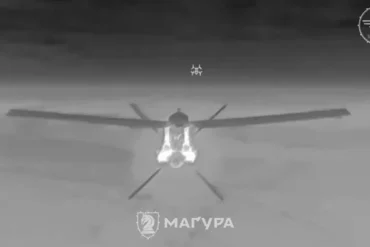
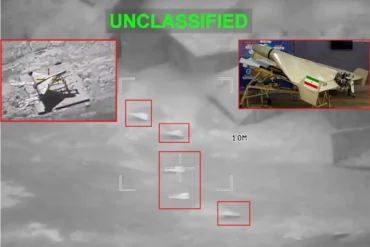
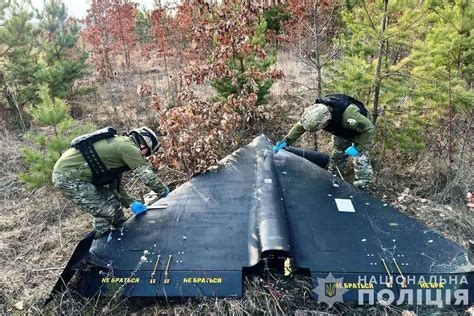
Its most substantial deployment, however, has occurred in Ukraine, where it has been used in waves of saturation attacks against cities and energy infrastructure since late 2022. Operating at low altitudes and often in swarms, these drones have proven difficult to intercept using traditional radar and missile systems. Ukrainian sources estimate interception rates between 65% and 85%, indicating a sizable number still reach their targets.
Ukrainian Countermeasures and Adaptations
To combat the drone threat, Ukrainian forces have developed an intricate mesh of countermeasures:
- Virtual observation posts and acoustic detection grids (Sky Fortress).
- Mobile fire teams utilizing DShK heavy machine guns with thermal optics.
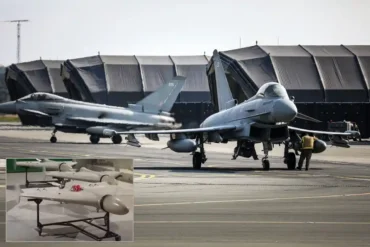
- Deployment of MiG-29 fighters and SA-8 missile systems for aerial interception.
- Self-Propelled Anti-Aircraft Guns (SPAAGs) like the ZSU-23-4 and Gepard.
- Integration of unmanned aerial vehicle (UAV) interceptors such as Anvil, Fowler, and NiDAR platforms.
These defensive layers show partial success but come at a disproportionately high financial cost when matched against the Shahed’s affordability.
Economics of Destruction: Cost vs. Effectiveness
The Shahed 136’s cost-effectiveness is central to its threat. Estimates place the drone’s domestic production cost in Iran at $10,000 to $50,000 per unit, while export variants may fetch $193,000. Russian domestic units produced at Alabuga reportedly cost between $48,000 and $80,000.
In contrast, Western surface-to-air missiles, such as NASAMS or IRIS-T, cost between $400,000 and $1 million per shot. This disparity allows the Shahed 136 to deplete and saturate air defense resources over time.
Human Rights Concerns and International Diplomacy
The widespread deployment of the Shahed 136 has sparked diplomatic and humanitarian backlash. Western powers—including the United States, United Kingdom, and France—accuse Iran of violating UN Security Council Resolution 2231, which restricts the transfer of certain military technologies.
Iran denies direct involvement, claiming autonomous militia use or indigenous production. Nonetheless, the drone’s consistent appearance in conflict zones and its direct battlefield impact have led to Ukraine severing diplomatic ties with Tehran.
Meanwhile, human rights observers and military ethicists label the drone a ‘terror weapon,’ citing its use in urban strikes and its psychological impact on civilian populations.
Labor Conditions and Assembly in Russia
Reports from within the Alabuga production facility indicate troubling labor practices. Investigative journalists and defectors have documented poor living conditions, involuntary labor schemes, and even the exploitation of foreign engineering students. While these reports remain difficult to verify independently, they highlight ethical dilemmas surrounding wartime mass production.
Conclusion: A New Chapter in Low-Cost Aerial Warfare
The HESA Shahed 136 has permanently altered the dynamics of drone warfare. As an affordable, long-range, loitering munition, it provides nation-states and non-state actors a potent, scalable offensive tool. Its emergence challenges the traditional cost-benefit paradigm of modern air defense and introduces new urgency in counter-UAS development.
Though crude in construction and openly derivative in parts sourcing, the drone’s operational success cannot be overstated. It serves as both a warning and a lesson: in the future of war, simplicity and affordability may trump complexity and precision.