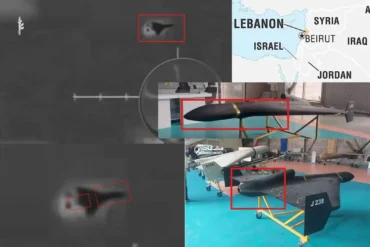
A suspected Iranian Shahed-136 loitering munition struck RAF Akrotiri in Cyprus shortly after midnight on March 2, 2026, marking a dramatic extension of regional hostilities into a critical British sovereign base area. The UK Ministry of Defence confirmed that a small one-way attack drone impacted the installation, while analysts assessed whether the platform matched the profile of Iran’s widely deployed Shahed-136 unmanned aerial vehicle (UAV). The timing of the strike—only hours after London authorized the United States to use selected British bases for defensive strikes against Iranian missile sites—immediately placed the incident within a fast-evolving cycle of military signaling and retaliation.
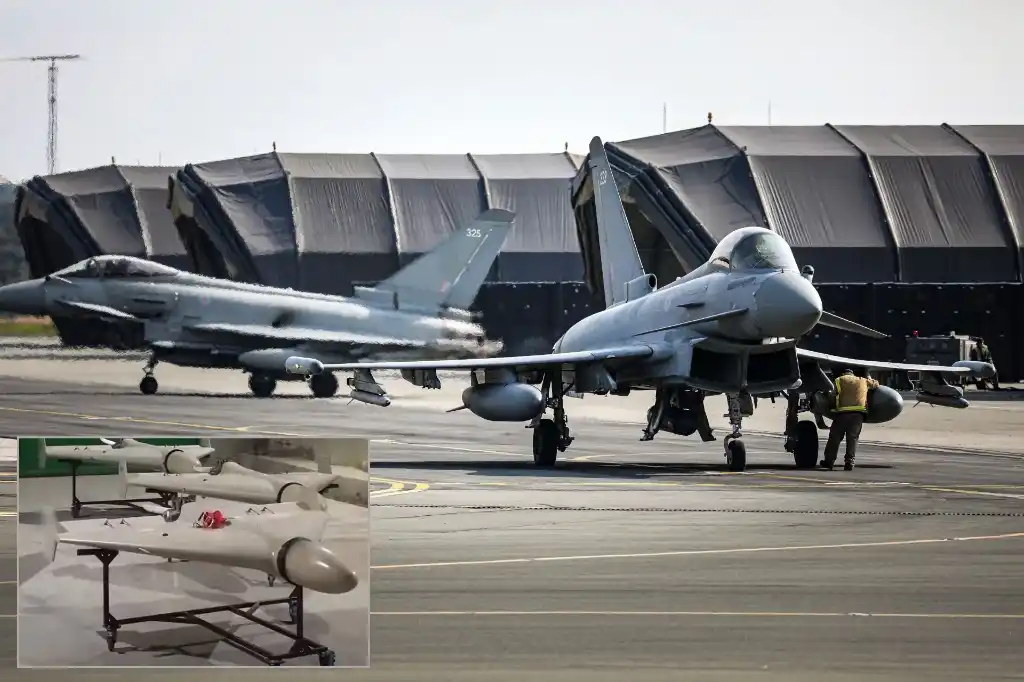
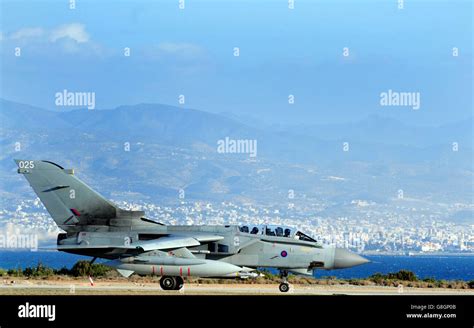
RAF Akrotiri is not a peripheral outpost. It is one of the United Kingdom’s most strategically valuable overseas military hubs, positioned at the crossroads of the Eastern Mediterranean, the Levant, and the wider Middle East. Since Cyprus gained independence in 1960, Britain has retained sovereign base areas on the island, preserving operational access to a region that remains central to NATO planning and coalition air campaigns. The base routinely supports Royal Air Force Typhoon FGR4 multirole fighters, Voyager KC2 and KC3 refueling tankers, and rotational deployments of F-35B Lightning fifth-generation aircraft.
The suspected drone strike therefore carried symbolic and operational weight beyond its immediate physical impact. Even a limited strike against infrastructure at Akrotiri signals that forward-deployed Western bases now sit squarely within the engagement envelope of Iranian-aligned systems.
The Shahed-136: Anatomy of a Long-Range Loitering Munition
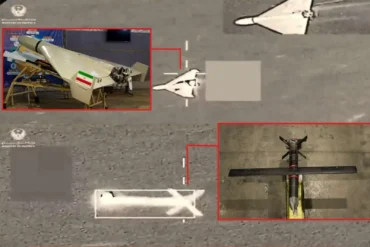
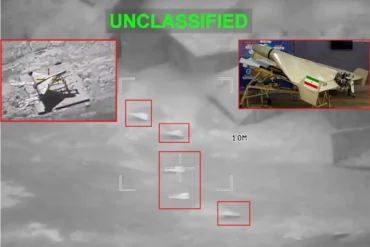
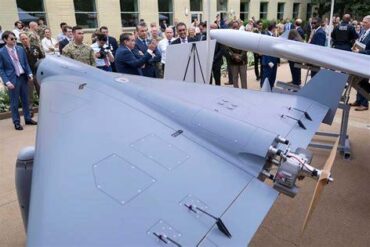
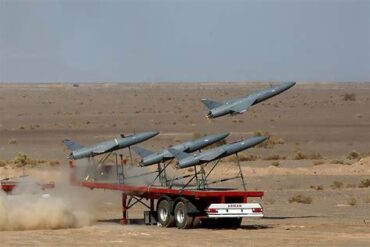
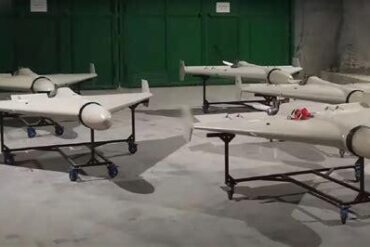
Preliminary assessments suggest the platform resembled the Shahed-136, an Iranian-designed loitering munition that has become emblematic of modern asymmetric warfare. The drone features a distinctive delta-wing configuration, powered by a small piston engine that drives a rear-mounted propeller. Its operational range is often cited at up to 2,000 kilometers, allowing it to strike deep targets without requiring forward launch positions near the objective.
The Shahed-136 typically carries a 30–50 kilogram warhead and relies on a combination of Global Positioning System (GPS) guidance and inertial navigation. Rather than returning to base, it is designed as a one-way attack drone, diving into its target upon terminal approach. Its relatively slow cruising speed—estimated between 150 and 190 kilometers per hour—makes it less threatening in terms of velocity but challenging in terms of detection. Flying at low altitudes, often below 1,000 meters, it can exploit radar blind spots and compress response timelines for defenders.
The drone’s operational history in Ukraine and in Middle Eastern theaters has demonstrated its utility as a cost-effective strike platform. Compared to ballistic missiles, it is inexpensive, simpler to manufacture, and capable of being launched in waves to saturate defenses. That combination of affordability and persistence has reshaped calculations around base protection and air-defense architecture.
RAF Akrotiri’s Strategic Role in Regional Air Operations
RAF Akrotiri functions as a forward operating platform for British and allied airpower. From this airfield, aircraft can rapidly reach Syria, Lebanon, Iraq, Israel, and parts of North Africa. Its long runways accommodate heavy refueling tankers and high-performance combat aircraft, making it indispensable for sustained coalition operations.
The presence of the F-35B Lightning adds a fifth-generation dimension to the base’s capabilities. Equipped with the AN/APG-81 active electronically scanned array (AESA) radar, the aircraft integrates radar, electro-optical targeting systems, and electronic support measures into a fused operational picture. Through secure data links such as Link 16, information gathered by one aircraft can be distributed across the force in near real time. This networked capability enhances situational awareness, particularly in contested airspace.
Typhoon FGR4 aircraft stationed at Akrotiri provide quick-reaction alert coverage and multirole flexibility, capable of air-to-air interception and precision-guided strikes. The coexistence of fourth- and fifth-generation platforms at the base underlines its role as a layered combat node rather than a simple staging field.
Counter-Drone Defenses and Force Protection Measures
In the days preceding the strike, the United Kingdom reportedly deployed additional counter-unmanned aerial system (C-UAS) assets to Cyprus. These include ground-based radars optimized for detecting low radar cross-section targets, as well as short-range air-defense systems capable of engaging slow-moving drones. Modern C-UAS architecture often blends kinetic interceptors, electronic jamming, and surveillance networks to create overlapping detection and engagement zones.
Short-range systems typically operate below 5,000 meters in altitude and are designed to neutralize threats before they reach critical infrastructure such as runways, fuel depots, or aircraft shelters. Electronic warfare components can attempt to disrupt navigation signals or sever control links, though autonomous one-way drones like the Shahed-136 are less susceptible to remote signal disruption once launched on pre-programmed trajectories.
Despite these measures, no air-defense system offers absolute protection. A single drone slipping through layered defenses may cause limited physical damage while still achieving psychological or political impact. In that sense, the strike on Akrotiri illustrates the evolving challenge of defending fixed installations against persistent, low-cost aerial threats.
Political Context: Authorization of U.S. Strikes from British Bases
The incident occurred hours after Prime Minister Keir Starmer authorized the United States to use selected British bases for defensive strikes against Iranian missile launchers and storage facilities. London framed the move within the doctrine of collective self-defense, emphasizing that British forces would not directly participate in offensive action. Yet permitting U.S. aircraft to operate from British sovereign territory inevitably links the United Kingdom to subsequent escalatory dynamics.
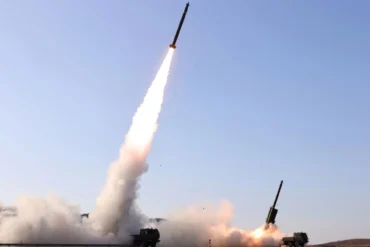
From Tehran’s perspective, bases facilitating U.S. operations may be viewed as legitimate military nodes within a broader confrontation. By striking—or being perceived to strike—RAF Akrotiri, Iran or its aligned actors signal their willingness to expand the battlespace geographically. The action suggests that retaliatory measures need not be confined to the Gulf but can extend into the Mediterranean basin.
This dynamic introduces escalation risks unique to sovereign base areas. Unlike coalition facilities in other states, Akrotiri is legally British territory. An attack on such a site carries implications that differ from strikes on partner nations’ installations, potentially influencing the political calculus in London regarding future engagement levels.
Calibrated Harassment or Strategic Message?
The operational logic behind deploying a Shahed-type drone against a hardened air base appears less about decisive destruction and more about calibrated pressure. Loitering munitions are well suited for probing defenses, gathering intelligence on response times, and imposing a constant state of alert. Even if intercepted or causing minimal damage, they compel defenders to expend resources and maintain heightened readiness.
Against a fortified installation supported by integrated radar coverage and rapid scramble procedures, a lone drone is unlikely to alter force posture significantly. However, repeated attacks—especially if coordinated with missile salvos or electronic warfare—could strain defensive systems and create cumulative risk.
The strike therefore functions as both a tactical event and a strategic signal. It communicates reach and intent while testing the resilience of British and allied defensive measures.
Broader Regional Implications
The Eastern Mediterranean has increasingly become an extension of Middle Eastern security competition. As the United States expands its operational footprint and conducts strikes against Iranian missile infrastructure, Tehran seeks avenues to demonstrate deterrence. Facilities in Bahrain, the United Arab Emirates, and Cyprus form part of a network of allied bases supporting American operations.
RAF Akrotiri’s targeting underscores the vulnerability of even well-defended nodes in this network. At the same time, it highlights the adaptability of modern military strategy, where relatively inexpensive unmanned systems challenge technologically advanced air-defense ecosystems.
The trajectory of escalation will depend on several variables: whether further strikes occur, the degree of damage inflicted, and the political interpretation of intent. Sustained attacks on British sovereign territory could prompt a recalibration of London’s posture, potentially shifting from a strictly defensive framework toward a more assertive alignment with U.S. operations.
For now, the incident at Akrotiri stands as a stark illustration of contemporary conflict dynamics. Loitering munitions, strategic basing decisions, and rapid cycles of retaliation converge in a theater where geography, technology, and politics intersect with unusual intensity. In an era defined by distributed warfare and contested airspace, even a single drone impact reverberates far beyond the crater it leaves behind.