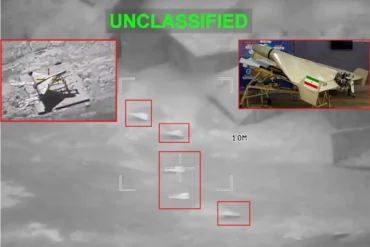
The modern battlefield is being reshaped not by billion-dollar stealth aircraft or hypersonic missiles, but by a far more disruptive force: low-cost, mass-produced drones capable of overwhelming even the most advanced defenses. In the escalating conflict known as Operation Epic Fury, the spotlight has shifted decisively toward the Shahed-class drone family—a lineage that now spans Iranian ingenuity, Russian adaptation, and American reinvention.
What began as a relatively simple loitering munition has evolved into a strategic weapon of attrition, redefining how nations think about airpower, deterrence, and cost efficiency. The Shahed-136, in particular, has emerged as a symbol of this transformation—a drone that is inexpensive to build, devastating in numbers, and alarmingly difficult to counter at scale.
Operation Epic Fury and the Rise of Drone-Centric Warfare
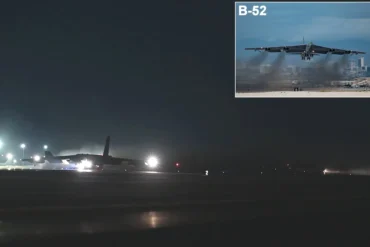
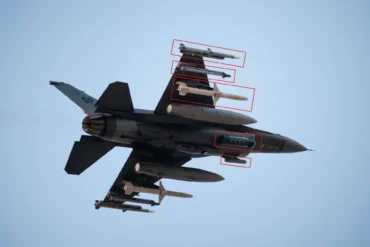
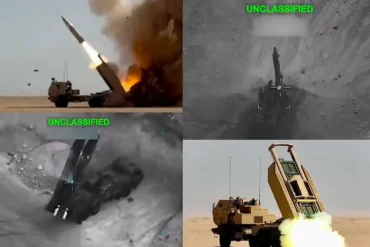
Launched on February 28, 2026, Operation Epic Fury marked a significant escalation in tensions between the United States and Iran, with coordinated strikes targeting Iranian military infrastructure, command networks, and strategic assets. While traditional airpower played a role in the opening phase, the conflict quickly transitioned into a battle of endurance and economic efficiency, where drones became the dominant force.
Iran’s response relied heavily on one-way attack drones, particularly the Shahed series. These systems allowed Tehran to project power across vast distances without risking pilots or deploying costly missile systems. The result was a relentless wave of aerial threats designed not just to strike targets, but to exhaust and destabilize opposing defenses.
By deploying thousands of drones in coordinated attacks, Iran effectively turned the battlefield into a numbers game—one where quantity could rival, and sometimes surpass, technological superiority.
Shahed-136: The Blueprint of Low-Cost Lethality
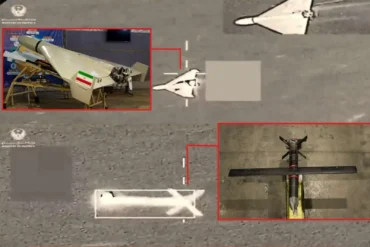
At the center of this drone revolution is the Shahed-136, a deceptively simple platform that has proven to be extraordinarily effective. Designed as a loitering munition, it combines long-range capability with a terminal dive attack, making it ideal for striking fixed infrastructure and high-value targets.
The drone’s defining characteristics are not its speed or sophistication, but its efficiency and adaptability. Flying at low altitudes with a minimal radar signature, the Shahed-136 is difficult to detect and track. Its GPS-guided navigation system enables it to travel distances of up to 2,500 kilometers, allowing strikes deep into enemy territory.
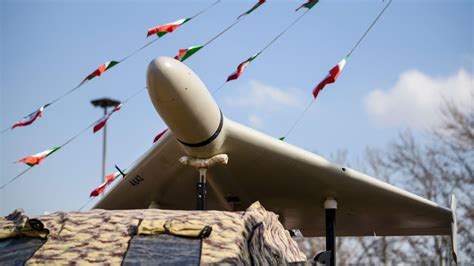
Constructed from commercially available components—fiberglass frames, simple piston engines, and basic electronics—the drone is designed for mass production under constrained conditions. This simplicity is not a limitation; it is a strategic advantage. By keeping costs between $20,000 and $50,000 per unit, Iran has created a weapon that forces adversaries to spend exponentially more on interception.
This cost asymmetry lies at the heart of the Shahed’s success. Every drone launched represents a financial dilemma for defenders, who must decide whether to expend high-value interceptors on a relatively cheap threat.
Saturation Attacks and the Economics of Air Defense
The true power of the Shahed-136 is revealed not in individual strikes, but in coordinated saturation attacks. By launching drones in large numbers, Iran can overwhelm radar systems, exhaust missile inventories, and create gaps in defensive coverage.
This tactic transforms air defense into a battle of attrition. Advanced systems designed to intercept high-speed aircraft or ballistic missiles are suddenly forced to engage slow-moving, low-cost targets in overwhelming quantities. The result is a strategic imbalance, where even successful defenses come at a prohibitive cost.
In practical terms, this means that a swarm of drones costing a few million dollars can compel defenders to expend tens or hundreds of millions in interceptors. Over time, this dynamic erodes the sustainability of traditional air defense strategies.
Russian Geran-2: Enhancing the Shahed Formula
The Shahed-136 did not remain static. Through a significant defense agreement, Russia began producing its own variant—known as the Geran-2—introducing a series of upgrades that enhanced the drone’s effectiveness in contested environments.
These modifications included improvements to propulsion systems, warhead configurations, and electronic resilience. One of the most notable advancements was the integration of CRPA antennas, which improve resistance to electronic warfare by mitigating GPS jamming.
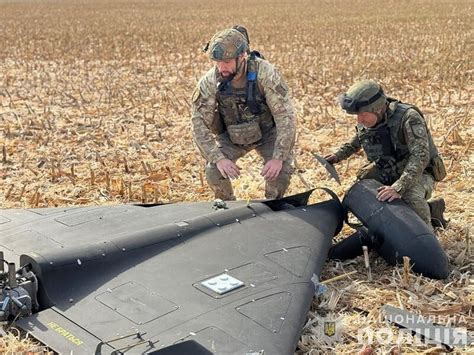
Russian engineers also experimented with adding electro-optical sensors, enabling limited reconnaissance capabilities and potentially improving targeting accuracy. Reports have even suggested the integration of additional weapon systems, pushing the boundaries of what a loitering munition can achieve.
These enhancements transformed the Shahed from a simple attack drone into a multi-role platform, capable of adapting to different mission profiles. The battlefield experience gained in Ukraine served as a testing ground, accelerating the evolution of the design.
The implications are profound: a low-cost drone is no longer just expendable—it is becoming increasingly capable and versatile.
Intelligence Signals and the Circulation of Technology
Recent intelligence claims have pointed to the use of Russian-manufactured Shahed variants in Middle Eastern operations, suggesting a complex exchange of technology and expertise. This cross-pollination blurs the lines between national defense industries, creating a shared ecosystem of drone development.
The flow of knowledge appears to be bidirectional. Iran initially provided the design and production framework, while Russia contributed refinements based on real-world combat experience. The result is a feedback loop of innovation, where each iteration becomes more effective than the last.
This dynamic raises critical questions about the future of drone proliferation. As designs become easier to replicate and improve, the barrier to entry for advanced drone capabilities continues to fall.
America’s LUCAS: Turning the Design Back on Its Origin
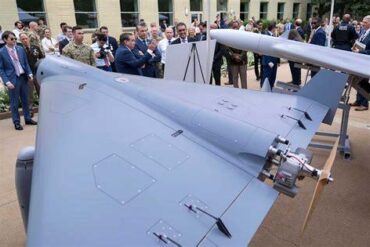
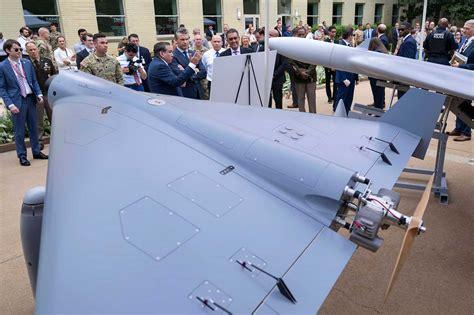
In a striking twist, the United States has entered the arena with its own interpretation of the Shahed concept: the LUCAS (Low-cost Unmanned Combat Attack System). Derived from a captured Shahed-136, LUCAS represents a deliberate effort to reverse-engineer and improve upon the original design.
Rather than dismissing the Shahed as a crude system, American engineers recognized its strategic value and sought to replicate its strengths while addressing its limitations. The result is a drone that maintains the core principles of affordability, scalability, and simplicity, but integrates them into a more advanced operational framework.
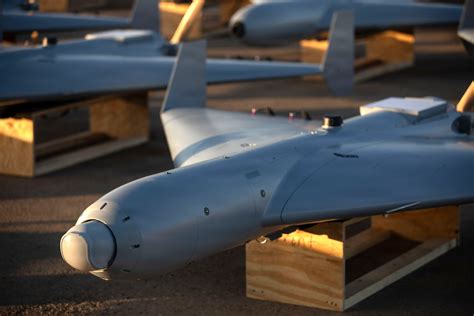
LUCAS is lighter, more modular, and designed with an open architecture that supports multiple payload configurations. It can carry explosive warheads, electronic warfare modules, or reconnaissance equipment, making it a highly adaptable platform.
With a unit cost estimated between $30,000 and $35,000, LUCAS remains firmly within the low-cost category, enabling large-scale deployment. Its ability to loiter for extended periods and execute precise terminal attacks makes it a formidable counterpart to the Shahed.
Drone-on-Drone Warfare: A New Battlefield Reality
The introduction of LUCAS has created an unprecedented scenario: Shahed-inspired drones being used against their originators. This “drone-on-drone” dynamic represents a new phase in aerial warfare, where similar systems compete in a contest of numbers, efficiency, and adaptability.
Unlike traditional air combat, which relies on speed, maneuverability, and pilot skill, this new paradigm emphasizes production capacity, network integration, and cost management. Victory is no longer determined solely by technological superiority, but by the ability to sustain operations over time.
The battlefield becomes a complex ecosystem of autonomous systems, each interacting with sensors, command networks, and defensive measures in real time. In this environment, the line between offense and defense becomes increasingly blurred.
Mass Production and the Industrialization of Conflict
One of the most striking aspects of the Shahed phenomenon is its compatibility with industrial-scale production. Unlike advanced fighter jets or precision missiles, these drones can be manufactured in relatively simple facilities using widely available materials.
This accessibility allows for rapid scaling, enabling nations to build large inventories in a short period. It also introduces a level of resilience, as production can be distributed across multiple locations, reducing vulnerability to targeted strikes.
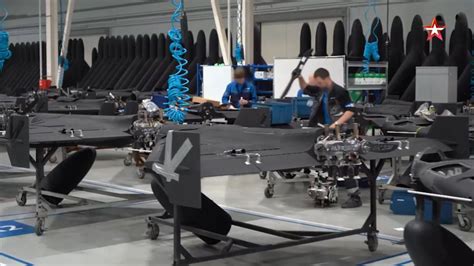
The industrialization of drone warfare marks a significant departure from traditional defense models. Instead of focusing on a small number of high-value assets, militaries are increasingly investing in large quantities of low-cost systems that can be deployed en masse.
This shift has profound implications for global security, as it lowers the threshold for sustained conflict and increases the potential for escalation.
Strategic Implications for Future Warfare
The rise of Shahed-class drones underscores a broader transformation in military strategy. Airpower is no longer defined solely by advanced platforms and precision strikes, but by the ability to balance cost, scale, and effectiveness.
For defenders, this means developing new approaches to air defense that can handle large volumes of low-cost threats without incurring unsustainable expenses. Solutions may include directed energy weapons, electronic warfare systems, and low-cost interceptors designed specifically for drones.
For attackers, the focus shifts toward maximizing the impact of each dollar spent, leveraging mass and coordination to achieve strategic objectives.
Conclusion: The Era of Affordable Airpower Has Arrived
The story of the Shahed-136 and its derivatives is not just about a single drone—it is about a fundamental shift in how wars are fought. By combining simplicity, affordability, and scalability, these systems have introduced a new form of airpower that challenges conventional assumptions.
In Operation Epic Fury, the interplay between Iranian designs, Russian enhancements, and American adaptations has created a multi-layered contest of innovation and endurance. Each side is learning, adapting, and evolving in real time, pushing the boundaries of what low-cost systems can achieve.
The implications extend far beyond this conflict. As drone technology continues to proliferate, the principles demonstrated by the Shahed class—cost efficiency, mass deployment, and operational flexibility—are likely to shape the future of warfare for years to come.
What was once dismissed as a crude weapon has become a defining feature of modern combat. And in that transformation lies a powerful lesson: the most disruptive innovations are not always the most complex—they are the ones that change the rules entirely.