The United States has escalated its air campaign against Iran’s strategic military infrastructure, deploying a B-52H Stratofortress to conduct precision strikes against ballistic missile facilities and command-and-control nodes under Operation Epic Fury. The operation marks a significant expansion of U.S. military efforts aimed at dismantling Iran’s long-range strike architecture and disrupting its capacity to coordinate missile attacks across the Middle East.
According to U.S. Central Command, the strike specifically targeted infrastructure directly linked to Iran’s ballistic missile forces, including operational command posts responsible for launch coordination. The use of a heavy strategic bomber rather than tactical aircraft underscores the scale and intent of the mission: to deliver sustained, high-volume precision firepower against hardened and dispersed targets critical to Iran’s missile enterprise.
In a video statement released on March 3, 2026, Admiral Brad Cooper, Commander of U.S. Central Command, confirmed that the bomber sortie was part of ongoing operations designed to weaken Iran’s ability to organize and execute coordinated missile strikes against regional partners and U.S. interests. The focus has shifted from initial suppression of air defenses and storage facilities toward the operational backbone of Iran’s missile forces—its command network.
Strategic Use of the B-52 Stratofortress in Modern Warfare
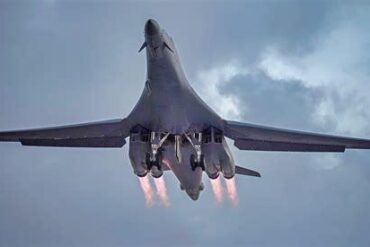
The decision to deploy the B-52H Stratofortress carries operational and symbolic weight. Entering service in the 1950s, the aircraft remains one of the most formidable long-range conventional strike platforms in the U.S. arsenal. Its endurance, payload capacity, and compatibility with modern precision-guided munitions make it uniquely suited for complex strike missions against hardened infrastructure.
Capable of carrying up to 70,000 pounds of ordnance, the B-52 can deliver a mix of conventional gravity bombs, precision-guided munitions, and long-range cruise missiles. Its modernization programs have integrated advanced targeting systems, satellite-guided weapons, and network-centric warfare capabilities, allowing it to operate as a central node in a broader intelligence and strike ecosystem.
The aircraft’s mission profile during Operation Epic Fury likely involved coordination with space-based surveillance, airborne early warning platforms, and aerial refueling tankers. This integrated architecture enables the bomber to strike multiple targets over a vast operational area without relying solely on forward-deployed tactical fighters.
Precision Munitions and Standoff Strike Capabilities
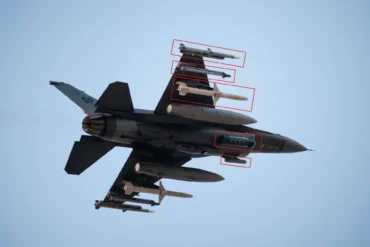
The B-52’s effectiveness lies not only in its payload capacity but in the sophistication of its weapons systems. Among the most prominent are the Joint Direct Attack Munition (JDAM) kits, which convert conventional bombs into GPS-guided precision weapons. Variants such as the 500-pound GBU-38, the 1,000-pound GBU-32, and the 2,000-pound GBU-31 provide flexible options depending on target hardness and structural complexity.
For deeply buried or reinforced facilities, penetrator variants based on the BLU-109 warhead are designed to destroy hardened bunkers and underground command centers. Such capabilities are particularly relevant when targeting ballistic missile infrastructure, which is often protected by reinforced concrete and subterranean construction.
The bomber also has the capacity to deploy the GBU-39/B Small Diameter Bomb, enabling multiple precision strikes during a single sortie due to its compact size and accuracy. In scenarios involving dispersed missile launch complexes, this capability allows for simultaneous engagement of numerous high-value nodes.
Beyond gravity bombs, the B-52 can launch standoff weapons such as the AGM-86C Conventional Air-Launched Cruise Missile (CALCM) and the stealthy AGM-158 Joint Air-to-Surface Standoff Missile (JASSM), including its extended-range variant, JASSM-ER. These missiles allow strikes from hundreds of kilometers away, reducing exposure to hostile air defense systems and enabling penetration of heavily defended airspace.
Targeting Iran’s Ballistic Missile Command Architecture
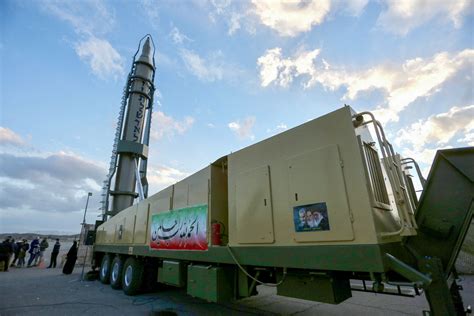
Iran’s ballistic missile program forms a central pillar of its national defense strategy. Lacking a modern air force comparable to Western powers, Tehran has invested heavily in short-, medium-, and intermediate-range ballistic missiles as a means of deterrence and regional influence. These systems are designed to threaten military installations, population centers, and strategic chokepoints throughout the Middle East.
Crucially, ballistic missile operations depend on a distributed yet interconnected command-and-control network. Launch brigades, targeting units, logistics elements, and operational headquarters are linked through communications and data-sharing systems that enable coordinated salvos. Disrupting this network can significantly degrade the effectiveness of missile operations, even if launchers themselves remain intact.
By striking command nodes rather than solely focusing on launch sites, U.S. forces aim to fracture the decision-making chain that synchronizes missile launches. Without functional command posts and reliable communications, large-scale coordinated attacks become slower, riskier, and more vulnerable to interception.
Operational Integration Within a Broader Air Campaign
Operation Epic Fury appears to be structured as a phased campaign. Earlier actions reportedly targeted air defense systems, military bases, and missile storage depots, creating conditions for deeper strikes. The B-52 mission signals a transition toward dismantling higher-level operational infrastructure.
The integration of heavy bombers with carrier strike groups, land-based fighter squadrons, and naval strike assets allows U.S. forces to sustain pressure across multiple domains. Strategic bombers provide long-endurance firepower, while tactical aircraft can conduct dynamic targeting and close air support roles. Naval assets, including guided-missile destroyers and submarines, add further layers of strike capability.
This multi-layered approach complicates defensive planning and increases the tempo of operations. Iran’s missile forces must contend not only with the physical destruction of infrastructure but also with persistent surveillance and rapid strike cycles enabled by networked intelligence systems.
Strategic Significance and Regional Implications
The use of a long-range strategic bomber communicates both operational resolve and global reach. B-52 aircraft can deploy from bases in the continental United States or forward locations, demonstrating the ability to project power across intercontinental distances with minimal warning. This flexibility reinforces the credibility of U.S. commitments to regional partners.
At the same time, targeting ballistic missile infrastructure carries significant strategic implications. Missile forces are often viewed by Tehran as a deterrent shield against external aggression. Strikes against these assets may be interpreted as an effort to erode that deterrent, potentially influencing escalation dynamics.
However, from a military perspective, degrading missile launch capabilities reduces the risk of coordinated large-scale attacks against U.S. forces and allied nations. By focusing on operational command nodes, the campaign seeks to limit Iran’s capacity to orchestrate synchronized missile salvos that could overwhelm defensive systems.
The Enduring Role of the B-52 in Contemporary Conflict
The continued operational relevance of the B-52 illustrates the adaptability of legacy platforms when paired with modern technology. What began as a Cold War nuclear deterrent aircraft has evolved into a versatile conventional strike platform capable of precision warfare in complex theaters.
Its long loiter time, heavy payload, and compatibility with next-generation munitions ensure that it remains a cornerstone of U.S. strategic aviation. In operations like Epic Fury, the aircraft functions as a force multiplier—able to deliver concentrated firepower while operating within a broader network of intelligence and strike assets.
The March 2026 strike reflects a deliberate effort to move beyond symbolic demonstrations of force and toward tangible degradation of adversary capabilities. By attacking ballistic missile sites and command infrastructure, U.S. forces aim to constrain Iran’s operational freedom and reduce the likelihood of large-scale missile attacks across the region.
As Operation Epic Fury continues, further long-range strike missions targeting missile infrastructure and military command facilities remain plausible. The trajectory of the campaign suggests sustained emphasis on dismantling the structural foundations of Iran’s missile enterprise, reshaping the strategic balance in a region where missile power has become a defining instrument of statecraft.