The deployment of the B-52H Stratofortress into active combat operations under Operation Epic Fury marks a notable escalation in the scale and complexity of the United States’ airpower posture in the Middle East. Announced by U.S. Central Command (CENTCOM) on March 15, 2026, the mission introduces one of the most powerful long-range strike platforms in the American arsenal into an ongoing campaign targeting Iranian-linked military infrastructure. By integrating strategic bombers capable of delivering massive precision payloads across intercontinental distances, Washington is signaling both operational resolve and a clear capacity for sustained high-intensity strike operations.
Operation Epic Fury has been characterized by U.S. officials as an evolving campaign designed to disrupt and degrade adversary military capabilities across the region. The involvement of the B-52 significantly expands the operational envelope of American forces. While tactical fighter aircraft typically conduct precision strikes from regional bases, the B-52 introduces a new layer of long-range firepower capable of launching stand-off weapons from outside heavily defended airspace. This strategic flexibility allows commanders to strike critical targets while minimizing exposure to advanced air defense systems.
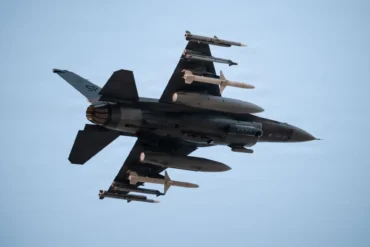
The decision to employ the Stratofortress reflects a deliberate shift toward a layered strike architecture that combines bombers, fighter aircraft, surveillance platforms, and networked intelligence systems. Rather than relying solely on rapid fighter sorties, U.S. planners appear to be leveraging the bomber’s unique ability to carry vast quantities of precision-guided munitions and deliver them against multiple targets in a single mission.
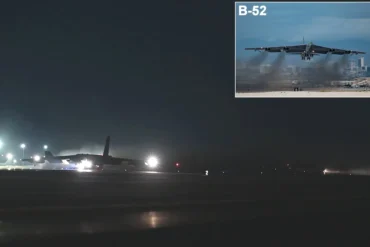
A U.S. Air Force B-52 Stratofortress takes off for a night mission during Operation Epic Fury. Strikes from U.S. forces continue to be unpredictable, dynamic, and decisive. pic.twitter.com/LU9zogVy7C
— U.S. Central Command (@CENTCOM) March 15, 2026
Strategic Bombers Enter the Theater
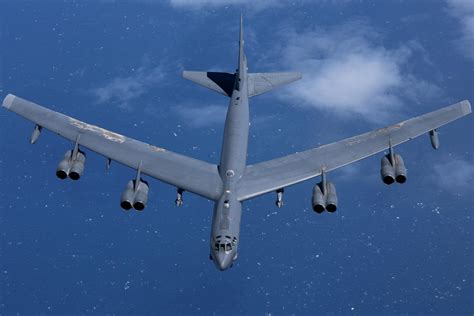
The B-52 Stratofortress, first introduced during the early years of the Cold War, remains one of the most recognizable and enduring aircraft in military aviation history. Despite entering service in the 1960s, the bomber has undergone decades of modernization that have transformed it into a highly capable platform for modern precision warfare.
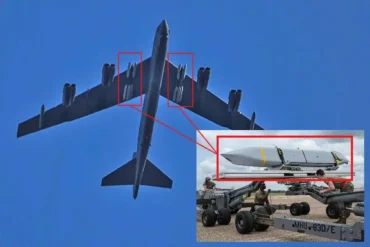
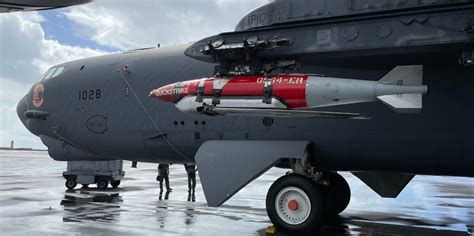
With a payload capacity of approximately 31,500 kilograms of ordnance, the aircraft can carry a diverse arsenal of weapons designed for both direct attack and long-range stand-off strikes. Its ability to launch advanced cruise missiles and guided bombs allows it to hit multiple targets over wide geographic areas during a single sortie.
Among the weapons available to the B-52 during modern strike missions are:
- Joint Direct Attack Munitions (JDAM) for precision bombing using satellite guidance
- AGM-158 Joint Air-to-Surface Standoff Missiles (JASSM) capable of striking heavily defended targets
- JASSM-ER extended-range variants, which can reach targets more than 900 kilometers away
- AGM-86C/D Conventional Air-Launched Cruise Missiles (CALCM) designed for long-range precision strikes
These systems allow the Stratofortress to engage hardened infrastructure, missile launch sites, command centers, and logistics facilities without directly entering contested airspace. The result is a powerful stand-off strike capability that complements the more agile but shorter-range operations of tactical aircraft.
Night Strike Operations and Tactical Advantages
CENTCOM officials emphasized that nighttime strike missions are a central element of Operation Epic Fury. Conducting operations after dark offers several tactical advantages that modern air forces routinely exploit in high-risk environments.
Darkness significantly complicates enemy surveillance efforts, reducing the effectiveness of visual detection and certain radar-guided targeting systems. Although modern air defense networks rely heavily on radar and infrared sensors, nighttime operations still create additional layers of uncertainty for defending forces.
The B-52’s onboard systems allow it to maintain extraordinary accuracy regardless of lighting conditions. Advanced satellite navigation, digital targeting software, and integrated communications networks enable crews to coordinate with reconnaissance assets and strike targets with precision even in poor weather or complete darkness.
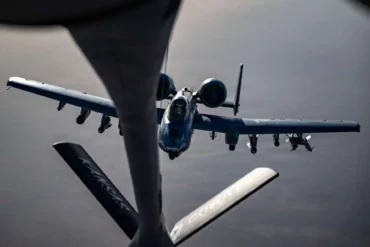
Supporting aircraft further amplify this capability. Airborne early warning platforms, intelligence and surveillance aircraft, and aerial refueling tankers form a coordinated operational ecosystem that allows the bomber to remain airborne for extended durations. With aerial refueling support, a B-52 sortie can remain active for many hours, providing commanders with a persistent strike platform capable of attacking time-sensitive targets as they appear.
This ability to maintain continuous presence over a theater of operations gives military planners a significant advantage when facing adversaries that rely on mobile missile launchers, dispersed infrastructure, or rapidly relocating command centers.
Operation Epic Fury and the Evolution of Precision Strike Warfare
Operation Epic Fury appears to reflect a broader evolution in how modern militaries conduct long-range strike campaigns. Instead of relying on massed bomber formations as in earlier conflicts, contemporary doctrine focuses on precision, intelligence integration, and rapid targeting cycles.
U.S. Central Command described the strikes as “unpredictable, dynamic, and decisive.” This language suggests a strategy centered on maintaining operational uncertainty for the adversary. Rather than conducting predictable bombing patterns, commanders appear to be using flexible strike packages that combine different aircraft types and weapon systems depending on emerging intelligence.
In such an operational model, the B-52 serves as a heavy strike multiplier. Its massive payload allows a single aircraft to deliver the equivalent firepower of several tactical fighter sorties. When multiple bombers operate alongside fighter aircraft and unmanned systems, they can rapidly generate overwhelming strike effects against dispersed targets across large geographic areas.
This approach is particularly effective against adversaries that rely on hidden storage facilities, hardened bunkers, and distributed logistical networks. By saturating multiple locations with precision weapons during a single operational window, strike planners can disrupt command structures and degrade infrastructure before defenses have time to reorganize.
Strategic Signaling and Deterrence
Beyond its immediate operational value, the deployment of the Stratofortress carries a clear strategic messaging component. Strategic bombers are among the most visible symbols of American military power. Their presence in a regional conflict communicates the ability of the United States to project overwhelming force across continents.
Unlike fighter aircraft that must operate from regional airbases, the B-52 can launch from distant locations and still strike targets thousands of kilometers away. This global reach reinforces the credibility of U.S. deterrence by demonstrating that distance alone does not guarantee safety from precision strike capabilities.
Historically, deployments of B-52 bombers into the U.S. Central Command area of responsibility have often served dual purposes: supporting active operations while simultaneously signaling readiness to escalate if necessary. Their appearance in Operation Epic Fury follows this longstanding pattern.
For regional actors, the message is unmistakable. Strategic bombers represent the upper tier of conventional strike power, capable of delivering sustained and large-scale firepower if conflict intensifies.
The Enduring Role of the Stratofortress
Perhaps the most remarkable aspect of the B-52’s participation in modern conflicts is its longevity. Designed during the Eisenhower administration, the aircraft continues to operate effectively more than six decades after its first flight.
Ongoing modernization programs have ensured that the bomber remains relevant in contemporary warfare. Planned upgrades include the B-52J modernization package, which introduces new Rolls-Royce F130 engines, advanced radar systems, and updated digital avionics. These improvements are intended to extend the aircraft’s operational lifespan well into the 2050s.
At the same time, the U.S. Air Force is preparing to introduce the B-21 Raider, a next-generation stealth bomber designed to penetrate sophisticated air defense networks. In this future force structure, the B-52 will likely serve as a stand-off missile carrier, launching long-range weapons while stealth platforms conduct deeper penetration missions.
This complementary approach reflects a broader philosophy in modern military aviation: legacy platforms can remain extremely effective when paired with advanced weapons and integrated digital command systems.
Uncertain Targets, Expanding Campaign
Despite the public announcement of B-52 involvement, many operational details surrounding Operation Epic Fury remain undisclosed. U.S. Central Command has not revealed specific target locations, the geographic scope of the strikes, or the number of bombers participating in the campaign.
Such secrecy is typical in ongoing military operations. Maintaining uncertainty about targeting patterns, aircraft deployment schedules, and strike timing helps preserve the unpredictability that commanders describe as a central element of the operation.
What is clear, however, is that the introduction of the B-52 Stratofortress marks a significant expansion of U.S. airpower in the region. With its immense payload capacity, long endurance, and ability to deploy advanced precision weapons, the bomber provides a powerful tool for sustaining pressure on adversary infrastructure.
Operation Epic Fury demonstrates that even in an era defined by stealth aircraft, drones, and cyber warfare, the strategic bomber remains a formidable instrument of military power. When paired with modern targeting networks and precision munitions, the venerable Stratofortress continues to shape the battlefield—delivering decisive effects from thousands of kilometers away.