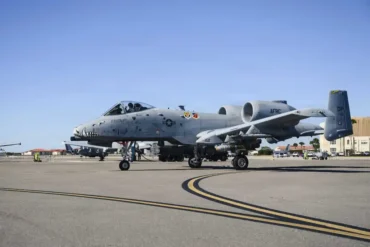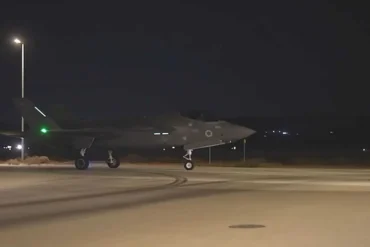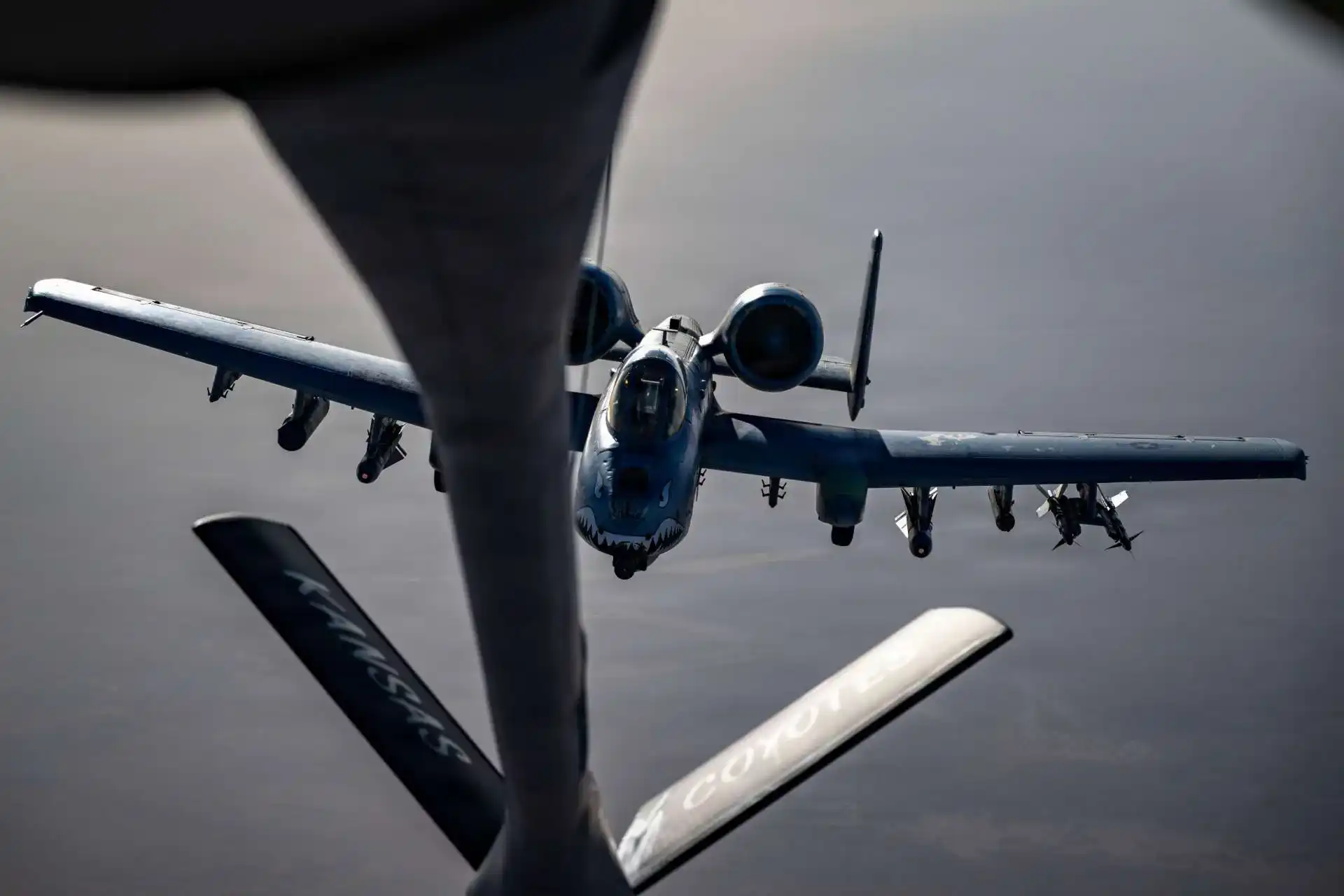
The United States has quietly expanded the range of aircraft supporting its latest Middle Eastern combat campaign, revealing that the iconic A-10 Thunderbolt II is actively participating in Operation Epic Fury, a coordinated U.S. military operation targeting Iranian-linked military infrastructure and regional militia networks. Newly released imagery from U.S. Central Command provides the first official visual confirmation that the heavily armed attack aircraft—better known as the A-10 Warthog—is operating in the theater as part of the broader effort to dismantle Iranian security capabilities and neutralize emerging threats across the region.
According to officials, the operation began on February 28, marking the start of a sustained American air campaign designed to strike a spectrum of targets connected to Iran’s military network. The inclusion of the A-10 is particularly notable because it signals a deliberate decision to combine strategic strike assets with persistent tactical aircraft capable of maintaining continuous presence above active battle zones. The release of refueling imagery serves both operational transparency and strategic messaging, demonstrating that the United States is maintaining long-duration air operations capable of applying pressure across multiple layers of the battlefield.
Unlike stealth bombers or long-range strike aircraft that execute rapid high-impact missions, the A-10’s mission profile revolves around endurance and responsiveness. By showing the aircraft refueling in flight, U.S. Central Command is emphasizing the aircraft’s ability to remain airborne for extended periods, reinforcing the concept of persistent armed overwatch during a complex regional operation.
A-10 Thunderbolt II Takes On Armed Overwatch Role in Active Combat Theater
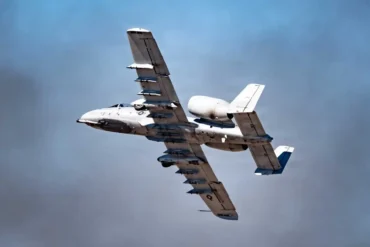
The imagery released by U.S. Central Command reveals more than a routine aerial refueling maneuver. Observers noted that the A-10 visible in the photographs appears equipped with a diverse combat loadout that reflects a multi-mission operational posture rather than a narrow close-air-support sortie.
The aircraft appears to carry:
- AGM-65 Maverick air-to-ground missiles
- APKWS laser-guided rockets
- AIM-9L/M Sidewinder air-to-air missiles
This configuration highlights the flexibility of the aircraft in the current conflict environment. The Mavericks allow precision strikes against hardened or armored ground targets, including vehicles, fortified structures, and missile launch platforms. Meanwhile, guided rockets offer accurate yet cost-effective engagement options against smaller tactical targets such as militia convoys or dispersed equipment positions.
The presence of Sidewinder missiles adds another dimension to the aircraft’s mission. While the A-10 is not primarily an air-to-air fighter, the missiles provide a defensive capability against low-altitude aerial threats, particularly drones that have become a frequent tool of Iranian-backed militias operating across the Middle East.
This diverse loadout strongly suggests the aircraft is performing persistent battlefield surveillance combined with rapid strike capability, remaining on station while waiting for targets of opportunity.
The Enduring Combat Design of the A-10 Warthog
The A-10 Thunderbolt II remains one of the most recognizable aircraft in the U.S. Air Force inventory. Designed during the Cold War to destroy armored formations and support ground troops, the aircraft was built around survivability and firepower rather than speed.
At the center of its design lies the formidable GAU-8/A Avenger 30-millimeter rotary cannon, a weapon capable of firing approximately 3,900 rounds per minute. The cannon’s immense destructive power allows the aircraft to neutralize armored vehicles, fortified positions, and heavy equipment with devastating efficiency.
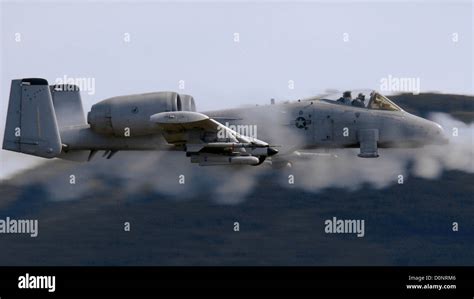
Beyond the cannon, the A-10’s design prioritizes battlefield resilience. The aircraft’s titanium “bathtub” armor protects the pilot and critical systems, allowing the aircraft to absorb significant damage while continuing to operate. Its engines are mounted high on the fuselage to reduce vulnerability to ground fire, and the aircraft’s simple systems allow crews to fly even with substantial structural damage.
These characteristics make the Warthog uniquely suited to missions where aircraft must remain close to hostile territory for extended periods. In the context of Operation Epic Fury, this resilience translates into a platform capable of maintaining presence in contested airspace while delivering rapid firepower when needed.
Why the A-10 Matters in Operation Epic Fury
Operation Epic Fury represents a complex campaign aimed at degrading Iran’s regional military reach. According to U.S. Central Command, the operation targets multiple elements of Iran’s military infrastructure and the networks that support it across the Middle East.
Key targets reportedly include:
- Command-and-control centers
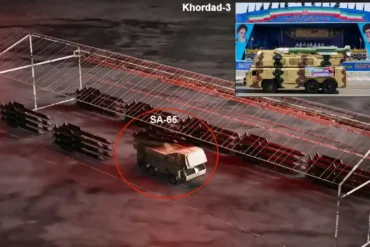
- Air defense installations
- Missile and drone launch facilities
- Military airfields
- Logistics hubs supporting militia forces
The strategic goal is not merely to strike individual targets but to disrupt the operational ecosystem that enables Iranian-aligned groups to operate across the region. In such an environment, aircraft that can maintain continuous presence over the battlefield become particularly valuable.
The A-10 excels in this role. Its ability to loiter near combat zones for hours, observe ground movement, and deliver immediate strikes makes it a powerful tool against dispersed or mobile targets. Iranian-backed militia groups frequently rely on small launch teams and mobile platforms, tactics designed specifically to evade detection and survive short strike windows.
Persistent aircraft like the A-10 complicate that strategy. When a Warthog remains overhead, the time between detection and attack shrinks dramatically, limiting an adversary’s ability to reposition or conceal equipment.
Combat Heritage Reinforces Its Operational Value
The A-10’s reputation as a battlefield workhorse was firmly established during the 1991 Gulf War, where the aircraft proved devastating against Iraqi armored units. During that conflict, A-10s flew thousands of combat sorties and destroyed large numbers of tanks, armored vehicles, and artillery systems.
Perhaps more impressive was the aircraft’s reliability. The U.S. Air Force reported that the Warthog maintained a mission-capable rate exceeding 95 percent, an extraordinary level of readiness for an aircraft operating in an intense combat environment.
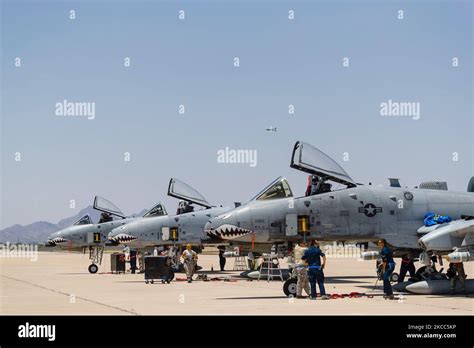
Over the decades that followed, the aircraft continued to play a central role in U.S. military operations in Afghanistan, Iraq, and Syria. Pilots repeatedly praised the aircraft’s ability to provide precise and responsive close air support, especially during chaotic ground engagements where troops required immediate firepower.
In many ways, Operation Epic Fury represents a modern extension of that legacy. Instead of armored divisions, today’s targets include mobile missile teams, drone operators, and militia convoys. Yet the fundamental mission remains the same: protect friendly forces while striking enemy assets with speed and accuracy.
Strategic Messaging Behind CENTCOM’s Release
The release of imagery showing A-10 aircraft supporting the operation carries strategic implications beyond the immediate battlefield. Military analysts view such imagery as part of a broader communication strategy aimed at both allies and adversaries.
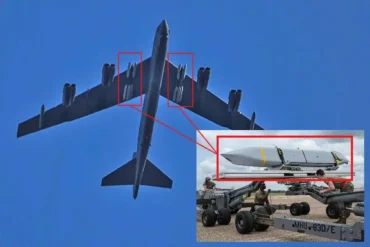
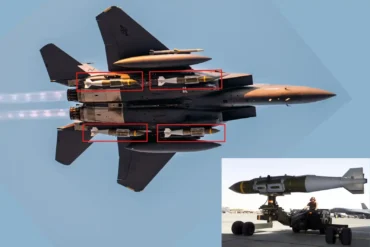
For partner nations operating alongside U.S. forces, the images demonstrate continued American commitment and operational depth in the region. The presence of multiple aircraft types—ranging from strategic bombers to tactical attack jets—signals a layered and sustained military effort.
For Iran and the militias aligned with it, the message is equally clear. The United States is not relying solely on sporadic high-profile strikes. Instead, it is building a campaign capable of maintaining pressure over time through aircraft that can remain present in the battlespace and respond instantly to emerging threats.
By revealing the participation of the A-10 Warthog, U.S. Central Command is highlighting an aircraft synonymous with persistent combat power and battlefield endurance. In the context of Operation Epic Fury, that symbolism reinforces the broader message: the campaign is structured for sustained operational impact rather than short-term demonstration.
As the operation continues to unfold, the A-10’s role underscores a key reality of modern warfare in the Middle East. Even in an era dominated by stealth aircraft and precision missiles, a rugged attack jet designed decades ago remains one of the most effective tools for maintaining continuous pressure on the battlefield and denying adversaries the freedom to operate.