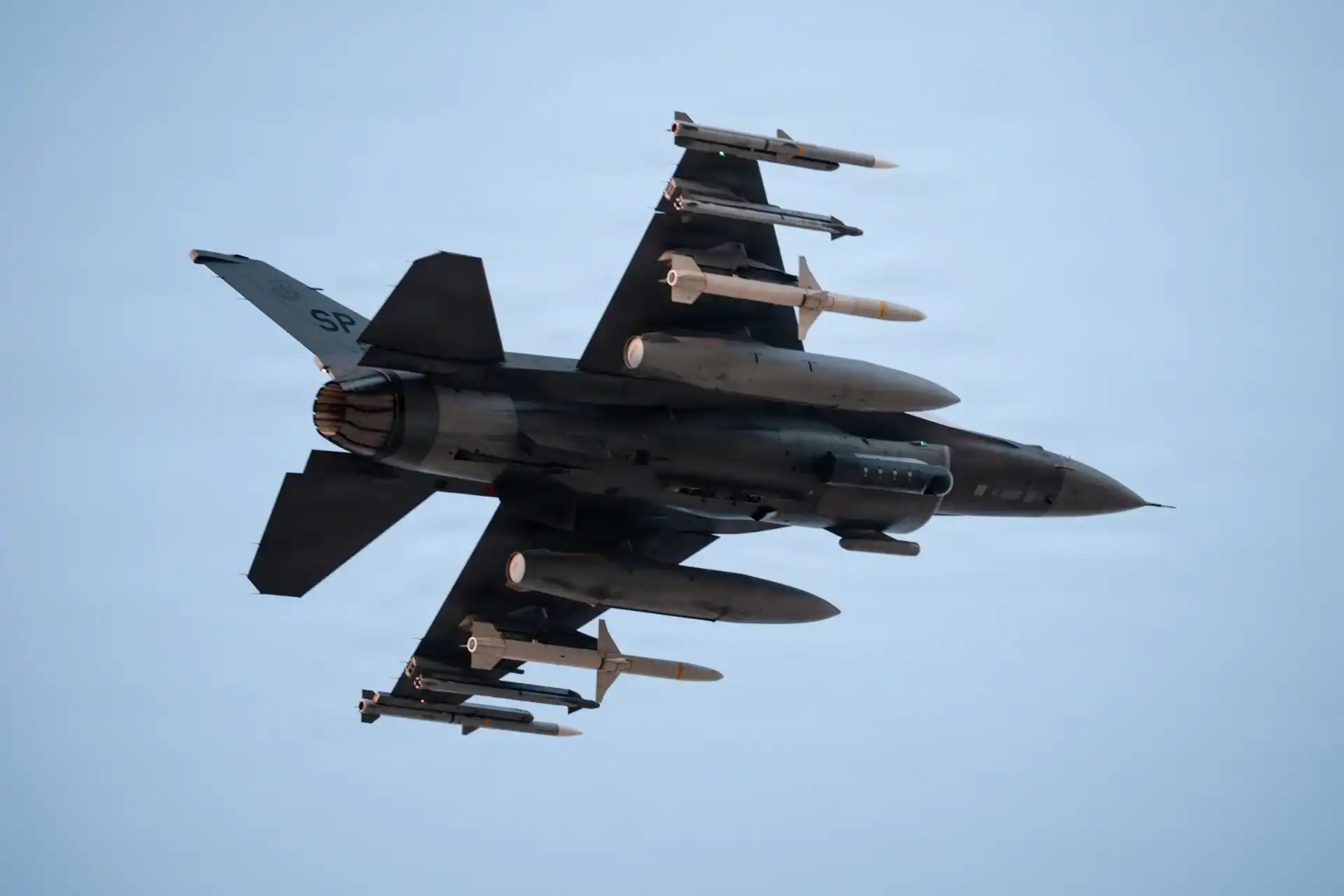
The scale of modern warfare is often difficult to grasp until numbers begin to feel almost abstract. In the case of Operation Epic Fury, those numbers are anything but abstract. Since its launch in the early hours of February 28, 2026, the United States has conducted more than 6,000 combat sorties over Iran, marking one of the most extensive sustained air campaigns in recent decades. The operation reflects a calculated shift from deterrence to active degradation of military capability, with a tempo designed not merely to strike—but to overwhelm.
According to U.S. Central Command (CENTCOM), the campaign has already targeted approximately 6,000 individual sites, suggesting a near one-to-one ratio between sorties and objectives. That ratio hints at a doctrine built on precision and persistence rather than saturation bombing. Each sortie represents a deliberate action against infrastructure considered an immediate or emerging threat, ranging from missile systems to naval assets.
The operation’s strategic focus is becoming increasingly clear: dismantle Iran’s ability to project power, particularly in maritime domains. Early reports indicate that more than 90 Iranian naval vessels, including over 30 minelayers, have been damaged or destroyed. This is not incidental. It is a direct attempt to neutralize one of the most disruptive tools in Iran’s asymmetric arsenal—its capacity to choke maritime traffic in the Strait of Hormuz.
Precision Targeting Across Iran’s Military Ecosystem
Operation Epic Fury is not a blunt instrument. It is a carefully orchestrated campaign targeting the connective tissue of Iran’s military architecture. Strikes have been carried out against command and control centers, Islamic Revolutionary Guard Corps (IRGC) headquarters, and intelligence facilities, aiming to disrupt decision-making at its core.
The scope extends further into integrated air defense systems, ballistic missile installations, and anti-ship missile launch sites. By systematically dismantling these systems, U.S. forces are attempting to strip away Iran’s layered defense capabilities, leaving critical assets exposed and reducing response coordination.
Particularly notable is the emphasis on weapons production infrastructure. Drone factories, missile assembly plants, and storage depots have all been targeted. This reflects a long-game strategy: not just destroying what exists, but preventing regeneration. War, in this sense, becomes an exercise in industrial denial—cutting off the future before it arrives.
Kargh Island Strike Signals Strategic Intent
Among the most significant individual कार्रাই actions was the large-scale precision strike on Kargh Island, a location of high strategic value. This operation reportedly destroyed more than 90 military targets, including fortified bunkers used for storing naval mines and missile systems.
Kargh Island’s importance lies in its proximity to vital shipping lanes and its role as a logistical hub. Neutralizing such a node does more than eliminate hardware; it disrupts operational flow. Imagine removing the central processor from a machine—the peripherals may still exist, but coordination collapses.
Air Superiority and the Machinery Behind It
Maintaining air superiority over Iranian airspace is no trivial feat. It requires a complex ballet of aircraft, sensors, and timing. The U.S. has deployed a wide spectrum of platforms, each playing a distinct role in the campaign.
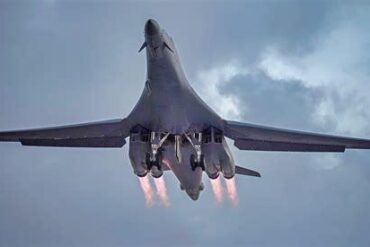
Strategic bombers such as the B-2 Spirit, B-1B Lancer, and B-52 Stratofortress form the backbone of long-range strike capability. The B-2, with its stealth profile, is designed to penetrate heavily defended airspace and deliver precision munitions against hardened targets. The B-52, by contrast, is less subtle but immensely powerful, capable of carrying over 30 tons of ordnance across vast distances.
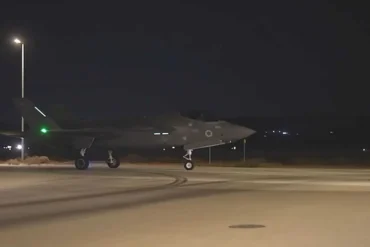
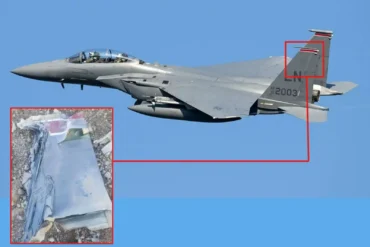
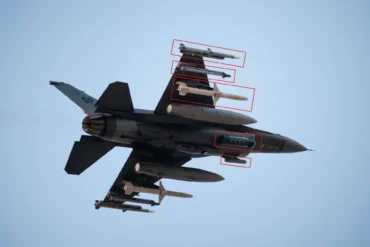
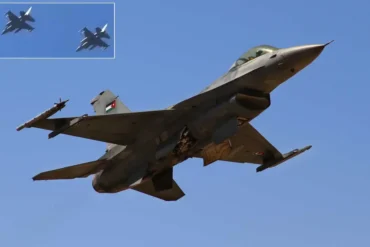
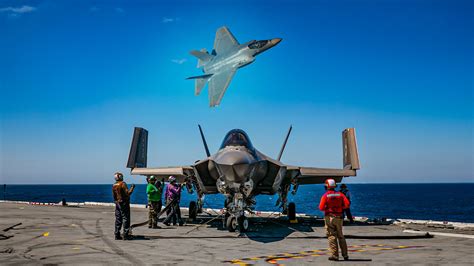
Tactical aircraft, including the F-15, F-16, and F/A-18, provide flexibility and responsiveness. Meanwhile, fifth-generation fighters like the F-22 Raptor and F-35 Lightning II operate as the campaign’s invisible scalpel, leveraging low observability and advanced sensor fusion to dominate contested environments.
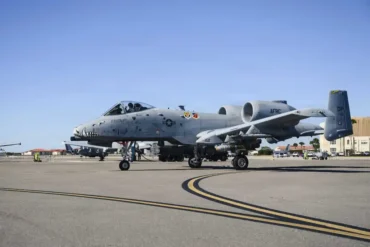
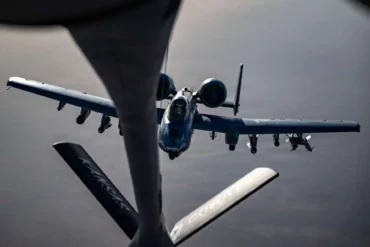
And then there is the A-10 Thunderbolt II, a machine that looks like it was designed by someone who really, really trusts a 30mm cannon. Its role in close air support remains unmatched, particularly when engaging armored or fortified ground targets.
Naval Power and Ground Systems Expand the Battlefield
Air power alone does not define Operation Epic Fury. The campaign is supported by a formidable naval presence, including nuclear-powered aircraft carriers and guided-missile destroyers. These platforms extend the operational reach of U.S. forces, enabling sustained sorties and providing sea-based strike options.
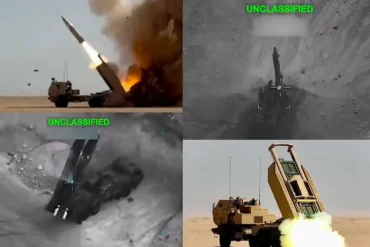
Ground-based systems also play a role, notably the M142 HIMARS (High Mobility Artillery Rocket System). With precision strike capabilities exceeding 70 kilometers, HIMARS units allow for rapid, accurate engagements from land, adding another layer to the operational matrix.
Degrading Iran’s Maritime Threat in the Strait of Hormuz
If there is a geographic heart to this conflict, it is the Strait of Hormuz. This narrow passage handles a significant portion of the world’s energy shipments, making it a strategic chokepoint of global importance. Iran’s ability to disrupt this corridor has long been a cornerstone of its deterrence strategy.
By targeting minelayers, fast attack craft, and anti-ship missile systems, the U.S. is systematically reducing that capability. The reported destruction of over 90 vessels is not just a tactical success—it is a strategic recalibration of power in the region.
Yet the challenge remains formidable. Iran’s reliance on asymmetric warfare—cheap, mobile, and hard-to-detect systems—means that complete neutralization is a moving target. Drones can be launched from improvised sites. Mines can be deployed quickly. Missile launchers can disappear into terrain or urban environments.
This is the paradox of modern conflict: technological superiority meets adaptive resistance.
Logistics: The Invisible Engine of High-Tempo Warfare
Behind every sortie is a chain of logistics that stretches across continents. Approximately 50,000 U.S. military personnel are currently deployed in support of Operation Epic Fury, forming a vast network responsible for fuel distribution, munitions supply, and maintenance operations.
Sustaining 6,000 sorties in a matter of weeks requires more than firepower—it demands precision in planning and execution at a systemic level. Fuel must arrive at the right place at the right time. Aircraft must be serviced and rearmed with minimal delay. Intelligence must flow continuously.
Think of it as a living organism. The aircraft are the limbs, but logistics is the bloodstream. Without it, everything stops.
Strategic Objectives and Political Pressure
The campaign unfolds against a backdrop of political urgency. On March 11, 2026, U.S. President Donald Trump called for decisive action to ensure the reopening and security of the Strait of Hormuz. The message was clear: global energy stability and maritime trade cannot remain hostage to regional instability.
Operation Epic Fury, therefore, is not solely a military endeavor. It is an instrument of geopolitical signaling. It communicates resolve, capability, and willingness to act at scale.
A Campaign Defined by Scale and Complexity
What emerges from the data is a portrait of a campaign defined by scale, precision, and complexity. More than 6,000 sorties, thousands of targets, dozens of destroyed vessels—these are not isolated metrics. They are interconnected elements of a broader strategy aimed at reshaping the operational landscape.
And yet, there is an underlying tension. Air campaigns can degrade, disrupt, and delay, but they rarely eliminate entirely—especially when facing an adversary adept at asymmetric tactics. The outcome will depend not only on firepower, but on adaptability, intelligence, and endurance.
In the strange arithmetic of war, overwhelming force meets stubborn resilience. Operation Epic Fury sits squarely at that intersection, where strategy becomes experiment and every sortie writes another line in a still-unfolding equation.