World of Hyatt is preparing one of the most consequential loyalty program shifts in its modern history. Beginning in May 2026, the program will implement a redesigned award chart that expands pricing bands within each category from three to five levels. While Hyatt is technically preserving its published award chart structure, the practical impact is unmistakable: redemption costs at the top end will surge by as much as 67%, fundamentally altering the value proposition for members who rely on aspirational stays and strategic point redemptions.
For a program long celebrated for relative transparency and outsized value—particularly compared to fully dynamic competitors—this development lands with force. Hyatt has not updated its award chart structure since 2021. After five years of relative stability, the shift signals a new phase in how the company manages demand, pricing pressure, and long-term loyalty economics.
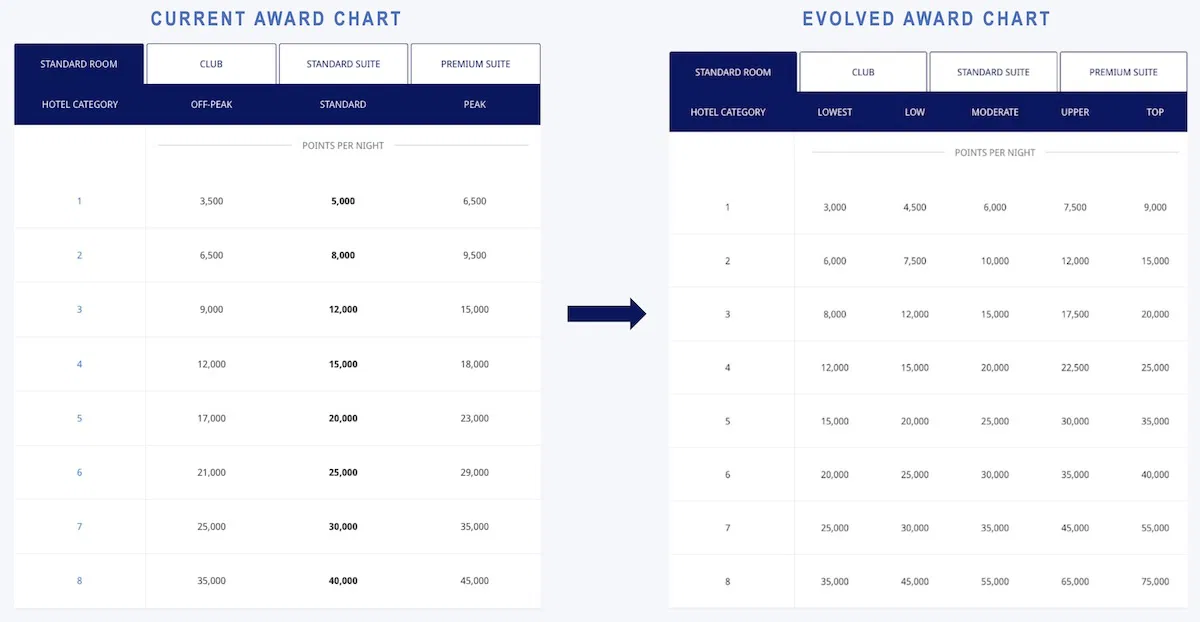
At the center of the change is a move from three pricing tiers—off-peak, standard, and peak—to five new levels: lowest, low, moderate, upper, and top. Hyatt maintains that category caps remain intact. Yet the expanded range inside each category dramatically widens the gap between the cheapest and most expensive redemption nights.
The New Five-Tier Structure: Precision or Price Escalation?
Under the current framework, a Category 8 hotel costs between 35,000 and 45,000 points per night for a standard room. Under the new structure, that same Category 8 property will range from 35,000 to 75,000 points per night. That upper boundary represents the most striking escalation in the revised chart.
Across categories, the increases are substantial:
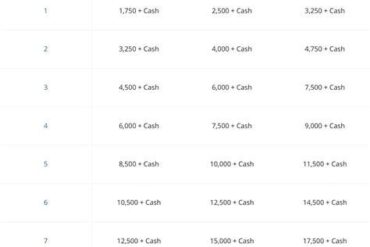
- Category 1 expands from 3,500–6,500 points to 3,000–9,000 points
- Category 4 moves from 12,000–18,000 points to 12,000–25,000 points
- Category 7 grows from 25,000–35,000 points to 25,000–55,000 points
- Category 8 stretches to a new ceiling of 75,000 points
While some “lowest” tier pricing reflects modest decreases—up to 14% in certain lower categories—the headline reality is the sharp expansion on the high end. Category 8’s potential 67% increase is the most dramatic example, but upper-tier properties across the board see meaningful upward adjustments.
Hyatt describes the shift as a way to align pricing more precisely with demand while reducing the need for broad annual category jumps. In theory, the five-tier structure provides flexibility. In practice, flexibility often favors revenue optimization.
Award Charts Remain—But Certainty Shrinks
Hyatt emphasizes its continued commitment to maintaining published award charts, positioning this as a differentiator from competitors that have embraced fully dynamic pricing. That commitment does matter. A published cap offers at least some ceiling visibility, preventing the runaway variability seen elsewhere in the industry.
However, the introduction of five pricing bands creates a different form of uncertainty. There is no stated limit on how many nights per property can fall into the “upper” or “top” tiers. Hyatt has indicated that, at launch, only a limited number of dates and properties will utilize the highest tiers. Yet the company has also described this structure as one it will “grow into” over time.
That phrase is critical. Growth into a pricing structure suggests gradual normalization of higher redemption levels. The immediate impact in 2026 may be restrained. The longer-term trajectory appears less forgiving.
High-End Properties Face the Steepest Impact
The most visible consequences will be felt at aspirational properties—those iconic Park Hyatt, Alila, and luxury resort destinations that drive outsized redemption interest.

A property like Park Hyatt Kyoto, currently pricing between 35,000 and 45,000 points per night as a Category 8 hotel, will be eligible for pricing up to 75,000 points per night under the new system. That is a seismic shift for members accustomed to extracting high cents-per-point value from flagship redemptions.
Even mid-tier sweet spots face erosion. Category 4 hotels, long prized for their eligibility under Category 1–4 free night certificates, will see moderate-tier pricing rise from 15,000 to 20,000 points per night when comparing today’s standard rates to tomorrow’s moderate level. While certificates remain valid within category regardless of pricing band, availability dynamics may tighten as demand concentrates around eligible properties.
The psychological shift is as meaningful as the numerical one. A Category 8 hotel that once “maxed out” at 45,000 points now carries a potential price 30,000 points higher. That recalibrates expectations around what constitutes a good deal.
Expanded Pricing Across Suites, All-Inclusives, and Miraval
The changes are not limited to standard room awards. Suite awards, club-level redemptions, Miraval wellness resorts, and all-inclusive properties will all adopt revised charts reflecting the five-tier system.
Miraval properties—already commanding premium point pricing—will now operate within expanded ranges that allow for even higher peak demand adjustments. All-inclusive resorts, which bundle food and beverage into redemption rates, similarly gain broader flexibility.
For members targeting experiential luxury stays rather than simple overnight accommodations, the implications are significant. Hyatt’s argument is that this structure protects long-term program integrity by managing demand without radical category upheaval. The counterpoint is straightforward: caps are rising materially.
Strategic Rationale: Managing Demand Without Category Shock
Hyatt’s executives frame the change as a modernization rather than a devaluation. The five-tier system, they argue, allows for more precise hotel-level pricing adjustments. In markets with extreme seasonal spikes—college towns during major events, resort destinations during peak holidays—properties can flex upward without triggering permanent category reassignments.
This logic carries internal coherence. A limited-service hotel in a college town might experience brief periods of extraordinary demand. Under a rigid three-tier system, category reassignment might overshoot the long-term equilibrium. Five tiers theoretically allow nuance.
Yet nuance cuts both ways. The absence of constraints on how often upper and top tiers may be deployed introduces elasticity that overwhelmingly benefits the program operator.
The history of loyalty economics suggests that once higher pricing bands exist, utilization gradually expands. Programs optimize toward revenue realities. Members adjust expectations downward.
Comparing Standard to Moderate: The True Apples-to-Apples Test
To gauge the practical impact, the most honest comparison is between today’s “standard” pricing and the future “moderate” tier, which Hyatt positions as the functional equivalent.
Under that lens:
- Category 4 moves from 15,000 to 20,000 points
- Category 8 rises from 40,000 to 55,000 points
Those shifts alone represent increases of roughly 33% to 37% in certain cases, even before considering upper or top tiers. That re-baselining effectively resets what members consider normal pricing.
Lower-tier properties may see occasional relief at the “lowest” level, but demand patterns suggest those nights will be scarce during high-traffic periods. The median redemption cost across the portfolio is likely to drift upward.
Certificates and Transferable Points: Residual Bright Spots
Not all elements of the program shift negatively. Category-based free night certificates—such as Category 1–4 and Category 1–7 awards—remain valid for properties within their respective categories regardless of pricing tier, provided standard room availability exists.
This detail preserves meaningful utility for credit card holders and milestone award earners. A Category 4 certificate can still unlock a property even if that hotel prices at 25,000 points on a top-tier night. That insulation softens the blow for a subset of members.
Additionally, Hyatt continues to benefit from partnerships with major transferable points ecosystems. The ability to earn Hyatt points via flexible currencies remains a structural advantage compared to competitors with weaker transfer pipelines.
Still, earning efficiency does not neutralize pricing inflation. If redemption ceilings rise dramatically, the effective purchasing power of points diminishes unless earning rates increase proportionally.
A Program at an Inflection Point
World of Hyatt has long occupied a distinct niche: smaller footprint, stronger redemption value, clearer pricing logic. This update does not eliminate those characteristics outright. It does, however, shift the equilibrium.
The introduction of five tiers creates room for gradual upward migration of award costs over the coming years. Hyatt has signaled that initial implementation of upper and top tiers will be limited in 2026, with broader adoption thereafter. The language suggests a phased normalization of higher pricing.
Whether this becomes a gentle recalibration or a steady march upward will depend on execution. If upper-tier nights remain rare exceptions, the structural damage may be manageable. If they become commonplace at high-demand properties, redemption strategies will require recalculation.
The Bottom Line: Substantial Upside Pressure on Award Costs
As of May 2026, World of Hyatt will operate under a redesigned award framework featuring five pricing tiers within each category. While award charts remain in place, maximum redemption costs increase dramatically—by as much as 67% in Category 8 properties.
The program’s long-term value will hinge on how aggressively Hyatt deploys the new upper and top tiers. The architecture now exists for significant upward movement. Members who maximize high-end redemptions should expect tighter margins and more selective opportunities.
Hyatt retains advantages—published charts, certificate stability, strong transfer partnerships—but the economic center of gravity is shifting. In loyalty programs, structural flexibility often precedes structural inflation. The next few years will reveal whether this evolution preserves balance or permanently reshapes the calculus of Hyatt redemptions.