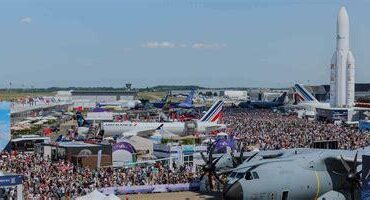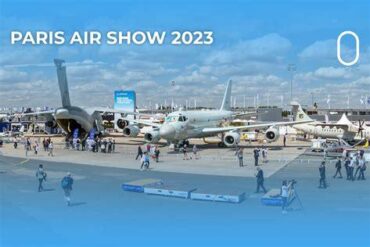
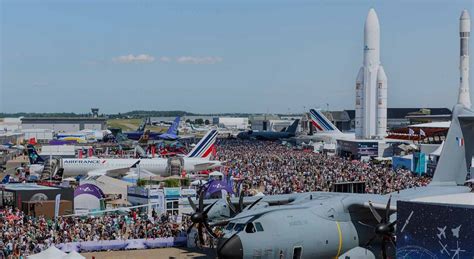
The Paris Air Show 2025 officially opens its gates today at Le Bourget Airport, welcoming some of the most influential names in aviation—including American Airlines, Delta Air Lines, Qatar Airways, Air India, Lufthansa, British Airways, along with aerospace titans Airbus and Boeing. But beneath the polished displays and billion-dollar pavilions, an undercurrent of tension defines this year’s show. The energy, while still present, is noticeably restrained. With tragedy, scrutiny, and uncertainty hanging in the air, the 2025 edition may be remembered less for its announcements and more for its atmosphere.

A Show Overshadowed by Tragedy: The Air India Boeing 787 Crash
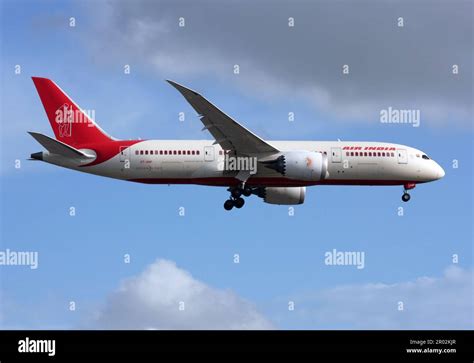
On June 12, just four days before the show’s kickoff, an Air India Boeing 787-8 Dreamliner crashed en route from Ahmedabad to London. The catastrophe claimed 241 lives, leaving only one survivor. It marks the first fatal crash involving the Dreamliner series, sending shockwaves through both the public and professional aviation communities.
What was meant to be Boeing’s comeback narrative—a celebratory return to form—has been engulfed by sorrow. Executives canceled scheduled appearances, investor events were scaled back, and the company now finds itself under renewed international scrutiny.
India’s Aircraft Accident Investigation Bureau (AAIB) has opened a high-priority inquiry, with cooperation from both American and British regulators. The recovery of the black boxes has expedited the investigation, though a definitive cause remains elusive. Initial focus centers on potential engine or system failure, bringing GE Aerospace, the Dreamliner’s engine manufacturer, into the spotlight.
Boeing’s Paris Pivot: From Revival to Reckoning
For Boeing, the stakes at Paris 2025 could not be higher. The crash abruptly interrupts a carefully orchestrated campaign to reposition the brand after years of production issues, FAA penalties, and high-profile 737 Max disasters. Prior to the incident, Boeing had recently secured:
- A $96 billion mega-order from Qatar Airways for 120 Dreamliners and 30 777-9s.
- High-value commitments from AviLease and British Airways.
These deals were hailed as proof of restored market confidence. Yet now, with the shadow of tragedy, confidence is slipping once more.
Public trust in Boeing has always hinged on safety. This crash reawakens painful memories of previous failures. And while the 787 had previously enjoyed a clean safety record, the current scrutiny reopens fundamental questions about Boeing’s quality control and risk management practices.
Certification Gridlock and the Weight of Past Errors
Boeing’s problems are not limited to the crash. The company is battling serious headwinds on multiple fronts:
- The 737 Max 7, Max 10, and 777-9 aircraft remain stuck in FAA certification purgatory.
- The FAA’s production cap on the 737 Max line (limited to 38 aircraft per month) remains in force after the 2024 door plug blowout incident.
- A proposed acquisition of Spirit AeroSystems, its fuselage supplier, has turned into a logistical and regulatory headache.
This mosaic of delays, disasters, and distractions has eroded confidence within the investor community. More importantly, it has fueled doubts among airline clients, government regulators, and the flying public.
Airlines Watch Cautiously: Strategic Moves Delayed
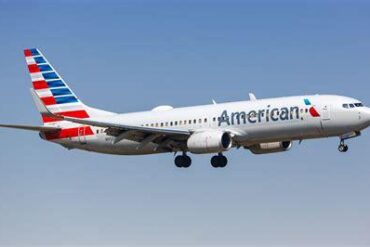
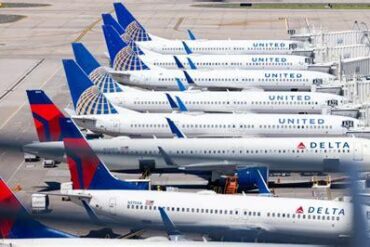
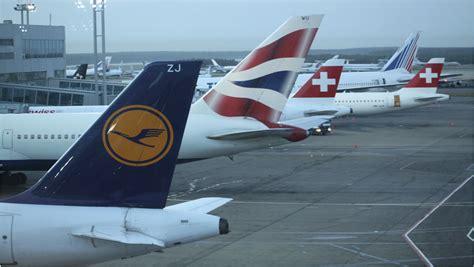
The crash and its aftermath have placed American, Delta, Qatar, Air India, Lufthansa, and British Airways in a position of delicate watchfulness. Though these carriers are all represented at Paris, none are rushing forward with major announcements. Instead, they are calibrating their public messaging and reevaluating procurement strategies.
Air India, in particular, is under the harshest spotlight. It has grounded its remaining 787 fleet for immediate inspection and has temporarily suspended further Dreamliner operations. Behind the scenes, discussions with Boeing are reportedly tense, with legal and reputational consequences looming.
Airbus: Ready to Capitalize, But Tempered by the Moment
Across the tarmac, Airbus enters the show with a unique opportunity: to quietly dominate. The European manufacturer has enjoyed strong momentum with its A320neo, A350, and A321XLR programs, each of which is seen as a fuel-efficient, long-range answer to Boeing’s uncertainty.
Yet, even Airbus seems subdued this year. Executives have acknowledged that “this is not a year for celebration, but for reflection.” Still, quiet meetings are underway. Airline executives are taking closer looks at Airbus’ backlogged production slots. Expect whispers of additional orders, but few headline-grabbing announcements.
The Rise of Defense at Paris 2025: A Changing Air Show Identity
An equally important transformation is playing out in the event’s exhibitor landscape. Roughly 45% of all booths at the Paris Air Show 2025 are defense-focused, signaling a significant shift in industry priorities.
Global tensions—from Eastern Europe to the South China Sea—are accelerating defense procurement cycles. New-generation drones, hypersonic weapons, electronic warfare systems, and combat aircraft have taken center stage.
For traditional commercial carriers and manufacturers, this creates a paradox. Investment dollars are now competing with government defense budgets. The result is a fragmented aviation ecosystem: one side brimming with geopolitical urgency, the other paralyzed by fear of failure.
Tourism and Commercial Aviation in a Holding Pattern
Beyond the exhibit halls and press briefings, the travel industry is facing a cascading effect. Certification delays mean airlines must hold on to older aircraft longer. That translates to fewer new routes, reduced fuel efficiency, and eventually, higher ticket prices for passengers.
Luxury travel operators and international tourism boards—once deeply involved in the Paris Air Show—have minimized their presence. Their future growth now hinges on aviation stability, something in short supply amid manufacturing crises and regulatory slowdowns.
Every delay at Boeing or Airbus reverberates across the entire ecosystem. Travelers wait longer. Airlines hesitate. And destinations lose momentum.
Will Boeing Recover—Or Regress Further?
The aviation world has watched Boeing stumble before. It survived the 737 Max grounding. It restructured leadership. It absorbed multibillion-dollar losses. But the Air India crash threatens to undo years of image recovery in just one week.
The true cost of the tragedy won’t just be measured in dollars, but in lost trust, regulatory tightening, and contractual reconsiderations. Boeing’s rivals are circling. Shareholders are jittery. The media narrative is grim. And perhaps most critically—families and governments demand answers.
In this moment, how Boeing chooses to respond will define its next decade. Transparent communication, radical quality assurance reforms, and meaningful safety investments are no longer optional—they are existential.
Conclusion: Paris Air Show 2025—Innovation Overshadowed by Accountability
The Paris Air Show has historically celebrated triumphs of aerospace engineering. This year, it bears witness to a more complex, sobering reality. American, Delta, Qatar, Lufthansa, British Airways, Air India, Airbus, and Boeing all arrive at a crossroads.
For some, it’s a moment of opportunity. For others, it’s a reckoning. And for the global public, it’s a poignant reminder that every leap in aviation must come with a commitment to integrity, safety, and responsibility.
From innovation to investigation, the skies above Paris carry not just new aircraft, but the weight of accountability.