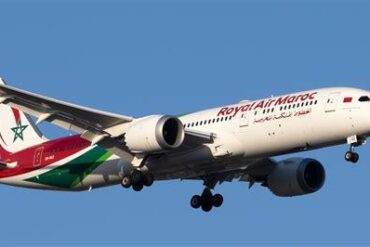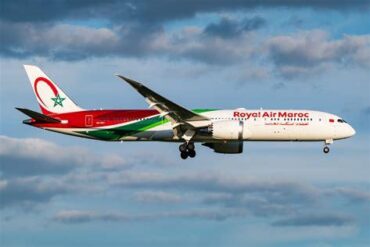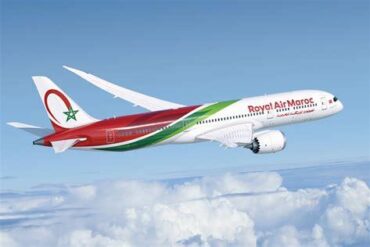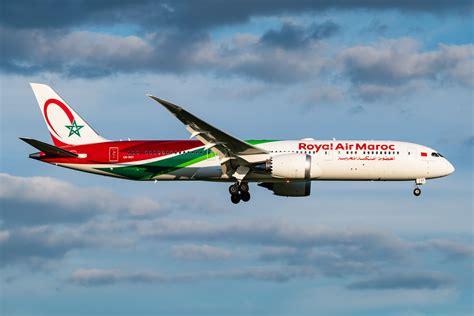
Royal Air Maroc (RAM), Morocco’s flagship carrier and one of Africa’s most ambitious airlines, is preparing for a sweeping fleet overhaul that could see it order as many as 70 new aircraft. While Boeing is expected to maintain its dominant grip on RAM’s future operations, Airbus is quietly maneuvering for a rare entry, signaling a subtle but meaningful shift in the strategic dynamics of global aerospace competition in North Africa.
RAM’s impending deal—anticipated to be announced during the upcoming Paris Airshow—is likely to reaffirm its deep-seated relationship with Boeing. The U.S. aerospace giant is expected to provide the bulk of the new aircraft, with insider reports pointing to an agreement involving up to 50 medium-haul Boeing 737s and two dozen long-haul 787 Dreamliners. This aligns with RAM’s long-standing reliance on Boeing, which currently forms the backbone of its commercial operations.
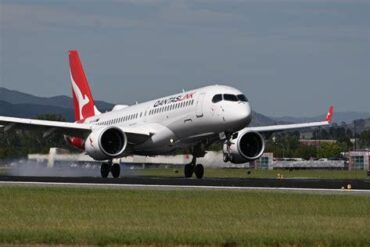
Yet buried within this massive Boeing deal is a bold, calculated move by Airbus: a potential order for 20 A220 aircraft, according to industry sources who requested anonymity due to the confidential nature of the negotiations.
Boeing Maintains Stronghold in a Pivotal Market
Morocco has, for decades, served as a cornerstone of Boeing’s North African market strategy. The aircraft manufacturer’s relationship with RAM and the Moroccan government extends well beyond aircraft sales. Boeing has invested heavily in Morocco’s aerospace ecosystem, establishing supply chain links and training facilities, and promoting the kingdom as a rising hub for aeronautical production and maintenance.
This embedded industrial alliance—cemented by decades of trust, co-investment, and political synergy—makes Boeing the natural choice for RAM’s expansive growth strategy. As Morocco gears up to quadruple its fleet over the next decade, with an eye on the 2030 FIFA World Cup it will co-host alongside Spain and Portugal, RAM’s demand for wide-body and single-aisle aircraft is expected to surge exponentially.
Airbus’ Strategic Re-entry: A220 as the Trojan Horse
Despite Boeing’s entrenched position, Airbus is poised to breach RAM’s defenses for the first time in nearly 25 years. The potential order of 20 A220s is more than just a symbolic win—it could mark the beginning of a strategic realignment in RAM’s future fleet planning.
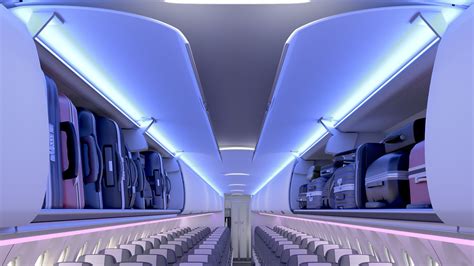
The A220, a nimble and fuel-efficient jet suited for regional and lower-density routes, is ideally positioned to complement RAM’s existing operations, particularly as the airline seeks to expand into secondary African and European cities. Its smaller size allows it to operate profitably on routes that might be unviable for larger aircraft, offering RAM a new layer of network flexibility.
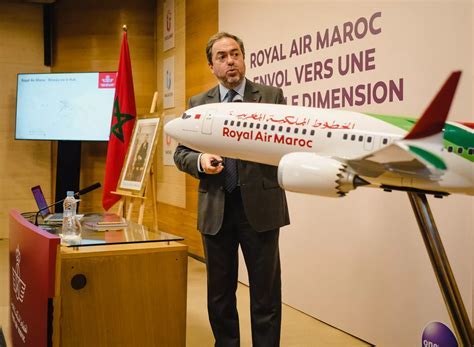
Moreover, this Airbus breakthrough coincides with a broader thawing of political relations between France and Morocco, following President Emmanuel Macron’s endorsement of Morocco’s autonomy plan for Western Sahara. This geopolitical overture has cleared the way for French companies to re-enter Moroccan strategic sectors, aviation being at the forefront.
Diplomacy, Politics, and the High-Stakes Chessboard of Aerospace Deals
RAM’s decision-making process is not merely a function of economics or aircraft performance. It is deeply entangled in geopolitical dynamics, diplomatic relationships, and national economic policy. Boeing’s influence has been long nurtured through direct U.S.-Moroccan cooperation, military ties, and industrial investments that benefit Morocco’s ambitious goal of becoming an aerospace manufacturing hub.
However, the inclusion of Airbus—especially in light of Paris’s recent political overtures—could represent an intentional hedging strategy by Morocco. By engaging both aerospace titans, Rabat may be positioning itself to extract more favorable terms, leverage bilateral ties, and diversify its strategic partnerships.
The Western Sahara issue continues to cast a long shadow over foreign policy and trade dynamics in the region. While France’s recognition of Morocco’s sovereignty over the disputed territory has earned it goodwill, it also faces domestic political backlash and pressure over aviation traffic rights for its national carrier. These undercurrents could influence the final shape and scope of any Airbus deal.
Fleet Expansion Driven by Vision 2030 and Surging Demand
RAM’s massive fleet expansion is part of a larger national transformation plan. Morocco’s aviation strategy is intricately linked to Vision 2030, a forward-looking blueprint designed to elevate the country’s economic, tourism, and transportation sectors. Central to this vision is the doubling of airport capacity to 78 million passengers annually, as well as extensive investments in infrastructure, tourism development, and global connectivity.
In this context, RAM’s fleet renewal is not just about replacing aging jets—it is about reshaping the airline into a modern, globally competitive carrier capable of supporting national development objectives. The choice of aircraft, therefore, is critical: Boeing’s 787 Dreamliner provides long-haul reach and high passenger capacity, while the 737 MAX offers short-to-medium haul versatility. Airbus’ A220, on the other hand, delivers a new capability to efficiently serve smaller or less mature routes, enhancing network resilience and responsiveness.
A Rare Opening in a Boeing Fortress
The significance of Airbus potentially securing a 20-jet deal with RAM cannot be overstated. Since 2001, when RAM placed its only previous direct Airbus order for four A321s, the carrier has remained almost exclusively aligned with Boeing. Cracking that wall—even with a modest A220 order—signals a potential pivot point in regional aerospace procurement trends.
For Airbus, the North African market has remained frustratingly elusive due to Boeing’s early and sustained dominance. A successful delivery of A220s to RAM would not only bolster Airbus’ commercial footprint, but also pave the way for future opportunities across the continent, particularly as African carriers seek to modernize and expand their fleets amid rising travel demand.
Silence Speaks Volumes: All Parties Decline Comment
As speculation mounts ahead of the Paris Airshow, neither Airbus, Boeing, nor Royal Air Maroc has offered official comment, a sign that negotiations remain sensitive and potentially volatile. The absence of formal statements suggests that final terms may still be in flux, and that public confirmation will likely be timed for maximum strategic and media impact during the industry’s most high-profile event.
Industry observers will be watching closely for subtle signals: the body language of executives, the order of announcements, and the framing of strategic partnerships. In such high-stakes aerospace deals, what’s said—and what’s left unsaid—often reveals as much as any press release.
Conclusion: Shifting Winds in African Aviation
As RAM prepares to unveil its ambitious new fleet plan, the balance of power in African aviation may be on the cusp of change. While Boeing looks set to maintain its dominant supplier status, Airbus’ tactical re-entry through the A220 could mark the beginning of a broader strategic rivalry on the continent.
For Morocco, embracing both Boeing and Airbus offers a dual advantage: retaining the benefits of a trusted American partner while rekindling economic and diplomatic ties with Europe. For Airbus, a successful deal could be a launching pad to more aggressive inroads across the African airline market, particularly as rising passenger volumes, regional integration, and political realignments reshape the aviation map.
RAM’s decisions today will echo into the next decade. The world will be watching when the curtain lifts at the Paris Airshow—not just to count jets, but to read the deeper story of where Morocco’s aviation ambitions are heading.