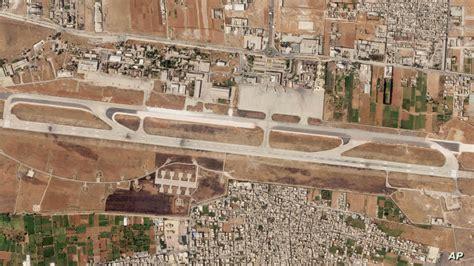
Situated at 33°24′41″N 36°30′56″E, Damascus International Airport stands as Syria’s largest aviation hub and one of the Middle East’s most symbolically contested transport infrastructures. Opened in 1973, this joint civil–military facility is a vital air gateway located approximately 30 kilometers southeast of Damascus, within Rif-Dimashq Governorate. Owned by the Government of Syria and operated by the Syrian Civil Aviation Authority, the airport serves both commercial and military operations, acting as a crucial node in Syria’s geostrategic framework, especially during and after times of conflict.
Strategic Position and Operational Role
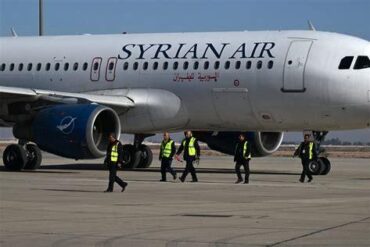
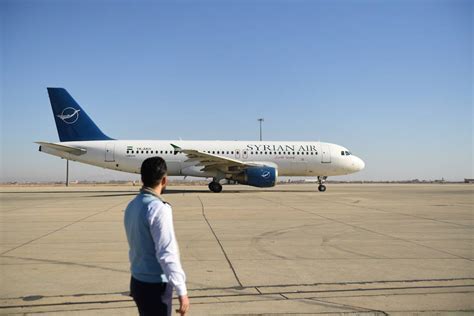
As the primary hub for Syrian Air and Cham Wings Airlines, Damascus International Airport has long been integral to Syria’s aviation ambitions. At an elevation of 616 meters, the airport operates within the Arabian Standard Time zone (UTC+03:00) and features two long, parallel asphalt runways — 05R/23L and 05L/23R — each measuring 3,600 meters. This design enables the facility to accommodate a wide range of aircraft, including the Airbus A380, Boeing 787, and Boeing 747-8.
Origins: From Military Field to National Hub
The airport’s roots trace back to the late 1960s, when the obsolete Mazzeh military airport could no longer handle growing civil aviation needs. Built in 1965 by a French consortium led by SCB, the new airport emerged as a modern replacement, ushering in a new era of air connectivity for the Syrian capital. By the 1980s, over 30 international carriers operated from Damascus, connecting the city directly to destinations in Europe, North Africa, the Middle East, and South Asia. Notably, Pakistan International Airlines (PIA) used it as a technical stopover on its transatlantic flights from Karachi and Islamabad to New York and Toronto.
One of the more unconventional routes launched in March 2007 was Iran Air’s Tehran–Caracas service, making a geostrategic link between Iran and Venezuela with a stop in Damascus. This service was later operated as a codeshare with Conviasa until it ended in August 2012.
Impact of the Syrian Civil War
The Syrian Civil War, which began in 2011, dealt a devastating blow to the airport’s operations. With intensifying conflict, major international carriers including Emirates and EgyptAir suspended services. The airport faced intermittent closures, particularly following aerial bombardments and missile strikes. Civilian air traffic plummeted, and Conviasa ceased its Caracas-Damascus route. In the following years, Russia was among the few countries to resume flights, reflecting its deepening involvement in Syria.
Israeli Airstrikes and Infrastructure Disruption
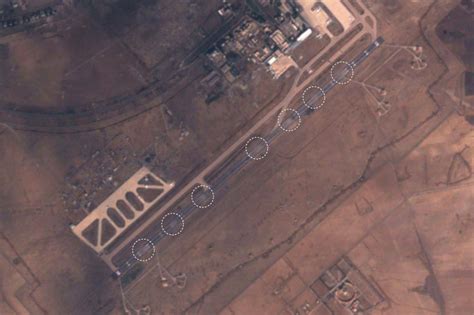
From 2022 to 2024, the airport was frequently targeted by Israeli missile strikes, aimed at curbing Iranian military supply routes through Syria. Notable incidents include:
- June 2022: Both runways were damaged, prompting a two-week closure.
- January 2, 2023: Strike killed two Syrian soldiers, grounding operations for seven hours.
- October 12 and 22, 2023: Consecutive attacks damaged runways and killed workers, causing operational halts.
- November 26, 2023: Another missile strike forced closure until December 27, 2023.
Despite these setbacks, the Syrian government made clear its intentions to keep the facility operational, often resuming services shortly after each incident. This resilience underlines the airport’s strategic and symbolic importance.
Recent Resumption and Post-War Rehabilitation
In the wake of the opposition’s December 2024 offensive, the airport was closed on December 8, only to resume minimal domestic operations on December 18, including a symbolic flight carrying 32 passengers to Aleppo. Shortly thereafter, on January 4, 2025, the Syrian Ministry of Transport announced the reopening of international routes beginning January 7, with Qatar Airways restarting its Doha–Damascus flights.
While most international routes remain suspended, February 2025 marked a pivotal moment: the launch of a major renovation initiative, reportedly involving technical assistance from Turkish contractors. This effort aims to restore and modernize essential infrastructure, reflecting Syria’s desire to re-integrate into the regional aviation network.
Airport Facilities and Layout
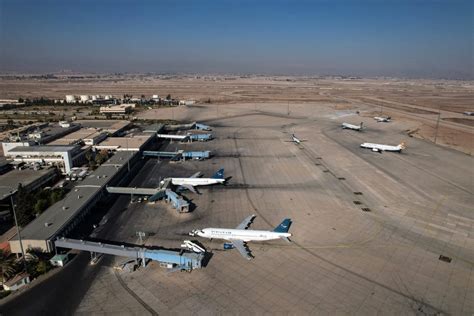
The airport features two passenger terminals — one for international flights and the other for domestic travel. Its architecture reflects traditional Islamic stylistic elements, blending cultural identity with functional design. Travelers have access to duty-free shopping, souvenir stalls, a coffee shop, three restaurants, and a business-class lounge, making the facility relatively well-equipped despite ongoing disruptions.
Terminal 2 was built with an estimated capacity of 25 million passengers, although wartime realities have rendered this far from reached. A third terminal, projected to handle 16 million passengers, was postponed indefinitely. Recently, Russian-backed investment plans have reignited interest in building a new terminal, potentially pushing capacity up by an additional 15 million passengers.
In addition to the public areas, the airport includes southern aircraft shelters for military assets, reinforcing its dual-use character.
Airlines and Route Network
Though once a bustling node in regional aviation, the airport’s current operational routes are sparse. As of 2025, scheduled or planned services include:
- Qatar Airways: Doha
- Turkish Airlines: Istanbul
- Royal Jordanian: Amman–Queen Alia
- Cham Wings Airlines: Aleppo, Baghdad, Muscat (many routes remain suspended)
- Syrian Air: Limited service to Abu Dhabi, Doha, Jeddah, Riyadh, and others
- Dan Air (starting June 2025): Berlin, Bucharest, Frankfurt, Stockholm
- AJet: Ankara, Istanbul–Sabiha Gökçen
Most carriers operate under constrained timetables, with frequent route adjustments in response to regional instability and diplomatic developments.
Ground Connectivity and Future Expansion
Damascus International Airport is linked to the city by a dedicated highway and shuttle bus services. Despite infrastructure degradation due to conflict, plans exist to enhance accessibility via a rail connection to central Damascus’ Hejaz station. This development, if completed, will include an airport bus terminal and a shopping center, suggesting a push toward a more integrated transport model.
A notable development in 2023 was a privatization proposal that would allow for up to 49% foreign ownership of the airport’s management. Russian and Iranian companies have reportedly expressed interest, viewing the project as an opportunity to cement their influence and invest in post-war reconstruction.
Runway Specifications and Technical Capability
The airport’s two runways, both renovated in the 2010s, were built to international standards and are fully capable of accommodating the world’s largest commercial aircraft. Each runway is 3,600 meters long, permitting long-haul departures and landings, even in challenging conditions. Their repair and upgrade post-strike periods have ensured minimal deviation from ICAO safety standards, albeit with temporary operational downgrades following attacks.
Accidents and Incidents
One of the most tragic accidents at Damascus International Airport occurred on August 20, 1975, when ČSA Flight 540, a Czechoslovak Airlines flight from Prague, crashed on final approach, killing 126 of the 128 people onboard. This remains the deadliest incident in the airport’s history and a stark reminder of the importance of aviation safety protocols.

Conclusion: A Resilient Hub in Flux
Damascus International Airport remains both a symbol and a barometer of Syria’s geopolitical status. From its Cold War-era origins and pre-war expansion to its survival during civil strife and its ongoing rehabilitation, the airport is deeply woven into Syria’s broader narrative of conflict, endurance, and reconstruction. While full normalization remains distant, gradual reopening and international reintegration signal a cautious yet deliberate return to the skies.
The facility’s infrastructure is primed for expansion, contingent on political stability and sustained investment. If current renovation and privatization plans materialize, Damascus International Airport could once again emerge as a vital bridge between East and West — not just in geography, but in commerce, diplomacy, and culture.