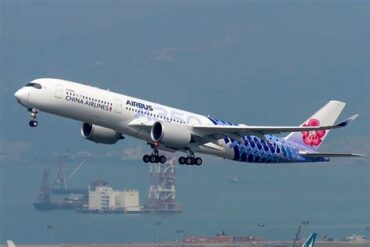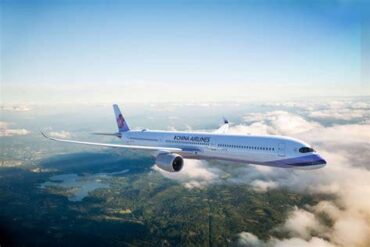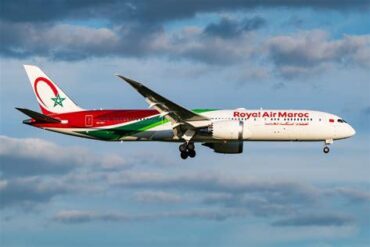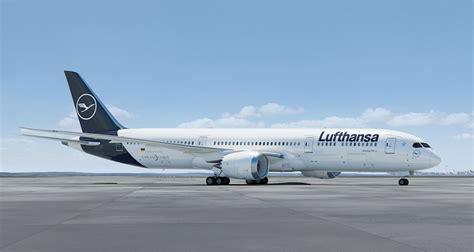
Lufthansa Group has reinforced its long-haul modernization strategy with a fresh order for 20 additional widebody aircraft, evenly split between ten Airbus A350-900s and ten Boeing 787-9s. The decision, approved by the Supervisory Board of Deutsche Lufthansa AG, represents another major commitment to next-generation long-haul operations as the airline group prepares for the fleet demands of the 2030s.
The aircraft, valued at roughly $7.7 billion at list prices, are scheduled for delivery between 2032 and 2034. While the order itself is substantial, the broader message behind it is even more significant. Lufthansa is no longer treating Airbus and Boeing as competing alternatives for its future fleet. Instead, the group is deliberately building a dual-platform strategy around the A350 and the 787, two aircraft families that have already become central to its long-haul transformation.
The latest purchase also highlights how aggressively global airlines are now competing for future delivery slots. With demand for efficient widebody aircraft remaining extremely strong, Lufthansa has chosen to secure production positions nearly a decade in advance, ensuring flexibility and stability as older aircraft retire.
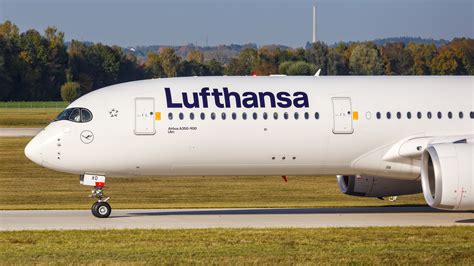
Lufthansa Deepens Commitment To Dual Widebody Strategy
Unlike previous fleet decisions that often leaned heavily toward either Airbus or Boeing, Lufthansa’s newest order demonstrates a balanced approach designed around operational resilience and long-term efficiency. Both the Airbus A350-900 and Boeing 787-9 already play major roles within Lufthansa’s network, and the additional aircraft will deepen that integration across the group.
Chief Executive Officer Carsten Spohr described the investment as a clear signal about the airline’s long-term priorities, emphasizing fleet modernization, premium service standards, and lower carbon emissions. The statement aligns closely with Lufthansa Group’s broader restructuring efforts, which increasingly focus on lowering complexity while improving operational reliability.
The airline group believes the strategy will create measurable advantages across maintenance planning, spare-parts logistics, crew training, and route flexibility. Standardizing more heavily around advanced twin-engine aircraft also reduces fuel consumption compared with the older four-engine jets that still remain active across parts of the fleet.
Importantly, Lufthansa has not yet announced which carriers inside the group will ultimately receive the new aircraft. That leaves room for deployment across Lufthansa, SWISS, Austrian Airlines, or potentially other subsidiaries depending on market conditions later in the decade.
Lufthansa’s Widebody Fleet Is Entering A New Era
The latest order arrives during one of the most ambitious fleet transitions in European aviation. Lufthansa currently operates one of the world’s most diverse long-haul fleets, a structure that historically provided flexibility but also created substantial operational complexity.
At present, Lufthansa’s widebody operations still include Airbus A330-300s, A340-300s, A340-600s, A350-900s, A380s, Boeing 747-400s, 747-8s, and 787-9s. Few major airlines continue to operate such a varied collection of aircraft types simultaneously.
That diversity was not originally part of Lufthansa’s ideal long-term plan. Repeated delays to Boeing’s 777X program, combined with earlier delivery disruptions involving the 787 Dreamliner, forced the airline to extend the lives of older aircraft far beyond their expected retirement timelines. Aircraft once intended as temporary capacity bridges instead became critical operational assets.
The arrival pace of new-generation aircraft is finally beginning to change that equation. Lufthansa already operates 31 Airbus A350-900s and 16 Boeing 787-9s, both of which have become increasingly visible across its intercontinental network.
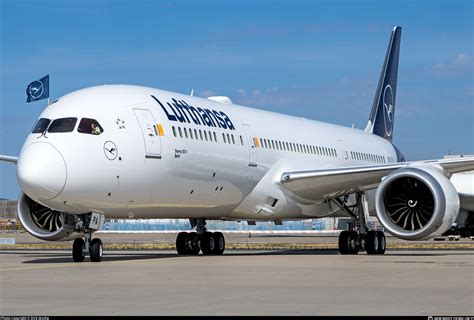
At the same time, additional aircraft remain on order, including Airbus A350-1000s, Boeing 777-9s, and Boeing 777-8 freighters. Altogether, Lufthansa Group’s widebody order book is approaching 100 aircraft, a figure that underscores the scale of the carrier’s long-term renewal plans.
The strategy reflects broader changes happening throughout global aviation. Airlines are prioritizing highly efficient twin-engine aircraft capable of serving both premium-heavy and long-range markets while significantly reducing fuel burn and emissions. Lufthansa’s future network is increasingly being designed around exactly those capabilities.
Aging Four-Engine Aircraft Are Approaching Retirement
For decades, Lufthansa’s identity was closely tied to large four-engine aircraft. The Boeing 747 became one of the airline’s defining symbols, while Airbus A340 variants handled many premium long-haul missions from Frankfurt and Munich.
That chapter is now gradually coming to an end.
The Boeing 747-400 fleet is expected to be fully retired by 2027, ending nearly four decades of service. Lufthansa still operates eight examples of the classic jumbo jet, but the aircraft’s economics have become increasingly difficult to justify compared with newer-generation twinjets.
The Airbus A340 family is also approaching its final years. Lufthansa plans to retire all remaining A340-300 aircraft by 2028, although some may temporarily remain active if additional delays affect Boeing 777X deliveries.
Meanwhile, the Airbus A340-600 — once among the airline’s most prestigious long-haul aircraft — is entering its final operational phase.
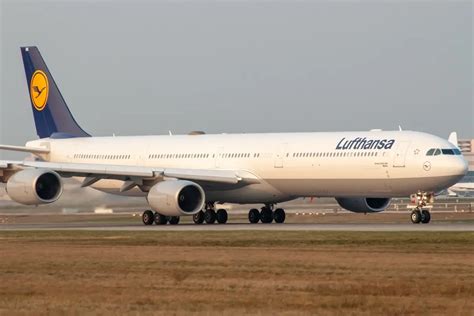
The Airbus A340-600’s Retirement Signals A Major Shift
Few aircraft are more closely associated with Lufthansa’s premium long-haul image than the Airbus A340-600. The stretched four-engine aircraft became a flagship of the airline’s intercontinental network thanks to its spacious cabin, premium-heavy layout, and distinctive lower-deck lavatories.
Lufthansa ultimately operated 24 examples of the type, making it one of the A340-600’s defining global operators. Today, however, only four remain in active service.
Those aircraft are currently concentrated on premium transatlantic routes from Frankfurt to Washington Dulles and New York JFK, where strong demand for premium seating still allows the aircraft to operate competitively. Even so, the economics of the A340-600 increasingly belong to a different aviation era.
Compared with the Airbus A350-1000 or Boeing 787-9, the aircraft consumes substantially more fuel while requiring greater maintenance resources associated with four-engine operations. Rising environmental pressures and operational costs have accelerated the retirement timeline for aircraft of its generation.
Current schedules indicate the A340-600 will leave Lufthansa service permanently after October 18, 2026. Its departure will mark the end of one of the most recognizable aircraft types in modern Lufthansa history.
Airbus A350-1000 Will Lead Lufthansa’s Premium Future
The aircraft expected to inherit many of the A340-600’s responsibilities is the Airbus A350-1000. Lufthansa’s first examples are due to arrive later this year and will introduce a larger, more efficient flagship for premium-heavy markets.
The airline has already confirmed that the A350-1000 will feature First Class cabins and focus heavily on routes with strong premium demand, closely mirroring the missions historically performed by the A340-600.
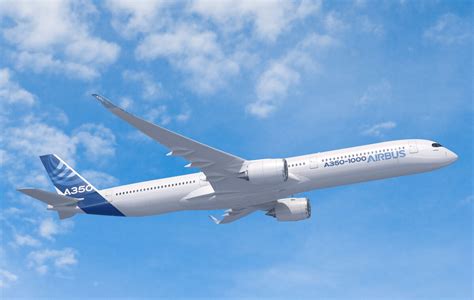
The first aircraft is scheduled to arrive in Lufthansa’s special 100th-anniversary livery, adding symbolic significance to one of the airline’s most important fleet introductions in years.
At the same time, Boeing’s long-delayed 777X program remains central to Lufthansa’s future strategy. The carrier still expects the 777-9 to enter service around 2027 if certification timelines remain stable. Once operational, the aircraft will eventually replace aging high-capacity jets while strengthening Lufthansa’s premium long-haul network.
Together, the Airbus A350 family, Boeing 787 Dreamliner, and Boeing 777X will form the backbone of Lufthansa’s intercontinental operations well into the 2030s. The newest order for 20 additional widebodies confirms that the airline group is fully committed to that transition.
For Lufthansa, this is no longer simply a fleet renewal. It is a complete reshaping of how one of Europe’s largest airline groups intends to compete in the next generation of global long-haul aviation.