Flying long-haul has evolved dramatically in the past decade, thanks to technological leaps by Airbus and Boeing. Among the most notable advancements are the Airbus A350 and the Boeing 787 Dreamliner, two cutting-edge widebody aircraft designed with passenger comfort, fuel efficiency, and operational performance in mind. But when it comes to in-flight comfort, travelers and aviation experts frequently debate: Is the Airbus A350 more comfortable than the Boeing 787? Let’s examine this question from every critical angle.
Design Philosophy and Technological Lineage
The Boeing 787 Dreamliner and Airbus A350 represent a new generation of long-haul airliners, but they originate from different design philosophies. The 787, which entered service in 2011, was the first commercial aircraft built primarily from carbon-composite materials. Its goal was to replace older medium-capacity, long-haul aircraft like the Boeing 767 with a fuel-efficient, modern successor.
Meanwhile, the Airbus A350 came into service in 2015 after a full redesign prompted by airline feedback. Airbus originally intended it as a refinement of its A330, but it was reimagined as a clean-sheet aircraft. It is larger and more capable, roughly sized between the Boeing 787 and the 777.
Both aircraft feature modern carbon-composite fuselages that allow for increased cabin humidity and lower cabin altitude, significantly reducing fatigue over long flights.
Economy Class: The Battle for Width and Comfort
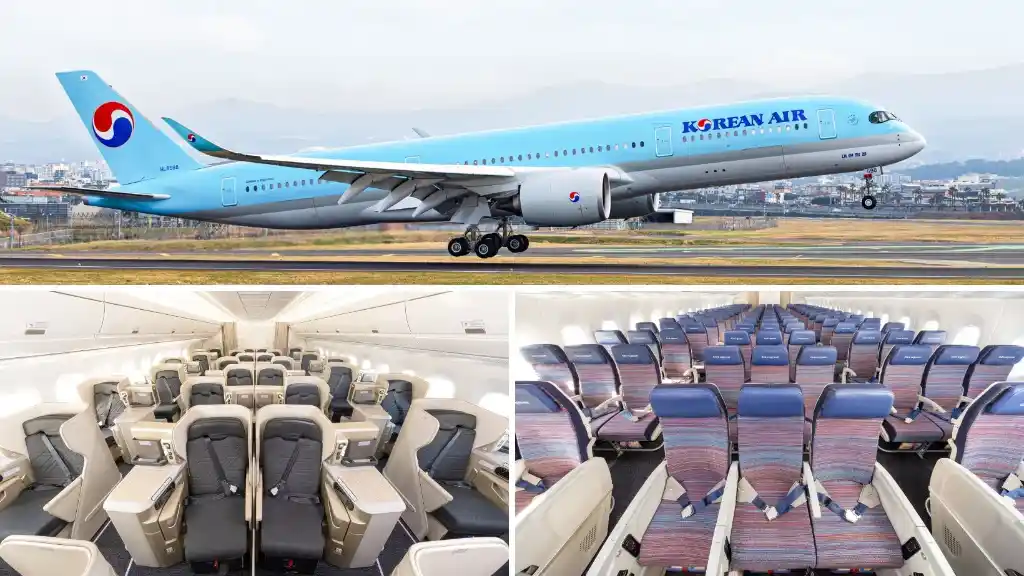
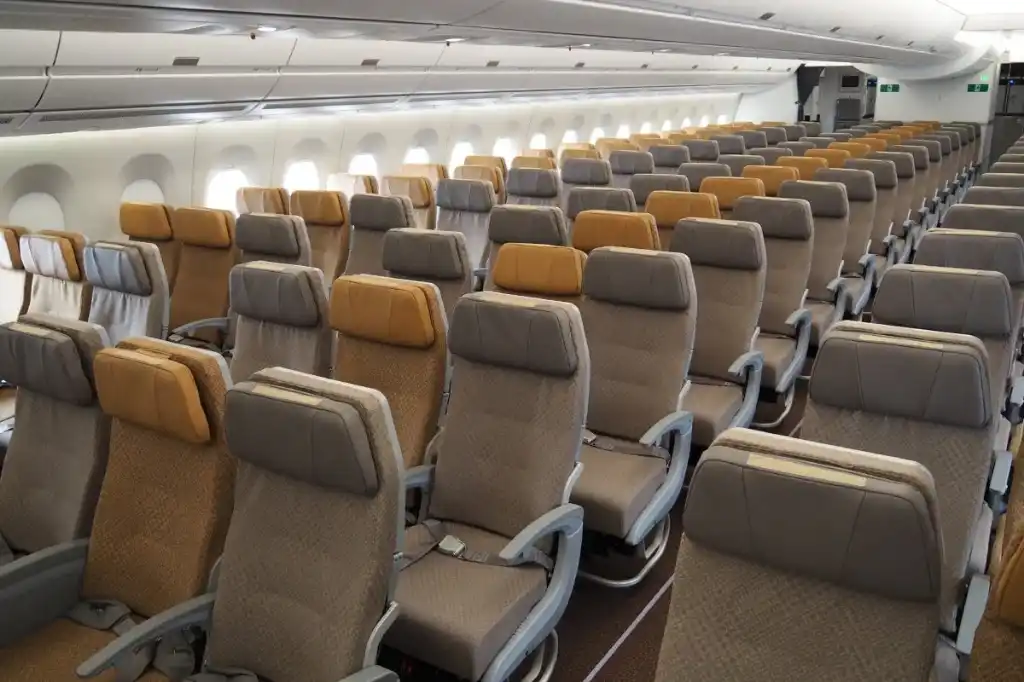
Perhaps the most tangible difference in comfort comes down to seat width—a detail that economy passengers will immediately notice. The Boeing 787 was initially designed for eight-abreast seating in economy, offering generous 18.5-inch-wide seats. However, due to economic incentives, most airlines opt for nine-abreast configurations, reducing seat width to around 17 inches.
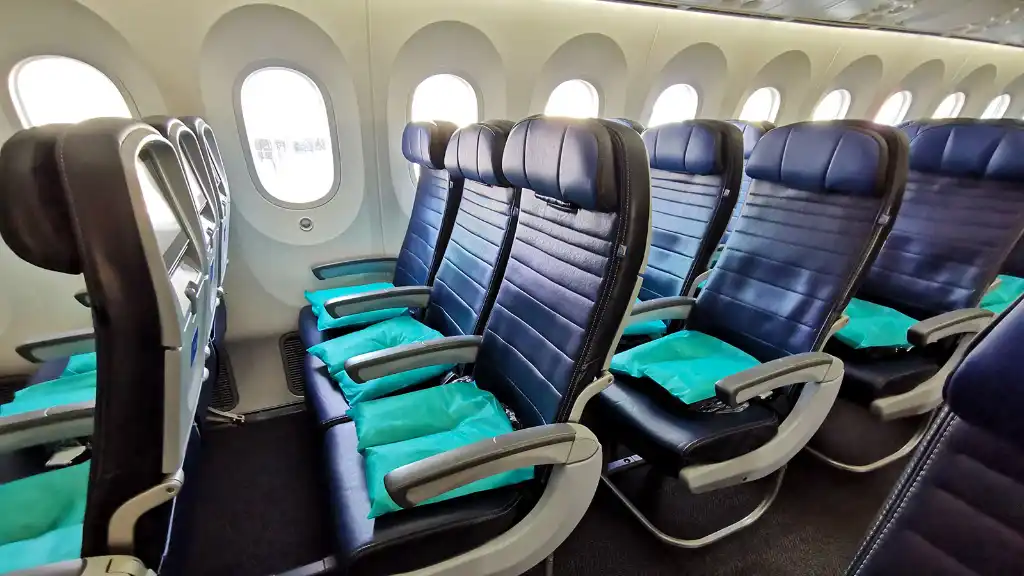
In contrast, the A350 was specifically designed for nine-abreast seating, making it possible to maintain 18-inch-wide seats even in economy. This single inch may sound negligible, but over a 12-hour flight, it translates into significantly improved shoulder room, better posture, and less passenger fatigue.
Wider aisles on the A350 further enhance the cabin experience. This subtle spatial advantage contributes to a more open, breathable cabin atmosphere, which becomes increasingly noticeable during long-haul journeys when passengers move around or crew performs in-flight service.
Premium Economy and Business Class: Subtler Differences
In premium economy, the seating arrangements begin to vary more by airline than aircraft. Most 787s opt for a seven-abreast layout in this class, while A350s are typically configured eight-abreast, yet still manage to retain generous width due to the fuselage’s inherent space.
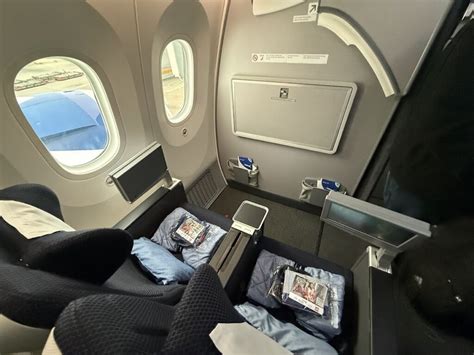
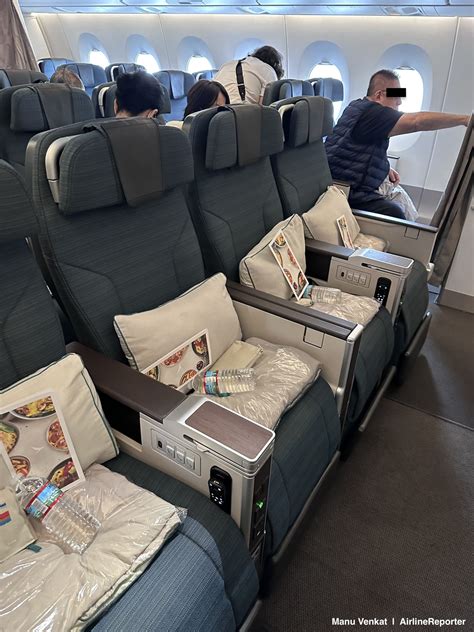
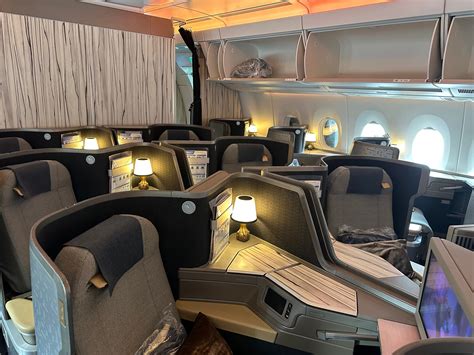
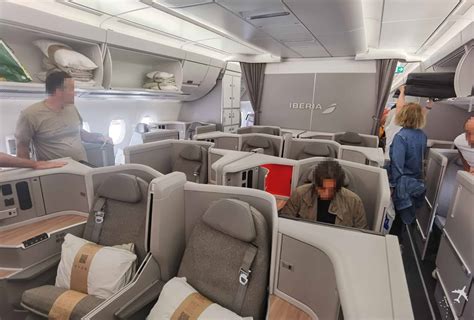
In business class, the difference narrows further. While both aircraft offer cutting-edge seating products—flatbeds, direct aisle access, and high privacy levels—the A350’s slightly wider cabin enables more spacious aisles and broader seating configurations. Some operators maximize this by installing next-generation suites or staggered layouts that wouldn’t fit as comfortably in a 787.
Cabin Design: Airspace vs. Sky Interior
Both Airbus and Boeing have introduced next-gen cabin environments to improve the in-flight experience:
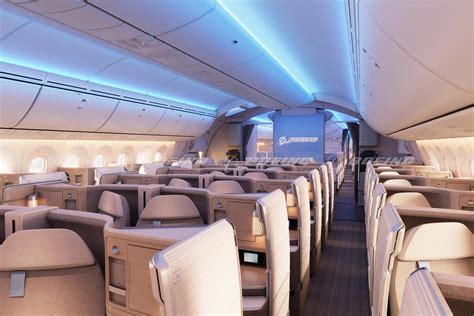
- Boeing Sky Interior, first seen on the 737 and integrated into the 787, focuses on modern aesthetics, LED mood lighting, and gently curved architecture that mimics a sky-like ambiance.
- Airbus Airspace, featured in the A350, pushes the envelope with larger pivoting bins, customizable ambient lighting, and cleaner lines. The result is a brighter, sleeker, and arguably more serene passenger space.
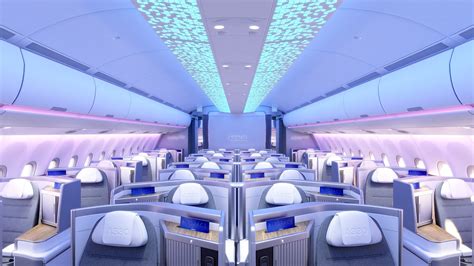
While both interiors excel in form and function, Airbus Airspace feels more upscale, particularly in how it utilizes ambient lighting and high ceilings to create a feeling of openness.
Window Experience: A Boeing Triumph
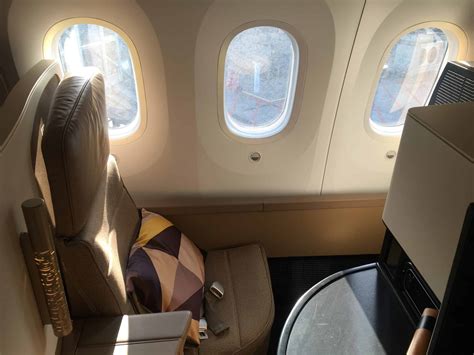
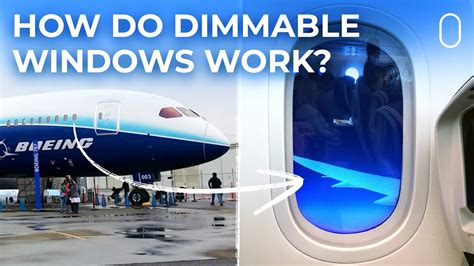
If Airbus dominates seat comfort, Boeing edges ahead in window design. The 787 boasts the largest cabin windows in aviation, measuring 10.7 by 18.4 inches. This not only allows more natural light to enter but provides panoramic views—especially when flying over dramatic landscapes or during sunrise/sunset.
What truly sets the 787 apart is its electrochromic dimming system, which replaces conventional window shades. Passengers can adjust the tint at the touch of a button, offering a personalized light experience while maintaining a view outside. The A350’s windows, while large for Airbus standards (9.5 by 13.5 inches), simply don’t match the visual impact or user experience of Boeing’s innovation.
Cabin Pressure and Humidity: Less Fatigue, More Vitality
A central feature of both the A350 and 787 is their low cabin altitude—pressurized to around 6,000 feet, compared to the traditional 8,000 feet in older aircraft. This directly correlates to better oxygen absorption, reduced jet lag, and fewer dehydration symptoms.
Thanks to the use of carbon-composite materials, which allow for a greater pressure differential without compromising structural integrity, both aircraft also maintain higher cabin humidity levels. Passengers notice this difference especially on ultra-long-haul flights: skin feels less dry, eyes are less irritated, and recovery time post-flight is significantly improved.
The physical impact of these advancements cannot be overstated. Both aircraft provide a less punishing travel experience, and for business travelers or frequent flyers, this translates into measurable health benefits and productivity gains.
Noise Levels: The Silent Revolution in Flight
Sound pollution is another factor where both aircraft excel. Internal cabin noise—engine hum, airflow, and mechanical vibrations—can subtly drain a passenger’s energy. The Airbus A350 and Boeing 787 are among the quietest twinjets ever built, with studies indicating noise levels significantly below those of the A330 or 777.
However, recent acoustic tests have shown that the A350 edges out the 787 in cabin quietness. Passengers report a noticeably calmer cabin environment on the A350, particularly in business and economy cabins located over the wing and aft sections. This silence enhances sleep quality and conversation clarity, reinforcing the A350’s status as a refined long-haul platform.
Operational Smoothness and Reliability
Comfort isn’t just a matter of seat width or lighting—it extends to flight stability and operational reliability. The Boeing 787’s early years were marked by technical challenges, including battery issues and engine reliability concerns, especially involving the Rolls-Royce Trent 1000 engines.
In contrast, the A350 program has had a remarkably smooth entry into service, with fewer maintenance issues and higher dispatch reliability. This translates into fewer delays, smoother operations, and higher passenger satisfaction.
Additionally, the A350’s wings feature adaptive flaps and morphing wingtips, contributing to superior ride quality. The aircraft dynamically adjusts to turbulence with a more responsive wing structure, minimizing mid-flight bumps and jolts.
Airlines and Configuration: Variance in Execution
It is crucial to underscore that airline configuration plays a defining role in passenger comfort. For example:
- Japan Airlines maintains an eight-abreast economy layout on its 787s, offering unrivaled comfort.
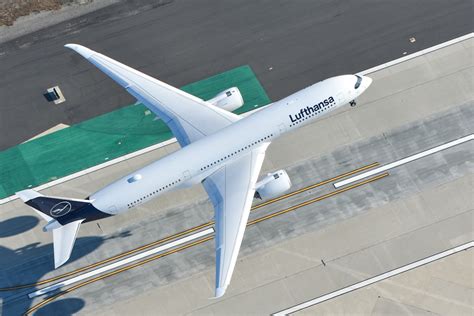
- Low-cost carriers like AirAsia X cram ten-abreast seats into their A350s, making them far less comfortable than other A350 operators.
Thus, while the aircraft’s inherent design influences comfort, airlines’ choices can either enhance or negate those advantages. The best-case scenarios for each aircraft type are remarkably comfortable; the worst-case configurations can be equally underwhelming.
Final Verdict: Which Aircraft Is More Comfortable?
When weighing all the elements—seat width, noise levels, air pressure, lighting, and reliability—the Airbus A350 emerges as the slightly more comfortable aircraft, especially in economy class. Its thoughtful nine-abreast design with 18-inch-wide seats, wider aisles, quieter cabin, and stable service record give it an edge in passenger well-being over the course of a long-haul flight.
However, the Boeing 787 Dreamliner remains highly competitive, offering superior windows, dimmable glass technology, and a sophisticated interior ambiance. In premium economy and business class, the differences narrow considerably, and depending on airline implementation, the 787 can easily rival or surpass the A350.
For travelers prioritizing economy seat comfort and overall cabin tranquility, the Airbus A350 deserves its reputation as the more comfortable widebody. For those who value cabin aesthetics and immersive views, the Boeing 787 offers unmatched visual experiences.
Ultimately, both aircraft have reshaped modern aviation by setting new benchmarks in passenger comfort—ushering in an era where long-haul travel no longer has to be a test of endurance.